The Dawn of High-Power Fiber Lasers in Rosario’s Industrial Corridor
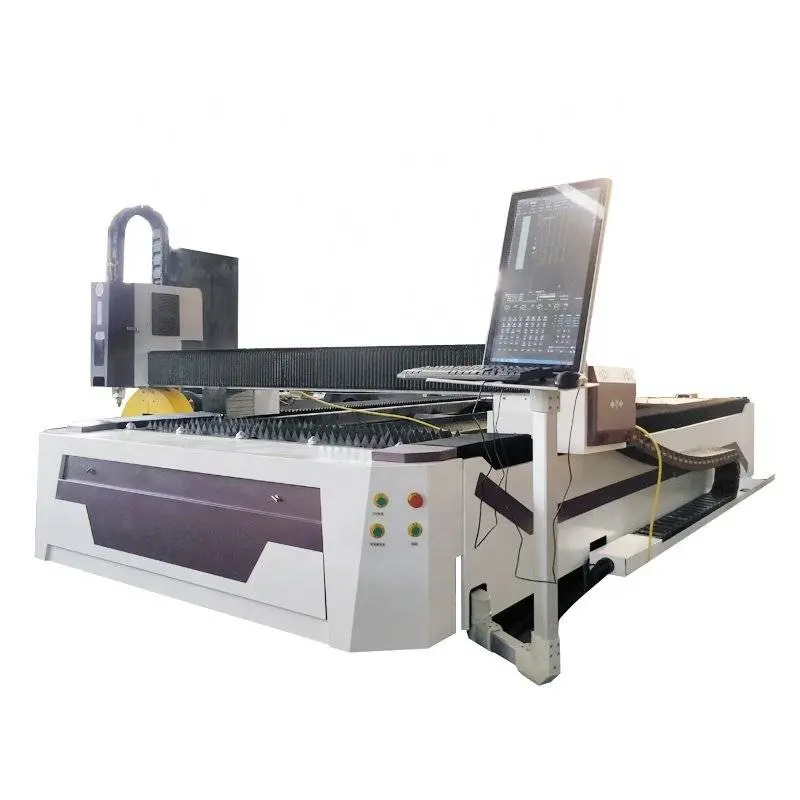
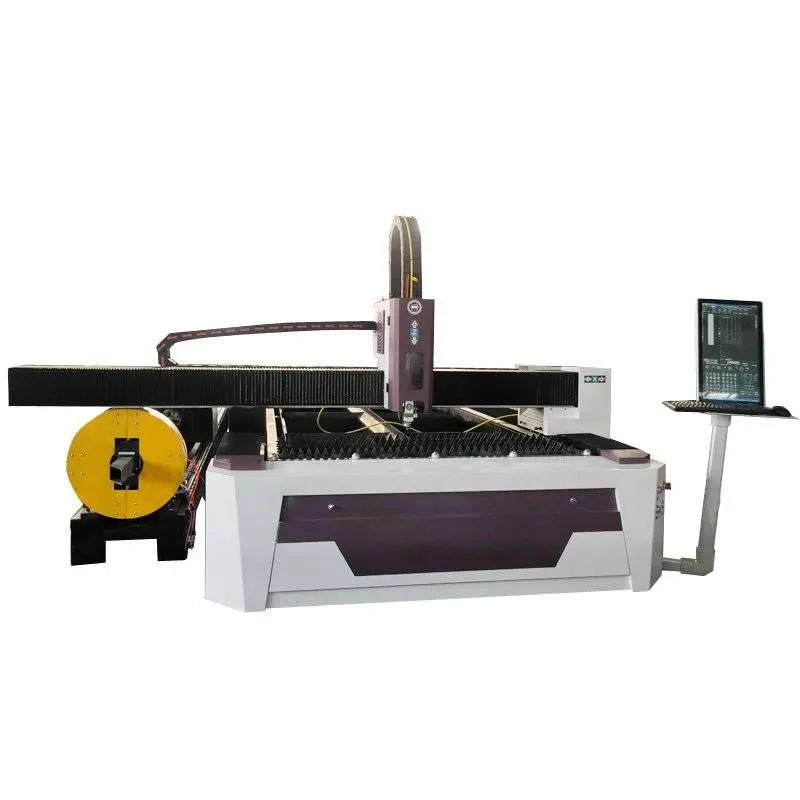
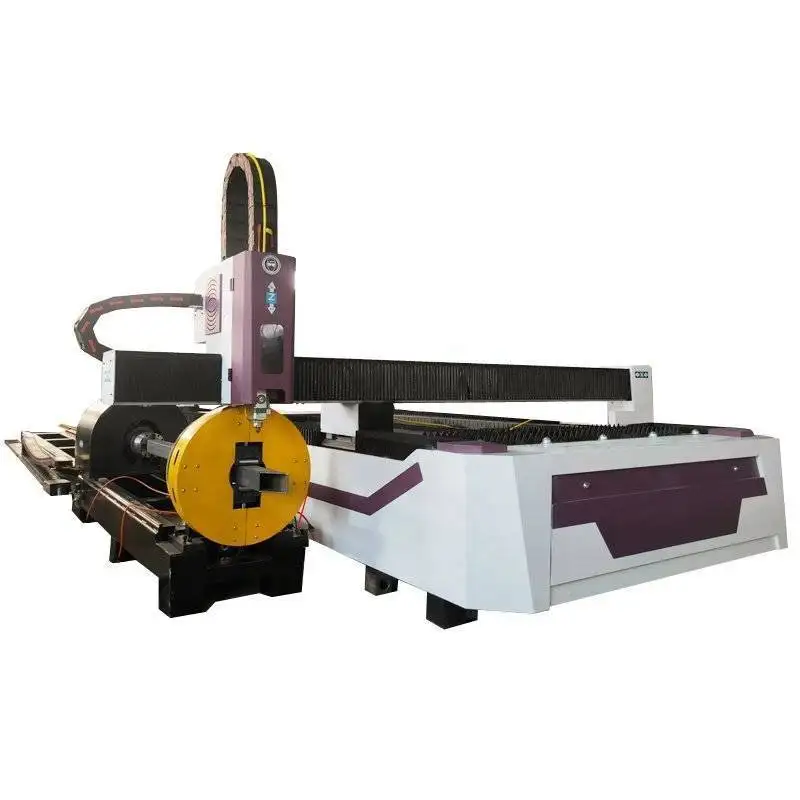
Rosario, often cited as the heartbeat of Argentina’s industrial and agricultural logistics, is currently undergoing a technological renaissance. As the demand for sophisticated warehousing and high-density storage racking systems surges, local manufacturers are moving away from legacy mechanical processes toward high-power fiber laser solutions. The introduction of the 12kW H-Beam laser cutting Machine is not merely an incremental upgrade; it is a fundamental transformation of how structural steel is processed.
For decades, the fabrication of H-beams for storage racking relied on a fragmented workflow: band sawing for length, mechanical drilling for bolt holes, and manual oxy-fuel or plasma torching for complex notches. This “disconnected” process introduced cumulative tolerances and significant labor overhead. A 12kW fiber laser consolidates these steps into a single, high-speed automated cycle. At 12,000 watts, the laser density is sufficient to vaporize steel instantly, allowing for feed rates that were previously unthinkable in structural applications.
Technical Mastery: Why 12kW is the Sweet Spot for H-Beams
In the realm of fiber lasers, power correlates directly with both “piercing speed” and “cutting thickness.” For storage racking—which requires heavy-duty uprights and beams capable of supporting thousands of tons—the material thickness often ranges from 6mm to 20mm.
A 12kW source offers a critical advantage: the ability to utilize high-pressure air or nitrogen cutting on mid-range thicknesses, which results in a clean, oxide-free edge. This is vital for storage racking because any dross or slag left on the beam would interfere with the precision of the interlocking connectors. Furthermore, the 12kW power reserve allows the machine to maintain a stable “keyhole” during the cutting process, ensuring that the structural integrity of the H-beam is preserved through a minimal Heat Affected Zone (HAZ). Unlike plasma cutting, which can soften the edges of the steel, the fiber laser’s precision ensures that the load-bearing characteristics of the H-beam remain intact.
Zero-Waste Nesting: The Mathematics of Profitability
Perhaps the most significant innovation discussed by fiber laser experts today is the implementation of “Zero-Waste Nesting” software tailored for structural profiles. In traditional H-beam processing, “drops” or remnants (the unused ends of a beam) typically account for 5% to 10% of total material volume. In a large-scale racking project in Rosario involving thousands of tons of steel, this waste represents a massive financial drain.
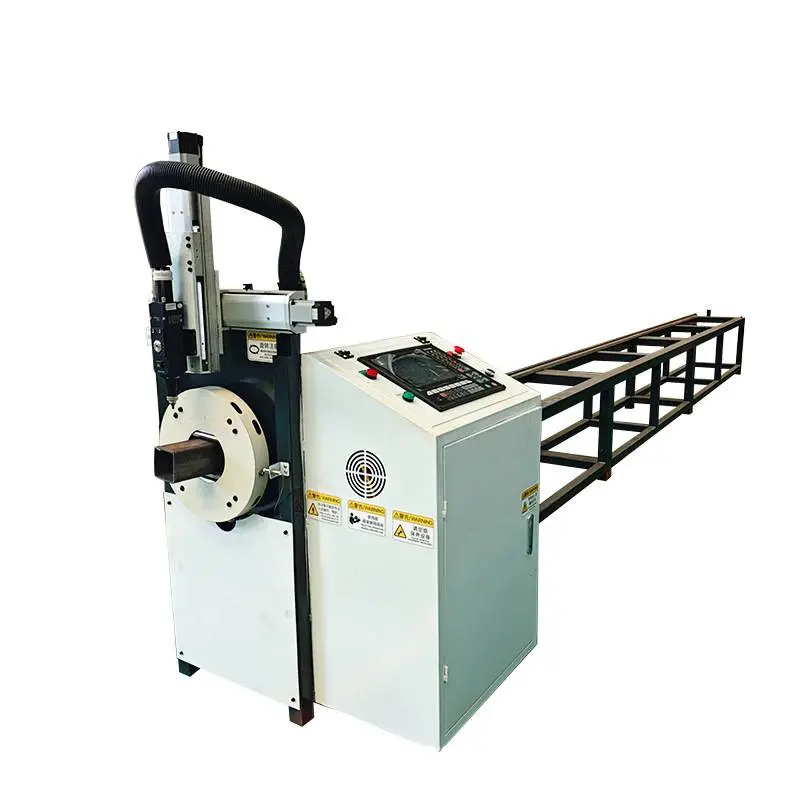
Zero-Waste Nesting utilizes advanced CAD/CAM algorithms that treat the entire raw beam as a continuous canvas. The software performs “common line cutting,” where one laser pass serves as the finishing edge for two separate parts. Additionally, the machine’s chuck system is designed to pass the beam through the cutting head with minimal “blind zones.” Modern 12kW H-beam lasers often feature a three-chuck or even four-chuck architecture, allowing the machine to hold the very end of the beam while the laser finishes the cut. This eliminates the standard 200mm-500mm scrap piece typically left behind by older tube and beam lasers, driving material utilization rates toward 99%.
Precision Engineering for Storage Racking Systems
Storage racking is an exercise in repetitive precision. Whether it is Teardrop, Pallet Racking, or Cantilever systems, the stability of the entire warehouse depends on the “fit-up” of the beams.
1. **Micro-Joint Technology:** The 12kW laser can produce precise micro-joints, keeping small parts or complex notched sections attached to the main beam during processing to prevent collisions, yet allowing them to be snapped off easily during assembly.
2. **Bolt Hole Accuracy:** In racking, bolt holes must be perfectly aligned across hundreds of vertical meters. The laser’s positional accuracy (often within ±0.05mm) ensures that every upright matches its corresponding beam without the need for on-site reaming or adjustment.
3. **Complex Notching:** Modern racking often requires specialized “hook and slot” designs. The 12kW H-Beam machine uses a 5-axis or 3D cutting head that can tilt and rotate around the flange and web of the beam, creating complex geometries that would be impossible for a drill or a standard 2D laser.
The Economic Impact on the Rosario Manufacturing Sector
Rosario’s proximity to major steel suppliers and its role as a shipping hub make it the ideal location for high-output fabrication. By adopting 12kW technology, local firms can pivot from being regional suppliers to international competitors.
The reduction in labor is the most immediate economic benefit. A single H-Beam laser can replace a saw line, a drill line, and a manual layout station. This allows Rosario-based manufacturers to reallocate their skilled labor to higher-value tasks like system design and final assembly. Furthermore, the “Zero-Waste” aspect appeals directly to the growing demand for “Green Construction” and “Sustainable Logistics.” Reducing steel waste isn’t just about saving money; it’s about reducing the carbon footprint associated with the smelting and transport of excess raw material.
Integration of 3D Cutting Heads and Robotics
The “expert” edge of a 12kW machine lies in its 3D processing capabilities. Unlike flat-sheet lasers, an H-beam machine must navigate the “shadows” created by the beam’s flanges. The 3D cutting head on these machines is a marvel of mechatronics. It must dynamically adjust its focal length and angle to maintain a perpendicular cut on the web, then flip 90 degrees to process the flanges—all while moving at high speeds.
This 3D capability is essential for “bevel cutting.” Many heavy-duty racking systems require beveled edges for weld preparations. The 12kW laser can cut these bevels in a single pass, eliminating the need for a secondary grinding process. This “one-and-done” philosophy is the core reason why the storage racking industry is migrating toward these high-power fiber systems.
Maintenance and Operational Longevity
As an expert in the field, I must emphasize that a 12kW system requires a robust operational environment. In the humid and often dust-heavy industrial zones of Rosario, the machine’s chiller systems and dust extraction units must be top-tier. Fiber lasers are incredibly efficient (converting about 30-40% of electrical energy into laser light, compared to 10% for CO2), but they are sensitive to contamination.
The beauty of the 12kW H-Beam machine is its solid-state nature. With no moving mirrors or gas turbines in the resonator, the uptime is significantly higher than older technologies. For a factory running 24/7 to fulfill a major warehouse contract, this reliability is the difference between meeting a deadline and facing stiff penalties.
Conclusion: The Future of Structural Fabrication
The deployment of a 12kW H-Beam Laser Cutting Machine with Zero-Waste Nesting in Rosario is more than an equipment purchase; it is a strategic move toward the future of structural engineering. By harnessing the raw power of 12kW and the intelligence of modern nesting software, manufacturers are producing storage racking that is stronger, cheaper, and more precise than ever before.
As we look toward the future of logistics infrastructure, the synergy between high-power photonics and structural steel will continue to deepen. The “Zero-Waste” philosophy will eventually become the industry standard, driven by both economic necessity and environmental responsibility. For the fabricators of Rosario, the message is clear: the laser age has arrived, and it is shaped like an H-beam.