The Industrial Evolution of Katowice: A Hub for Structural Innovation
Katowice and the surrounding Upper Silesian Metropolitan Area have long been the beating heart of Central European industry. Traditionally known for coal and steel, the region is undergoing a radical digital transformation. Today, the demand for storage racking—driven by the explosion of e-commerce and centralized logistics—has necessitated a more refined approach to steel fabrication.
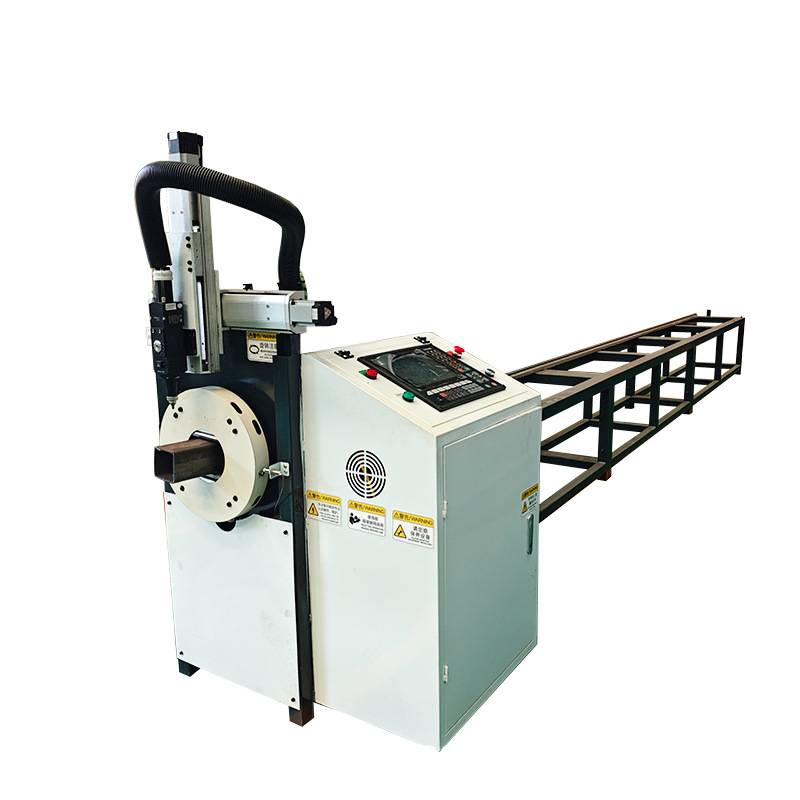
The installation of 12kW H-Beam laser cutting Machines in this region is a strategic response to the European market’s need for speed and precision. Storage racking systems, which must support thousands of tons of inventory, require impeccable structural components. The 12kW fiber laser offers the perfect balance of raw power and delicate precision, enabling Katowice-based manufacturers to outpace traditional mechanical methods like sawing, drilling, and punching.
Decoding the 12kW Power Advantage
In the realm of fiber lasers, “more power” does not simply mean “thicker cutting.” While a 12kW source can easily slice through the heavy-gauge structural steel used in H-beams (up to 25mm or more with high quality), its true value lies in processing speed and the reduction of the Heat Affected Zone (HAZ).
For storage racking, the H-beam serves as the backbone of heavy-duty uprights and load-bearing beams. A 12kW laser allows for “high-speed nitrogen cutting,” which prevents oxidation on the cut edge. This is critical for the racking industry, as it eliminates the need for secondary cleaning or grinding before the beams are powder-coated or galvanized. Furthermore, the 12kW density allows for nearly instantaneous piercing, significantly reducing the cycle time per beam compared to 4kW or 6kW alternatives. In a high-volume production environment like those found in Katowice’s industrial parks, these seconds saved per hole translate into thousands of additional units produced per month.
Precision Engineering for Storage Racking Systems
Storage racking is an exercise in structural safety. Every bolt hole, teardrop notch, and interlocking tab must be positioned with sub-millimeter accuracy to ensure that the final assembly can withstand seismic loads and heavy machinery impacts.
Traditional methods of processing H-beams often involved multiple machines: a saw for length, a drill for holes, and a milling machine for notches. The 12kW fiber laser consolidates these into a single process. Because the laser head can move with six axes of freedom (including rotation and tilt), it can execute complex geometries on all four sides of an H-beam in one pass. This eliminates the “stacking error” inherent in moving a heavy beam from one machine to another. For Katowice’s engineers, this means that the racks produced are straighter, more reliable, and easier to assemble on-site, reducing labor costs during warehouse installations.
The Mechanics of Zero-Waste Nesting
Perhaps the most significant financial advancement in this technology is “Zero-Waste Nesting.” Historically, laser cutting of tubes and profiles suffered from a “tailing” problem. Because the chucks of the machine must hold the beam firmly during the cut, the last 500mm to 1000mm of the material often could not be processed, resulting in expensive structural steel being sold as scrap.
The latest generation of 12kW machines utilized in Katowice features advanced three-chuck or even four-chuck systems. These machines allow for “jumping” the material between chucks during the cutting process. By intelligently shifting the grip, the laser can cut right up to the edge of the material.
Combined with sophisticated nesting software, the machine can calculate the best arrangement of different parts (uprights, braces, and beams) from a single 12-meter H-beam. The software identifies the “remnant” and finds a smaller component in the production queue to fill that space. In the high-volume racking industry, where material costs account for up to 70% of the total product cost, achieving near-zero waste provides a massive competitive advantage.
Sustainability and the Silesian Green Shift
As the European Union moves toward stricter carbon neutrality goals, the manufacturing sector in Katowice is under pressure to “green” its operations. The 12kW fiber laser is a key ally in this mission.
First, fiber lasers are significantly more energy-efficient than older CO2 laser technology, converting more electricity into light. Second, the zero-waste nesting capability directly reduces the carbon footprint of the facility by ensuring that every kilogram of steel purchased is utilized in the final product. Less scrap means less energy spent on recycling and less raw material extraction. For storage racking companies aiming for “Green Building” certifications (like LEED or BREEAM) for their clients’ warehouses, using components manufactured on zero-waste laser lines is a powerful selling point.
The Role of Location: Why Katowice?
The choice of Katowice for deploying these high-end machines is no accident. Its proximity to the A4 and A1 motorways provides a direct logistical pipeline to Germany, the Czech Republic, and Slovakia. A 12kW laser machine is a massive investment, often exceeding a million euros. To justify this, the machine must run 24/7.
The region’s rich history of mechanical engineering means there is a ready pool of skilled operators and maintenance technicians who understand the nuances of structural steel. Furthermore, the local supply chain—including steel service centers that can provide the high-quality H-beams required for laser processing—is among the most robust in Europe. By placing 12kW H-beam lasers here, manufacturers are positioning themselves at the center of the European logistics corridor.
Integration with Industry 4.0 and Automation
A 12kW laser is so fast that manual loading and unloading become the bottleneck. Consequently, the installations in Katowice are typically paired with fully automated loading and unloading systems.
Bundles of H-beams are placed on a loading rack, and the machine automatically selects a beam, measures its length, detects any bow or twist, and adjusts the cutting path in real-time. Once cut, the finished racking components are automatically sorted and stacked. This level of automation is essential for storage racking, where a single warehouse project might require tens of thousands of identical beams. The integration of the laser’s software with the factory’s ERP (Enterprise Resource Planning) system allows for “just-in-time” manufacturing, where parts are cut exactly when they are needed for the assembly line, further reducing the need for expensive inventory storage in the Katowice facility.
The Future of Beam Processing
As we look toward the future, the 12kW H-beam laser is just the beginning. We are already seeing the emergence of 20kW and 30kW systems, which will further push the boundaries of thickness and speed. However, the 12kW remains the “sweet spot” for storage racking, offering the best return on investment when paired with zero-waste nesting.
For the engineers and business leaders in Katowice, this technology represents a bridge between the region’s storied industrial past and its high-tech future. By adopting fiber laser technology, they are ensuring that the “Made in Poland” stamp on storage racking stands for precision, efficiency, and structural excellence. In the global race to build the warehouses of tomorrow, the 12kW H-beam laser is the engine driving the Silesian industry forward, one perfectly cut beam at a time.