The Industrial Evolution: Edmonton as a Hub for Wind Energy Fabrication
Edmonton has long been recognized as the “Gateway to the North” and a powerhouse for the oil and gas sector. However, as Alberta diversifies its energy portfolio, the city’s manufacturing sector is pivoting toward the burgeoning wind energy market. Wind turbine towers are massive structures, often exceeding 100 meters in height, requiring high-strength steel and impeccable weld quality.
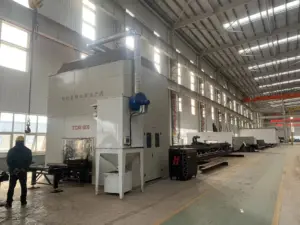
The introduction of the 12kW H-Beam laser cutting Machine with an infinite rotation 3D head is a strategic move for Edmonton-based shops. These machines are not merely tools; they are comprehensive fabrication centers capable of handling the heavy-duty H-beams, I-beams, and channels that form the internal skeletons and transport frames of wind towers. In the competitive landscape of renewable energy, the ability to produce components locally in Alberta reduces logistical costs and carbon footprints, positioning Edmonton as a critical node in the green energy supply chain.
The Power of 12kW: Why High-Wattage Fiber Lasers Matter
In the world of laser cutting, power equals both thickness and speed. A 12kW fiber laser source provides a significant leap over the previous 4kW or 6kW standards. For wind turbine components—which often utilize thick-walled carbon steel—the 12kW power density allows for clean, high-speed dross-free cuts.
At 12kW, the laser can penetrate structural steel H-beams with thicknesses exceeding 25mm with ease. This power level is crucial for maintaining a high feed rate, which minimizes the Heat Affected Zone (HAZ). A smaller HAZ is vital for wind turbine towers, as it preserves the metallurgical properties of the steel, ensuring that the components can withstand the cyclical loading and vibration stresses inherent in wind power generation. Furthermore, the efficiency of fiber laser technology means lower energy consumption per cut compared to older CO2 systems, aligning with the sustainability goals of the wind industry.
The Engineering Marvel: Infinite Rotation 3D Cutting Heads
Perhaps the most significant advancement in this machinery is the “Infinite Rotation” 3D head. Traditional 3D laser heads often suffer from “cable wrap,” where the internal gas lines and electrical cables limit the head’s rotation to 360 or 720 degrees before it must “unwind.” In a complex H-beam cut involving multiple bevels and notches, this unwinding time can add minutes to every part.
The infinite rotation head utilizes advanced slip-ring technology and specialized optical pathways to allow the cutting head to spin indefinitely. For wind turbine fabrication, this is a game-changer. It allows for continuous beveling (V, Y, K, and X joints) on all sides of an H-beam in a single pass. When preparing the internal platforms and structural reinforcements of a tower, these bevels are essential for deep-penetration welding. The precision of the 3D head ensures that the fit-up is perfect, reducing the amount of weld filler required and significantly lowering the failure rate of the joints.
Applications in Wind Turbine Tower Structural Components
While the outer shell of a wind turbine is a rolled plate, the interior is a complex environment of H-beams, C-channels, and specialized brackets. These components serve as the mounting points for electrical cabinets, ladders, and maintenance platforms.
The 12kW H-Beam laser excels at processing these structural members. It can cut bolt holes, wire-routing apertures, and complex end-profiles in a single setup. In Edmonton’s fabrication facilities, this eliminates the need for multiple machines—no more moving a beam from a saw to a drill line to a manual beveling station. The laser does it all. By integrating the infinite rotation head, the machine can execute complex “saddle cuts” or “fish-mouth” cuts where H-beams intersect with the curved interior walls of the tower, ensuring a seamless fit that is impossible to achieve with traditional mechanical methods.
Precision Weld Preparation: The Key to Structural Longevity
Wind turbines in Alberta are subjected to extreme temperature fluctuations—from +35°C in the summer to -40°C in the winter—and constant wind-induced vibration. Under these conditions, the quality of the welds is the only thing preventing catastrophic structural failure.
The 12kW laser’s ability to provide high-precision beveling is its most valuable asset for weld prep. Manual grinding or plasma cutting often leaves an irregular surface that requires significant cleanup. The laser, however, leaves a mirror-like finish with tolerances within fractions of a millimeter. This level of precision allows for automated welding robots to perform at their peak efficiency, as the seam tracking is more accurate and the gap is consistent. For Edmonton’s manufacturers, this means faster turnaround and a finished product that meets the stringent international standards for renewable energy infrastructure.
Edmonton’s Logistics and Environmental Considerations
Operating a 12kW fiber laser in Edmonton presents unique advantages and challenges. The city’s industrial zones, such as Nisku and Acheson, are equipped with the heavy power grids required to run these high-wattage systems. Additionally, the cold climate of Alberta requires sophisticated cooling systems for the laser source. Modern 12kW machines utilize advanced chillers that can be integrated into the facility’s HVAC or heat-recovery systems, potentially using the waste heat from the laser to help warm the shop during the winter months.
From a logistics perspective, Edmonton’s rail and road links make it the ideal location to receive raw structural steel and ship out completed tower components to wind farms across Southern Alberta, Saskatchewan, and the Pacific Northwest. By utilizing high-speed laser cutting, local firms can compete with international suppliers by significantly reducing the “time-to-site” for critical infrastructure components.
The Economic Impact: ROI and the Future of Alberta Manufacturing
The capital investment for a 12kW H-Beam laser with an infinite rotation head is substantial, but the Return on Investment (ROI) is driven by the sheer throughput and the elimination of secondary processes. In a traditional shop, an H-beam might require four hours of labor for layout, cutting, drilling, and beveling. The 12kW laser can complete the same tasks in under fifteen minutes.
For the Edmonton labor market, this technology shifts the demand from manual laborers to high-skilled laser operators and programmers. This transition is essential for the long-term viability of the province’s manufacturing sector. As the wind energy sector continues to grow, with massive projects planned for the Alberta plains, the demand for high-precision structural steel will only increase. Facilities that adopt this 12kW technology now are positioning themselves as leaders in the next generation of energy infrastructure.
Conclusion: Setting a New Standard
The integration of 12kW H-Beam laser cutting machines with infinite rotation 3D heads is more than a technological upgrade; it is a statement of intent from Edmonton’s industrial sector. By embracing the most advanced fiber laser technology available, Edmonton is proving that it can pivot from traditional energy to the forefront of the renewable revolution.
The precision, speed, and versatility of these machines ensure that the wind turbine towers built in Alberta are of the highest quality, ready to stand against the elements for decades. As we look toward a cleaner energy future, the hum of the 12kW laser in an Edmonton shop is the sound of progress, carving out a new identity for the province’s manufacturing heritage.