
1. Executive Summary: The Technical Shift in Heavy Structural Fabrication
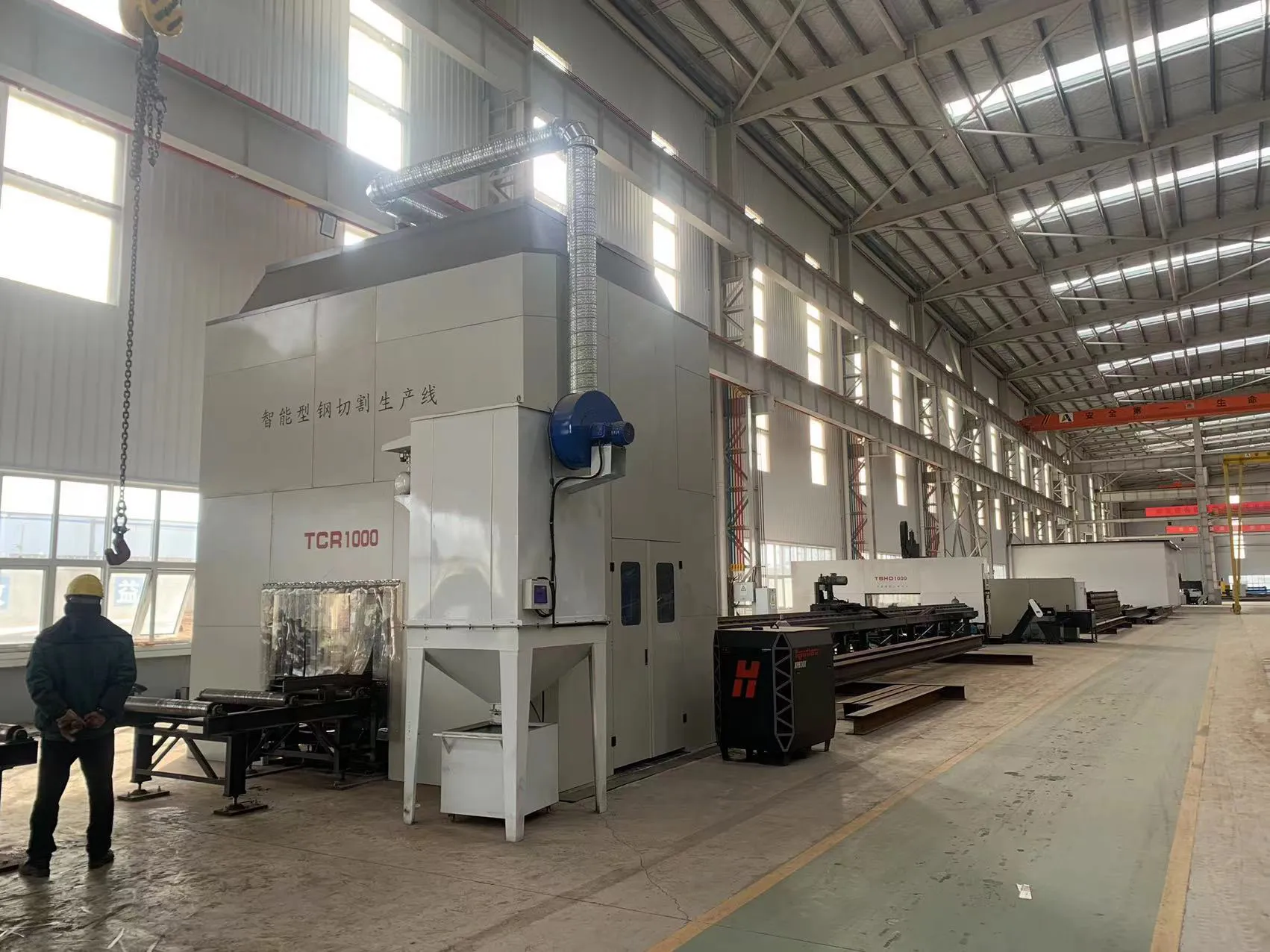
The transition from conventional plasma and mechanical oxy-fuel cutting to high-density fiber laser technology marks a paradigm shift in the fabrication of heavy structural sections. This report examines the deployment of a 12kW H-Beam laser cutting Machine equipped with an integrated Automatic Unloading System, specifically tailored for the offshore platform fabrication sector in the Pune industrial corridor. The integration of 12,000 watts of coherent light with multi-axis robotic kinematics allows for the processing of thick-walled H-beams, I-beams, and channels with a degree of precision previously unattainable in heavy engineering.
In Pune’s specialized manufacturing ecosystem, which serves as a critical supply chain node for global offshore energy projects, the demand for high-tolerance structural components—such as jacket legs, deck structures, and topside modules—is increasing. Conventional methods often result in significant Heat Affected Zones (HAZ) and geometric deviations. The 12kW system mitigates these issues while the automatic unloading unit addresses the logistical bottleneck of handling massive workpieces, ensuring a continuous, high-throughput production cycle.
2. 12kW Fiber Laser Source: Power Density and Material Interaction
The heart of the system is the 12kW fiber laser resonator. At this power level, the beam parameter product (BPP) is optimized to maintain a concentrated energy density even at extended focal lengths required for 3D profiling. For offshore applications, where H-beams often exceed 20mm in flange thickness, the 12kW source provides the necessary photon flux to achieve “high-speed vaporization cutting” rather than simple melt-and-blow processes.
2.1. Thermal Kerf Management
The 12kW source allows for significantly higher feed rates compared to lower-power counterparts. This speed is not merely for productivity; it is a critical factor in limiting thermal input into the substrate. By traversing the material faster, the total energy absorbed by the H-beam is reduced, minimizing the HAZ. In offshore environments—where structural integrity is governed by strict AWS D1.1 and API standards—minimizing the HAZ is essential to prevent hydrogen-induced cracking and maintain the fatigue resistance of the steel.
2.2. Piercing Dynamics in Thick-Walled Sections
Offshore structural steel, often grades like S355G10+M or API 2W Gr 50, requires sophisticated piercing strategies. The 12kW system utilizes multi-stage frequency-modulated piercing, transitioning from high-frequency pulses to continuous wave (CW) mode in milliseconds. This results in a “clean” start point, reducing splatter and protecting the laser optics during the processing of heavy H-beam webs and flanges.
3. 3D Kinematics and Geometric Precision in H-Beam Profiling
Processing H-beams for offshore platforms involves more than simple right-angle cuts. Complex geometries, including rat-holes, weld preparations (V, X, and K-bevels), and bolt-hole arrays, must be executed with sub-millimeter accuracy. The machine utilizes a 5-axis or 6-axis head configuration, allowing the laser to maintain a perpendicular or specific angular orientation to the beam’s surface at all times.
3.1. Compensation for Structural Deviations
Standard H-beams are rarely perfectly straight. Torsional deformation and “camber” are inherent in hot-rolled sections. The 12kW system integrates laser-based sensing or physical probing to map the actual profile of the H-beam in real-time. The control software then applies a dynamic compensation algorithm to the cutting path. This ensures that a 20mm hole cut at the end of a 12-meter beam is perfectly aligned with the global coordinate system of the offshore module, facilitating seamless “plug-and-play” assembly at the shipyard.
4. Automatic Unloading: Solving the Heavy Steel Bottleneck
In Pune’s high-output fabrication facilities, the manual handling of processed H-beams represents the primary cause of downtime and safety risk. A 12kW laser can cut faster than a crane operator can rig and move the finished part. The Automatic Unloading technology integrated into this system is designed to synchronize material flow with the laser’s duty cycle.
4.1. Mechanical Integration and Load Distribution
The unloading system employs a series of heavy-duty synchronized conveyors and hydraulic lifters. Once the laser completes the final cut, the “floating” support system detects the part’s separation. In conventional setups, the part might drop, damaging the lead-in or the machine bed. The automatic system uses a synchronized “catch and carry” mechanism that supports the beam along its entire length, preventing deformation of the cut edges.
4.2. Efficiency Gains in Post-Processing
The unloading unit categorizes parts based on their nesting program, moving them to specific discharge zones. In the context of offshore platforms, where a single project might involve thousands of unique structural members, this automated sorting reduces the “search and retrieve” time for downstream welding teams by an estimated 35%. Furthermore, by eliminating the need for overhead cranes for every single piece, the facility’s carbon footprint and energy consumption are notably reduced.
5. Application Analysis: Offshore Platforms in the Pune Sector
Pune has evolved into a hub for “brownfield” and “greenfield” offshore engineering. Local firms are increasingly tasked with producing high-complexity components for the North Sea, the Gulf of Mexico, and the Mumbai High fields. The 12kW H-Beam laser provides a competitive advantage in three specific areas:
5.1. Precision Weld Preparations
Offshore structures rely on full-penetration welds. Traditional plasma cutting requires manual grinding to remove dross and achieve the required bevel angle. The 12kW laser produces a “weld-ready” surface. The precision of the 3D head allows for the direct cutting of complex bevels (up to 45 degrees) with a surface finish (Ra) that often meets Norsok M-101 standards without secondary processing.
5.2. Weight Reduction and Optimized Nesting
In offshore design, every kilogram matters. The precision of laser cutting allows engineers to design more complex cut-outs and lightening holes in H-beams without compromising structural stability. The software’s ability to nest these parts tightly—combined with the narrow kerf of the 12kW laser—maximizes material utilization of expensive high-tensile marine steel.
6. Synergy Between 12kW Power and Automation
The synergy between the high-power source and the automated unloading system creates a closed-loop production environment. When cutting thick H-beams, the 12kW source generates a significant amount of slag. The automated system includes integrated scrap conveyors and dust extraction that operate in tandem with the unloading sequence, ensuring the machine remains clean and operational for 24/7 cycles.
Moreover, the integration of Industry 4.0 protocols allows the Pune-based facility to monitor the laser’s performance remotely. Data regarding gas consumption (Oxygen/Nitrogen), nozzle wear, and unloading cycle times are logged, allowing for predictive maintenance. For offshore contractors, this provides a “digital twin” of the fabrication process, ensuring traceability from the raw steel mill certificate to the final cut part.
7. Structural Integrity and Quality Assurance
From an engineering perspective, the primary concern with high-power laser cutting is the potential for micro-cracking in the hardened edge layer. However, field tests on 12kW processed S355 steel show that the cooling rate is so rapid that the Martensitic layer is extremely thin (<0.1mm). This layer is easily consumed during the subsequent welding process, ensuring that the final joint retains its required ductility and impact toughness at sub-zero temperatures—a critical requirement for offshore platforms operating in harsh environments.
8. Conclusion
The deployment of 12kW H-Beam Laser Cutting Machines with Automatic Unloading technology represents the current zenith of structural steel processing. In Pune’s industrial landscape, this technology allows fabricators to meet the stringent tolerances and accelerated timelines required by the global offshore industry. By solving the precision issues of 3D profiling and the efficiency bottlenecks of heavy material handling, this system ensures that structural steel fabrication is no longer a “rough” trade, but a high-precision engineering discipline. The reduction in manual labor, the elimination of secondary grinding, and the superior metallurgical results confirm that 12kW fiber laser technology is the definitive solution for the future of offshore structural fabrication.
















