The Evolution of Bridge Fabrication in the Charlotte Hub
Charlotte, North Carolina, has long been a nexus for logistics and heavy industrial manufacturing. As the region undergoes a massive expansion in infrastructure—driven by both population growth and the federal push for bridge revitalization—the demand for precision-engineered structural steel has reached an all-time high. Historically, the fabrication of H-beams for bridge supports, girders, and trusses relied on a combination of mechanical sawing, manual layout, and plasma cutting. While functional, these methods often introduced significant heat-affected zones (HAZ) or required extensive secondary grinding to meet American Association of State Highway and Transportation Officials (AASHTO) standards.
The arrival of the 12kW fiber laser has fundamentally changed this landscape. In a city where the “Queen City” spirit meets high-tech manufacturing, bridge engineers are now specifying laser-cut components for their superior edge quality and dimensional accuracy. The 12kW power threshold is particularly significant; it represents the “sweet spot” where cutting speed meets the ability to penetrate the thick-walled sections common in heavy civil engineering.
Technical Superiority: The 12kW Fiber Laser Advantage
As a fiber laser expert, I often emphasize that “power is nothing without control.” However, in the context of bridge engineering, 12kW of power provides the necessary thermal energy to achieve high-speed melt-expulsion in heavy carbon steel.
Fiber lasers operate at a wavelength of approximately 1.06 microns, which is more readily absorbed by steel compared to the 10.6 microns of traditional CO2 lasers. When you scale this to 12kW, the energy density at the focal point is immense. For H-beams—which feature varying thicknesses between the web and the flanges—the 12kW source allows the machine to maintain a high feed rate even when transitioning through thicker flange sections. This consistency is vital for maintaining the structural integrity of the beam, as it minimizes the time the heat source dwells on the material, thereby reducing the risk of metallurgical warping.
Furthermore, the 12kW system provides the capacity for “CleanCut” technology using nitrogen or high-pressure air. For bridge components that require painting or galvanizing, a laser-cut edge is often superior because it lacks the oxide layer produced by oxygen-assisted plasma cutting. This ensures better coating adhesion, which is a critical factor in the long-term corrosion resistance of bridge structures.
3D Processing of H-Beams: Beyond Flat Plate
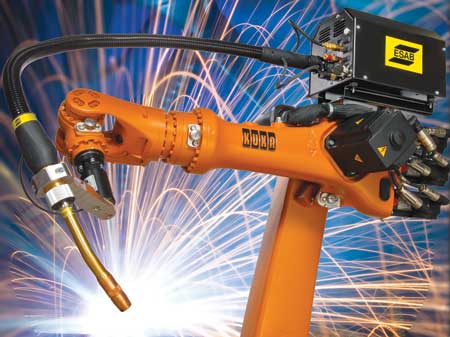
An H-Beam laser cutting Machine is not merely a high-power light source; it is a complex multi-axis robotic system. Unlike flat-bed lasers, these machines utilize a series of rotating chucks or a 5-axis robotic head to maneuver around the fixed beam.
In bridge engineering, beams are rarely just cut to length. They require complex bolt hole patterns, cope cuts for interlocking joints, and bevels for weld preparation. The 12kW H-beam machine can perform these tasks in a single setup. By rotating the beam or the laser head, the system can cut the top flange, the bottom flange, and the web with perfect alignment.
The precision offered here is measured in microns, whereas traditional layout methods are measured in fractions of an inch. For a bridge assembly in Charlotte, where girders may span hundreds of feet, a cumulative error of even 1/16th of an inch can lead to significant assembly issues on-site. The laser eliminates this “stack-up” error by utilizing CAD/CAM integration, pulling geometries directly from the bridge engineer’s Tekla or Revit models.
The Game-Changer: Automatic Unloading and Material Flow
In a high-output fabrication shop in North Carolina, the bottleneck is rarely the cutting speed—it is the material handling. An H-beam can weigh several tons, and the logistics of moving a raw 40-foot beam into the machine and extracting the finished part are fraught with safety risks and time sinks.
The “Automatic Unloading” component of these 12kW systems is what transforms a machine into a production cell. These systems typically utilize heavy-duty conveyor beds paired with hydraulic lifters or specialized “out-feed” grippers. Once the laser completes the final cut, the unloading system automatically maneuvers the finished beam onto a collection rack or a secondary conveyor.
From a management perspective, this provides three distinct advantages:
1. **Safety:** It removes the need for overhead crane intervention during the cycle, significantly reducing the risk of “struck-by” accidents in the shop.
2. **Duty Cycle:** The machine can begin processing the next beam while the previous one is being cleared. In a 12kW environment, where the laser moves incredibly fast, keeping the “beam-to-beam” transition time low is the only way to realize the ROI on the power source.
3. **Traceability:** Many automatic unloading systems are integrated with labeling or inkjet marking units. In bridge engineering, every component must be traceable back to its mill certificate. The system can automatically mark the part ID and heat number as it unloads, ensuring compliance with NCDOT (North Carolina Department of Transportation) regulations.
Meeting Rigorous Bridge Engineering Standards
Bridge engineering is perhaps the most demanding discipline within structural steel. The fatigue life of a bridge is directly related to the quality of the cuts and welds. A jagged edge or a micro-crack initiated during a thermal cut can propagate under the cyclic loading of traffic, leading to catastrophic failure.
The 12kW fiber laser produces a remarkably smooth surface finish (low Ra value). For bridge engineers in the Charlotte region, this means that the “re-entrant corners” of copes—often a point of stress concentration—are cut with a radius and smoothness that far exceeds what a manual torch could achieve.
Additionally, the precision of the 12kW laser allows for “interference-fit” tolerances in bolted connections. When the holes in the splice plates match the holes in the girders with sub-millimeter accuracy, the structural efficiency of the friction-grip connection is maximized. This precision is essential for the modern “Accelerated Bridge Construction” (ABC) techniques being adopted across the Southeast, where components are prefabricated off-site and assembled quickly to minimize traffic disruption.
Economic Impact on the Charlotte Fabrication Market
Charlotte is uniquely positioned as a hub for the “New South” industrial revolution. Local fabricators who invest in 12kW H-beam technology with automatic unloading are finding themselves at a significant competitive advantage. By reducing labor costs and eliminating secondary processes (like drilling and grinding), these shops can bid more aggressively on municipal and state-level bridge projects.
Furthermore, the environmental aspect cannot be ignored. Fiber lasers are significantly more energy-efficient than CO2 counterparts, and the precision of the nesting software minimizes scrap. In an era where “Green Steel” and sustainable infrastructure are becoming procurement requirements, the efficiency of a 12kW fiber system aligns with the corporate social responsibility goals of many large engineering firms headquartered in Charlotte’s uptown district.
Future Outlook: AI and the Digital Twin
Looking forward, the integration of 12kW lasers in Charlotte will likely move toward “digital twin” manufacturing. The sensors within the laser head and the automatic unloading system provide real-time data on cut quality and machine health. For a bridge project, this data can be archived, providing a digital “birth certificate” for every structural member.
As we see more complex bridge designs—including cable-stayed structures and intricate pedestrian overpasses in Charlotte’s growing suburbs—the flexibility of the 12kW H-beam laser will be the catalyst for architectural creativity. No longer limited by the constraints of mechanical tools, engineers can design more organic, optimized shapes that use less steel but provide greater strength.
Conclusion
The deployment of a 12kW H-beam laser cutting machine with automatic unloading is more than just an equipment upgrade; it is a strategic necessity for the future of bridge engineering in Charlotte. By marrying the raw power of fiber optics with the intelligence of automated logistics, the region’s fabricators are setting a new standard for infrastructure quality. As the city continues to grow and its bridges continue to span new horizons, this technology will be the silent partner ensuring that every beam, every bolt hole, and every bridge stands the test of time and the rigors of the road.