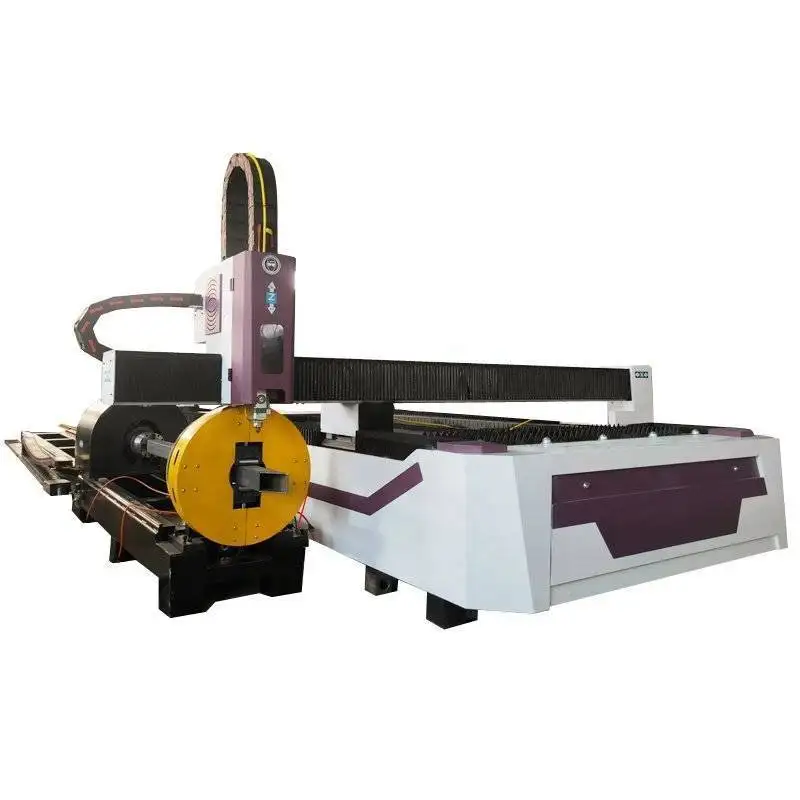
The Dawn of High-Power Fiber Lasers in Istanbul’s Infrastructure
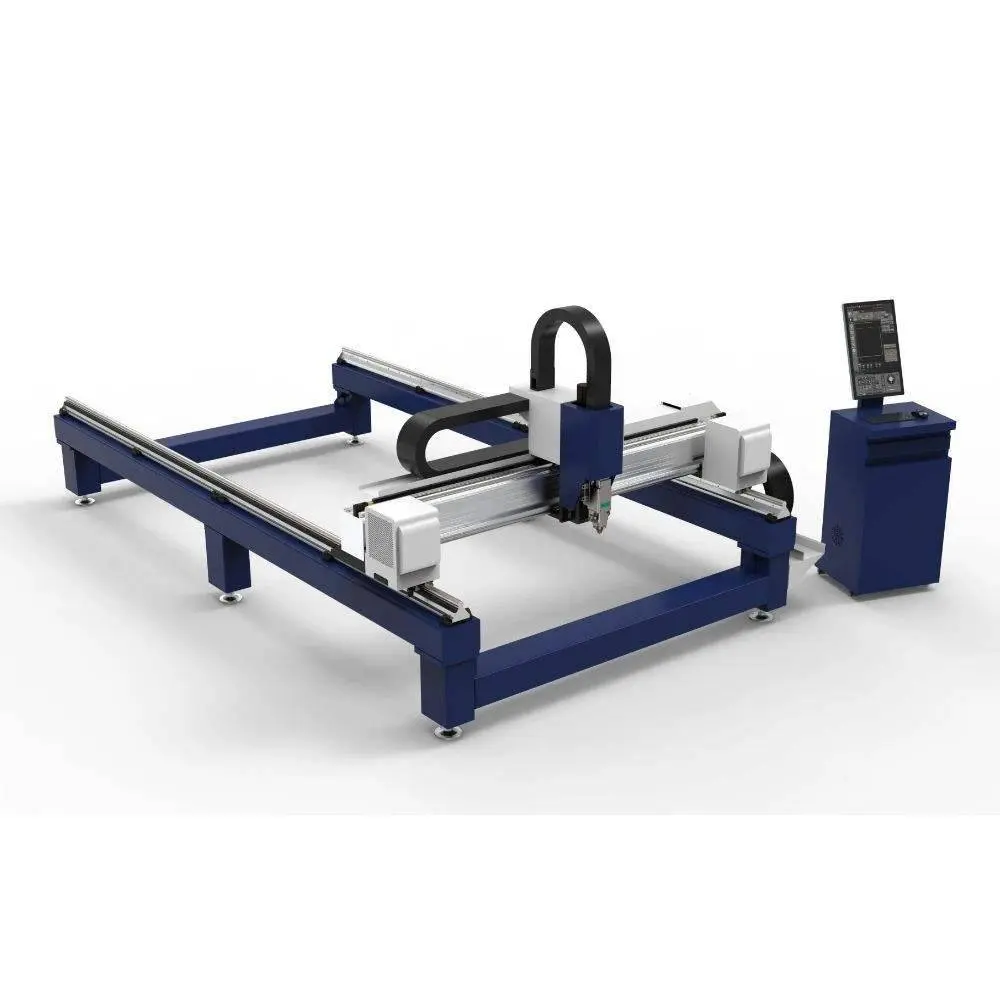
Istanbul stands as a global crossroads, and its commitment to world-class infrastructure is epitomized by its massive airport projects. The sheer scale of these developments requires structural integrity that only high-grade H-beams can provide. Traditionally, processing these beams—drilling, sawing, and coping—was a fragmented process involving multiple machines and significant manual labor. However, the introduction of the 12kW fiber laser has condensed these operations into a single, high-speed workstation.
As a fiber laser expert, I have observed that the jump to 12kW is not merely a linear increase in power; it is a qualitative leap in processing capability. In the context of Istanbul’s airport construction, where deadlines are aggressive and structural tolerances are microscopic, the 12kW source provides the necessary “punch” to penetrate thick-walled H-beams (up to 25mm or more) with a speed and edge quality that plasma or mechanical sawing cannot match.
Technical Specifications: The 12kW Fiber Advantage
The heart of this machine is the 12kW fiber laser resonator. Unlike CO2 lasers, fiber lasers deliver the beam via a flexible fiber optic cable, which maintains high beam quality (low BPP) even at high power levels. At 12,000 watts, the power density at the focal point is immense.
For H-beam processing, this power translates to several key advantages:
1. **Reduced Heat Affected Zone (HAZ):** The high cutting speed of the 12kW laser means the heat is localized. This is critical for the structural steel used in airport hangers and terminals, as it prevents the metallurgical weakening of the steel.
2. **Complex Geometry:** H-beams require “coping” or complex cutouts for interlocking joints. A 12kW laser, coupled with a 5-axis or 3D cutting head, can execute these geometries in a single pass.
3. **Gas Efficiency:** While 12kW can use Oxygen for thick mild steel, many Istanbul-based fabricators are moving toward High-Pressure Air or Nitrogen cutting to achieve oxide-free edges, which are ready for immediate welding without secondary grinding.
Engineering the 3D Cutting Environment for H-Beams
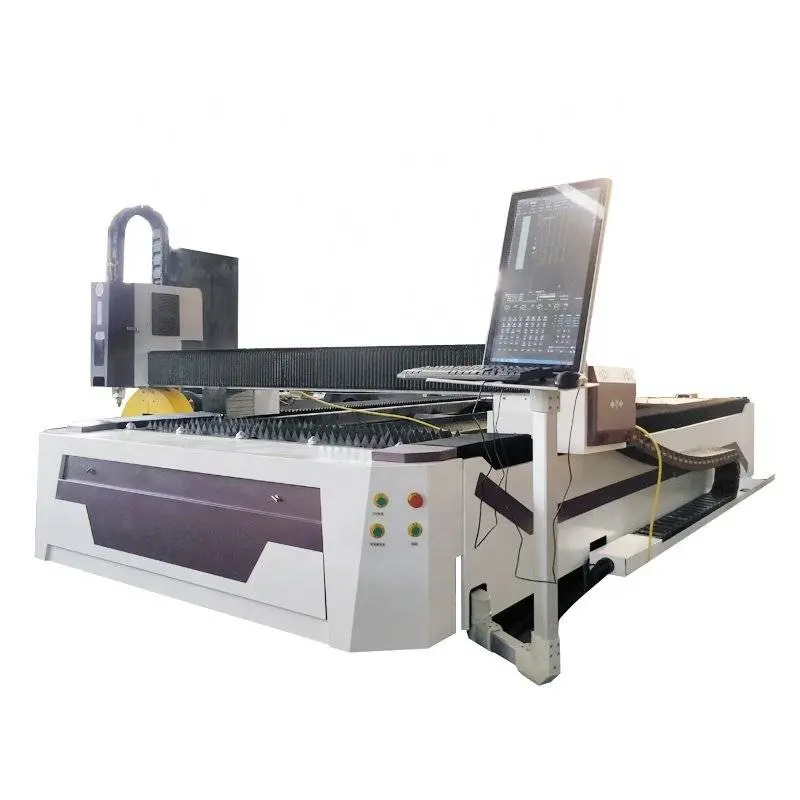
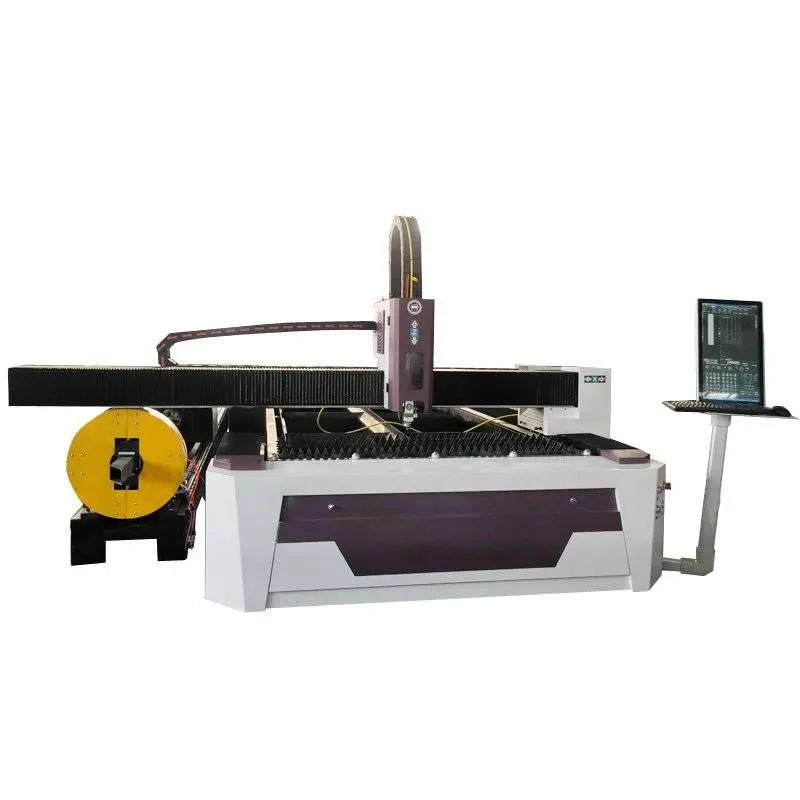
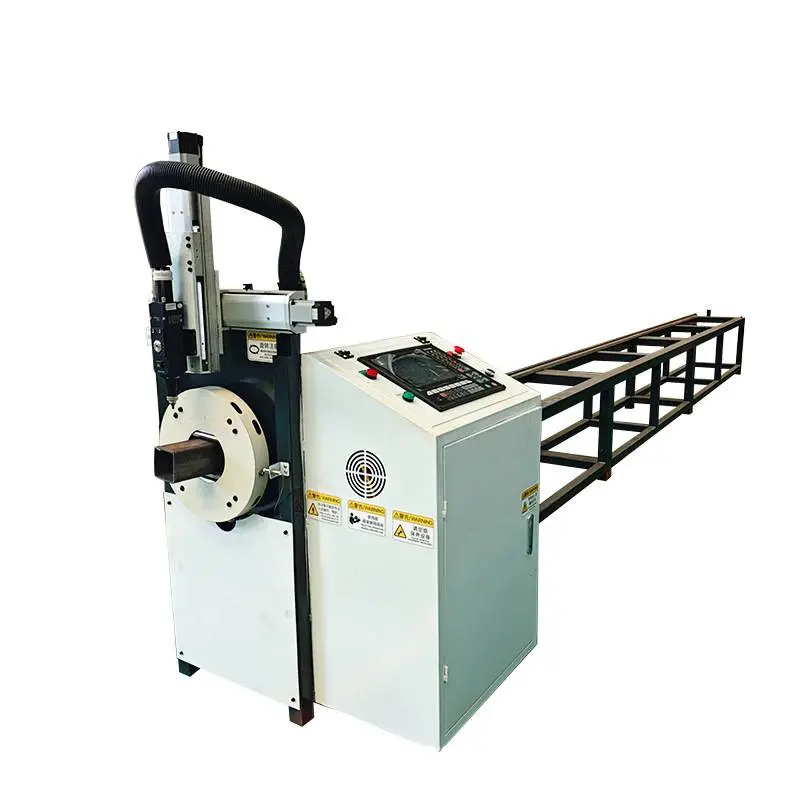
Cutting a flat sheet is two-dimensional; cutting an H-beam is a complex 3D challenge. The machine deployed in Istanbul features a specialized rotary chuck system and a multi-axis cutting head. The H-beam is held by high-precision chucks that synchronize with the laser head’s movement.
The 12kW head must navigate the “web” and the “flanges” of the H-beam. This requires sophisticated software that can compensate for the slight deviations often found in hot-rolled structural steel. In airport construction, where beams may span 30 meters or more, the laser’s ability to “sense” the material’s actual position via capacitive height sensing ensures that the focal point remains optimal, regardless of the beam’s geometric imperfections.
The Game Changer: Automatic Unloading Systems
In high-output environments like those found near the Istanbul Airport, the bottleneck is rarely the laser itself—it is the material handling. An H-beam is heavy, cumbersome, and dangerous to move manually. The integration of an Automatic Unloading System is what elevates this machine from a tool to a full production line.
The unloading mechanism utilizes a series of synchronized conveyor rollers and hydraulic lift arms. Once the 12kW laser completes its cut, the system automatically detects the part length and triggers the unloading sequence. The finished beam is moved to a collection rack while the next raw beam is simultaneously moved into the cutting zone. This “hidden time” processing ensures that the laser is firing for the maximum percentage of the shift. In the context of a 24/7 construction schedule in Istanbul, this can increase total throughput by as much as 40% compared to manual unloading.
Precision Requirements for Istanbul’s Airport Terminals
Airport architecture in Turkey has moved toward “Exposed Structural Steel” designs. This means the H-beams are not hidden behind drywall; they are part of the aesthetic. Therefore, the cuts must be visually perfect.
Traditional mechanical sawing and drilling often leave burrs and rough edges. The 12kW fiber laser produces a “laser-smooth” finish. For the interlocking “spider” joints and vaulted ceiling supports of a modern terminal, the precision of the laser ensures that components fit together like LEGO pieces. This reduces on-site welding time and eliminates the need for heavy-duty shimming or corrective grinding, which is a massive cost-saver for Turkish contractors.
Software Integration and Industry 4.0
The 12kW machines operating in Istanbul are not standalone islands; they are integrated into the BIM (Building Information Modeling) workflow. Engineers at the airport project site can export 3D TEKLA or CAD files directly to the machine’s nesting software.
The software optimizes the layout on the H-beam to minimize scrap—a vital feature given the rising cost of steel in the Mediterranean market. As an expert, I emphasize the importance of this digital thread: from the architect’s vision in Istanbul to the 12kW laser’s nozzle, the data remains pure, ensuring that the physical beam matches the digital twin of the airport perfectly.
Environmental and Economic Impact in the Turkish Market
Turkey has become a hub for high-tech manufacturing, and the shift toward fiber lasers aligns with global “Green Building” initiatives. 12kW fiber lasers are significantly more energy-efficient than older CO2 or plasma technologies. They convert wall-plug power to laser light at an efficiency of about 35-40%, whereas CO2 is closer to 10%.
Furthermore, the precision of the laser reduces material waste. In a project as large as an international airport, even a 2% saving in steel waste translates to hundreds of tons of material and millions of Lira. The automatic unloading also addresses labor shortages in the skilled welding and fabrication sectors by allowing a single operator to manage a machine that does the work of ten traditional fabricators.
Maintenance and Support in the Istanbul Industrial Corridor
For a 12kW machine to be effective in a mission-critical project like airport construction, uptime is everything. Istanbul’s industrial zones, such as İkitelli or Dudullu, have developed a robust support ecosystem for fiber lasers. These machines are equipped with remote diagnostic capabilities. As a fiber laser expert, I can log into a machine in Istanbul from halfway across the world to monitor beam stability, gas pressure, and diode health.
The 12kW machines use modular diode banks. If one module fails, the machine can often continue to operate at a lower power (e.g., 10kW) until a replacement is slotted in. This redundancy is vital for avoiding delays in the construction of critical airport infrastructure like cargo hubs and maintenance hangars.
Conclusion: The Future of Turkish Structural Fabrication
The deployment of the 12kW H-Beam laser cutting Machine with Automatic Unloading in Istanbul is more than just a purchase of hardware; it is a strategic investment in the future of Turkish civil engineering. By merging the extreme power of 12,000 watts with the efficiency of automated logistics, Istanbul is setting a new benchmark for how airports are built.
The speed, precision, and reliability of fiber laser technology ensure that the structural skeletons of our transit hubs are stronger, more beautiful, and more cost-effective. As we look toward the next phase of Istanbul’s urban expansion, the 12kW fiber laser will undoubtedly remain the cutting edge of progress, transforming raw steel into the soaring arches of the world’s most advanced aviation gateways.