The Evolution of Structural Steel Fabrication in Queretaro
Queretaro has solidified its position as the industrial heart of Mexico, serving as a hub for aerospace, automotive, and heavy manufacturing. As the region expands, the demand for sophisticated infrastructure—specifically large-span sports arenas and stadiums—has surged. Traditionally, the fabrication of H-beams for these massive structures relied on a fragmented workflow: mechanical sawing, followed by radial drilling, and manual oxy-fuel beveling for weld preparation.
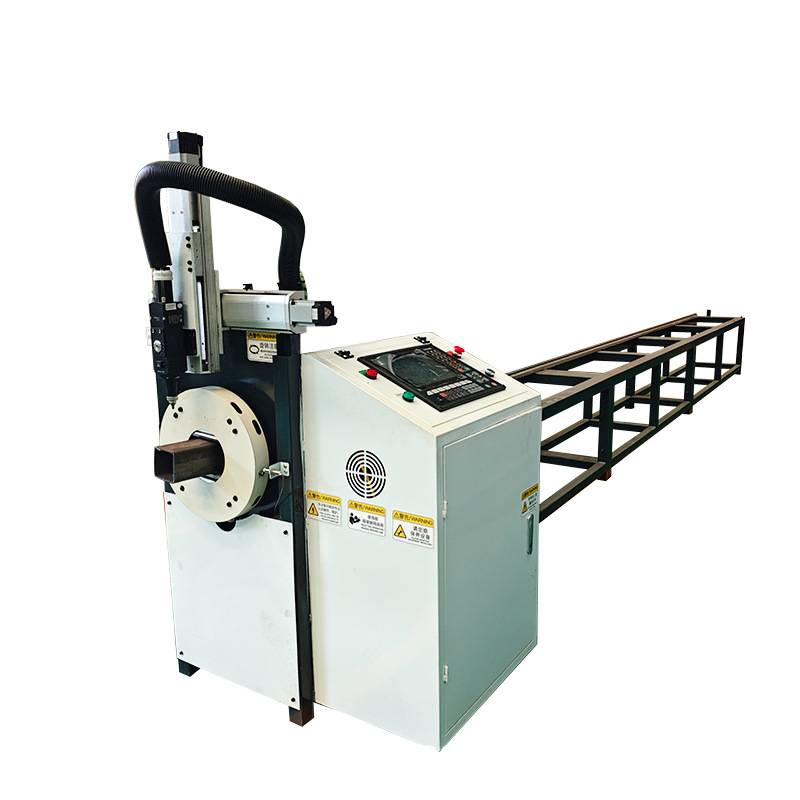
The introduction of the 12kW H-beam fiber laser cutting machine with a 5-axis beveling head has disrupted this traditional model. For Queretaro’s steel service centers, this represents a transition from “mechanized labor” to “intelligent automation.” In the context of stadium construction, where cantilevered roofs and intricate lattice girders are standard, the ability to process complex geometries on a single platform is not just an advantage; it is a necessity for staying competitive in the Bajío region’s aggressive market.
The Power of 12kW: Why Intensity Matters
In fiber laser technology, power is the primary driver of both thickness capacity and processing speed. A 12kW resonator provides a power density that allows for the high-speed sublimation of carbon steel, which is the backbone of H-beams used in stadium construction (often A36 or A572 Grade 50).
With 12,000 watts, the laser can maintain a stable “keyhole” during the cutting process, even through the thickest flanges of an H-beam. This power level ensures that the Heat Affected Zone (HAZ) is kept to an absolute minimum. In structural engineering, a small HAZ is critical because it preserves the metallurgical integrity of the steel, ensuring that the beam maintains its rated load-bearing capacity. For Queretaro-based projects, where seismic considerations are often integrated into structural designs, maintaining the original ductile properties of the steel through high-speed, low-heat laser cutting is a significant safety benefit.
Mastering the ±45° Bevel: The 5-Axis Revolution
The most transformative feature of the modern H-beam laser is the ±45° bevel cutting head. In stadium construction, beams rarely meet at simple 90-degree angles. Architects often design sweeping, organic curves and complex angular junctions to support massive roof spans and spectator tiers.
A standard 2D laser can only cut perpendicular to the surface. However, the 5-axis head allows the laser nozzle to tilt up to 45 degrees in any direction. This capability is essential for creating:
1. **V-Groove and Y-Groove Joints:** Essential for full-penetration welds required in high-stress structural nodes.
2. **Saddle Cuts:** Allowing H-beams to intersect with circular hollow sections (CHS) or other I-beams at various angles.
3. **Countersunk Holes:** Facilitating flush-bolt mounting for aesthetic or aerodynamic surfaces.
By performing these bevels during the initial cutting phase, the machine produces a “weld-ready” edge. In the high-volume fabrication shops of Queretaro, this eliminates hundreds of man-hours previously spent on manual edge preparation with angle grinders, which are not only slow but prone to human error.
Precision Engineering for Stadium Structures
Stadiums are unique engineering challenges. They require long-span beams that must support dynamic loads—thousands of cheering fans moving in unison—and environmental loads like wind and rain. The H-beams used in these structures must be fabricated to “zero-tolerance” standards to ensure that the onsite assembly fits perfectly.
The 12kW laser machine utilizes advanced 3D nesting software that integrates directly with Tekla or Revit BIM (Building Information Modeling) files. This digital-to-physical workflow ensures that every bolt hole, notch, and bevel on an H-beam is placed with a precision of ±0.05mm. When these beams arrive at a construction site in Queretaro or elsewhere in Mexico, they fit together like a precision-made watch, drastically reducing the need for expensive onsite modifications or “force-fitting.”
Furthermore, the laser’s ability to etch part numbers and alignment marks directly onto the steel surface facilitates rapid sorting and assembly. For a stadium project involving thousands of unique structural members, this logistical clarity is invaluable.
Technological Synergy: 3-Chuck Systems and Material Handling
Cutting an H-beam is significantly more complex than cutting a flat sheet. The machine must rotate and move a heavy, multi-ton profile while maintaining the focal point of the laser. Modern 12kW machines in the Queretaro market typically employ a three-chuck or even four-chuck system.
This “zero-tailing” technology allows the machine to support the beam throughout its entire length, preventing “sag” that could distort the cutting accuracy. The chucks work in sync to rotate the H-beam, allowing the laser to access the top flange, the bottom flange, and the web in a single continuous program. This stability is particularly crucial when executing ±45° bevels on the edges of thick flanges, where even a millimeter of vibration could result in a failed weld inspection later.
The Queretaro Advantage: Economic and Environmental Impact
Beyond the technical specifications, the deployment of 12kW laser technology in Queretaro offers a compelling economic case. The high efficiency of fiber lasers—which convert electrical energy into light with roughly 30-40% efficiency compared to the 10% of older CO2 lasers—means lower operational costs.
In a region where energy costs are a significant factor for industrial competitiveness, the speed of the 12kW laser allows shops to produce more tons of fabricated steel per kilowatt-hour. Additionally, the precision of the laser reduces scrap rates. In large-scale stadium projects, where thousands of tons of steel are used, a 3% to 5% reduction in material waste translates into millions of pesos in savings.
Environmental sustainability is also becoming a priority for Mexican infrastructure. Laser cutting is a “cleaner” process than plasma or oxy-fuel cutting. It produces less smoke and dust, and because it is a mechanical-free process (no drill bits or saw blades), there is a significant reduction in consumable waste.
Meeting International Standards (AWS and AISC)
For Queretaro fabricators aiming to export components or work on international contracts, meeting the standards of the American Welding Society (AWS) and the American Institute of Steel Construction (AISC) is mandatory. The 12kW fiber laser excels here. The clean, dross-free edges produced by the laser meet the stringent surface roughness requirements for structural welds without further processing.
The ±45° beveling capability is particularly important for achieving the “Qualified Weld Procedures” required for stadium trusses. The consistency of the laser-cut bevel ensures that the weld gap remains uniform throughout the joint, leading to higher quality welds that pass ultrasonic and X-ray inspections on the first pass.
Conclusion: Building the Future of Mexico’s Infrastructure
The 12kW H-beam fiber laser cutting machine is more than just a tool; it is a catalyst for architectural possibility. In the hands of Queretaro’s skilled engineers, this technology is transforming the skyline of Mexico. By mastering the complexities of ±45° beveling and the raw power of 12,000 watts, fabricators are now able to build stadium structures that are safer, more complex, and more cost-effective than ever before.
As we look toward the future of structural steel, the marriage of high-power photonics and multi-axis robotics will continue to define the limits of what can be built. For Queretaro, being at the forefront of this technological adoption ensures its place as a leader in the global construction and manufacturing arena, one precision-cut beam at a time.