
The Evolution of Metal Fabrication: 12kW Fiber laser cutting in Monterrey
Monterrey, Nuevo León, has long been recognized as the industrial heart of Mexico. As the city continues to evolve into a global hub for “nearshoring” and advanced manufacturing, the demand for high-precision, high-speed production tools has skyrocketed. Among these technologies, the 12kW fiber laser cutting machine stands out as a transformative force, particularly for industries dealing with galvanized steel. This guide explores the technical intricacies, economic advantages, and operational best practices for deploying 12,000-watt laser systems in the Monterrey industrial corridor.
The transition from traditional CO2 lasers or lower-wattage fiber systems to 12kW power levels represents more than just a speed upgrade; it is a fundamental shift in material processing capabilities. For Monterrey’s automotive, HVAC, and construction sectors, this technology provides the throughput necessary to compete on a global scale while maintaining the rigorous quality standards required by international partners.
Understanding the 12kW Fiber Laser Advantage
A fiber laser cutting machine utilizes an optical fiber doped with rare-earth elements as its gain medium. At the 12kW threshold, the photon density is sufficient to vaporize thick metals almost instantly. Unlike CO2 lasers, which rely on mirrors and gas mixtures, fiber lasers deliver the beam through a flexible cable, resulting in higher energy efficiency and a significantly smaller footprint. In the context of laser cutting, “power” translates directly to “feed rate” and “maximum thickness capacity.”
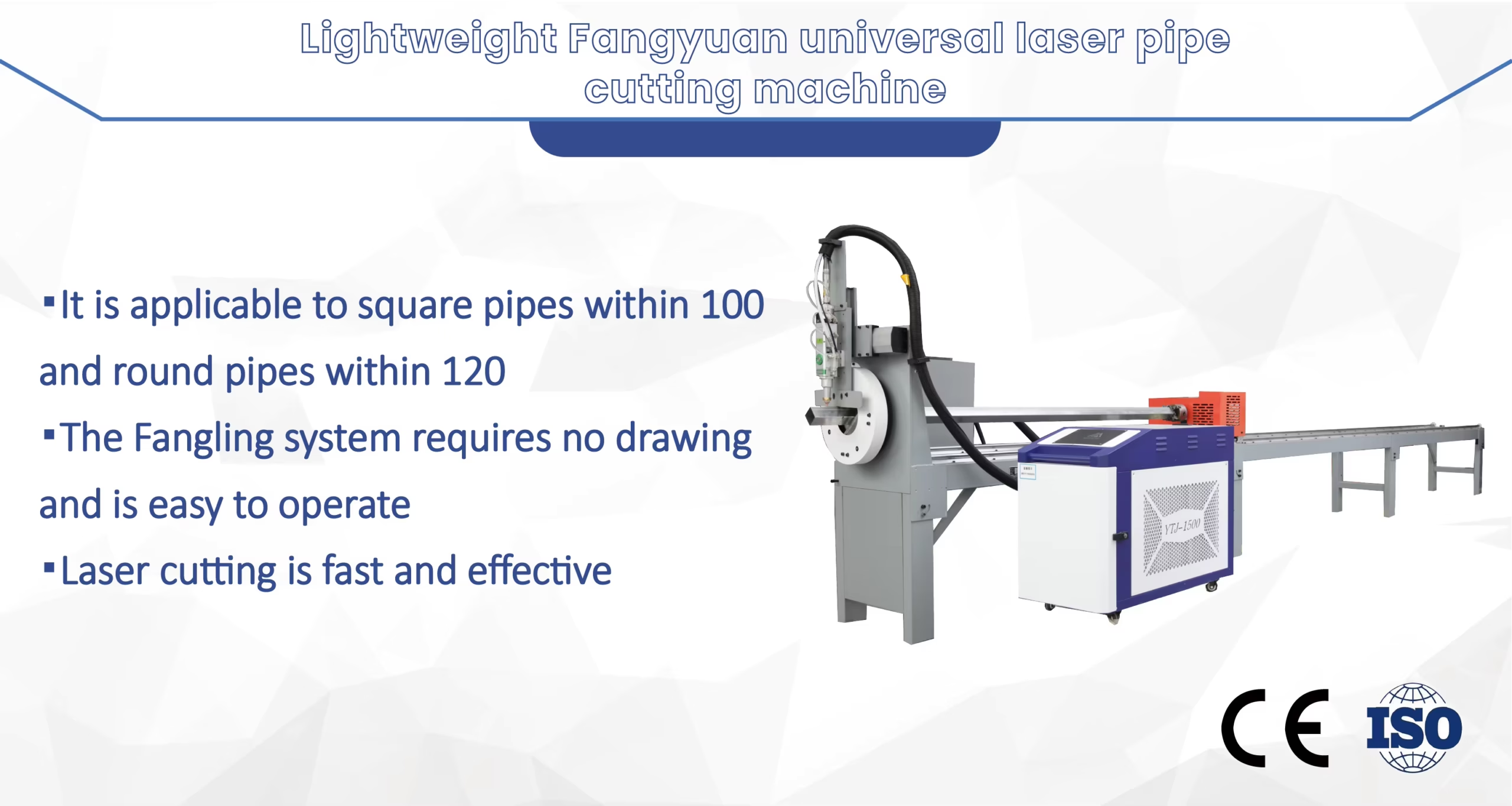
For fabricators in Monterrey, the 12kW system offers a “sweet spot” in the price-to-performance ratio. It provides enough energy to process 1-inch (25mm) carbon steel with ease, while simultaneously offering blistering speeds on thinner gauges of galvanized steel. This versatility is crucial for job shops that must pivot between different client requirements daily.
Processing Galvanized Steel: Technical Challenges and Solutions
Galvanized steel is a staple in the Monterrey manufacturing scene, used extensively in air ducting, automotive frames, and outdoor infrastructure. However, laser cutting galvanized material presents unique challenges due to the zinc coating. Zinc has a significantly lower melting point (approx. 419°C) than the underlying steel (approx. 1370°C). This disparity can lead to several issues during the laser cutting process:
1. Zinc Vaporization and “Popping”
As the laser beam interacts with the material, the zinc coating vaporizes before the steel melts. This gas can expand rapidly, causing “popping” sounds and potentially blowing molten steel back into the laser nozzle. A 12kW fiber laser cutting machine mitigates this through sheer speed. By moving the beam faster, the duration of heat exposure is minimized, allowing for a cleaner separation of the base metal before the zinc can interfere with the melt pool.
2. Dross Formation and Edge Quality
Dross, or the solidified metal residue on the bottom of a cut, is a common problem with galvanized steel. The high power of a 12kW source allows for the use of high-pressure nitrogen as an assist gas. Nitrogen acts as a mechanical force to blow away the molten material before it can bond with the zinc-rich slag. This results in a “burr-free” edge that requires no secondary grinding—a critical factor for Monterrey’s high-volume production lines.
3. Fume Management
Vaporized zinc creates toxic fumes (zinc oxide). When operating a high-power laser cutting system, integrated dust extraction and filtration systems are non-negotiable. Modern 12kW machines are equipped with zoned extraction tables that focus suction directly beneath the cutting head, ensuring a safe environment for operators in Monterrey’s large-scale facilities.
The Strategic Importance of Monterrey’s Industrial Ecosystem
Monterrey’s proximity to the United States border and its robust infrastructure make it an ideal location for high-tech fabrication. The implementation of 12kW laser cutting technology aligns with the region’s move toward Industry 4.0. With the arrival of major electric vehicle (EV) manufacturers and their suppliers, the need for precision-cut galvanized components has never been higher.

The local labor force in Monterrey is highly skilled, yet the automation provided by a 12kW fiber laser allows companies to scale production without a linear increase in headcount. These machines often feature automatic nozzle changers, shuttle tables, and advanced CNC interfaces (such as CypCut or Beckhoff), which reduce the margin for human error and maximize “beam-on” time.
Optimizing Assist Gas Selection
In the Monterrey market, the cost of consumables—specifically assist gases—is a major factor in the total cost of ownership. When laser cutting galvanized steel with a 12kW source, there are two primary options:
- Nitrogen: Best for maintaining the integrity of the zinc coating near the cut edge and ensuring a clean, oxide-free finish. This is essential if the parts are to be painted or welded later.
- Oxygen: While oxygen can increase cutting speeds on very thick carbon steel, it is generally avoided for thin-to-medium galvanized steel because it causes oxidation, which can lead to paint adhesion issues.
- Compressed Air: With a 12kW machine, high-pressure compressed air is becoming a popular, cost-effective alternative for galvanized steel. The high wattage compensates for the less efficient chemical reaction of air compared to pure oxygen, providing a fast and inexpensive cut.
Maintenance and Longevity of High-Power Systems
Operating a 12kW fiber laser cutting machine in the climate of Monterrey requires specific attention to maintenance. The region’s heat and occasional dust can impact sensitive optical components. To ensure the machine’s longevity, several protocols must be followed:
Chiller Calibration
A 12kW laser generates significant heat within the power source and the cutting head. A dual-circuit industrial chiller is required to maintain a precise temperature. In Monterrey’s summer months, ensuring the chiller is descaled and the coolant levels are optimal is vital to prevent thermal lensing, which can distort the laser beam and ruin the cut quality.
Optical Cleanliness
The protective window (cover glass) of the cutting head is the only barrier between the 12,000-watt beam and the harsh cutting environment. Even a microscopic speck of dust can absorb enough energy at 12kW to shatter the glass. Operators must be trained in “clean room” techniques when replacing consumables to prevent contamination of the internal optics.
Beam Path Alignment
While fiber lasers are much more stable than CO2 systems, the high energy density of a 12kW beam means that even a slight misalignment can cause the beam to strike the internal components of the cutting head. Regular “tape tests” and centering calibrations are mandatory to maintain the precision required for complex geometries in galvanized steel.
Conclusion: The Future of Fabrication in Monterrey
The 12kW fiber laser cutting machine is no longer a luxury; it is a necessity for Monterrey-based manufacturers who aim to lead in the North American market. Its ability to process galvanized steel with unprecedented speed and precision addresses the core requirements of modern industry: efficiency, quality, and cost-effectiveness.
By investing in high-power laser cutting technology, local businesses can reduce lead times, minimize waste, and offer superior products to their clients. As Monterrey continues to grow as a pillar of global manufacturing, the 12kW fiber laser will undoubtedly remain at the forefront of this industrial revolution, turning raw galvanized sheets into the components that build our modern world.
Key Takeaways for Monterrey Fabricators
When selecting a 12kW system, focus on the rigidity of the machine bed (to handle high-speed accelerations), the reputation of the laser source (IPG, Raycus, or nLight), and the availability of local technical support. In the fast-paced environment of Monterrey, downtime is the enemy, and a well-maintained 12kW fiber laser is the most powerful ally a fabricator can have.
















