
Engineering the Future of Vertical Transportation: The 12kW Fiber Laser Guide for Mexico City Elevator Manufacturers
As Mexico City continues its vertical expansion, the demand for high-performance elevators has reached unprecedented levels. For elevator factory owners and lead engineers, the transition from traditional CO2 lasers or mechanical punching to high-power fiber laser technology is no longer an option—it is a competitive necessity. The 12kW Fiber Laser Cutting Machine represents the pinnacle of industrial efficiency, specifically when processing the galvanized steel components that form the backbone of modern elevator cabins, doors, and structural frames.
This guide provides a deep technical analysis of why the 12kW fiber laser, supported by a plate-welded heavy-duty bed, is the optimal solution for the high-precision requirements of the elevator industry in the Mexican market.
Technical Advantage: The 12kW Power Benchmark
In the context of elevator manufacturing, material thickness typically ranges from 1.0mm for decorative cabin panels to 12mm+ for structural brackets and counterweight frames. A 12kW fiber laser source offers a “power reserve” that translates directly into edge quality and processing speed.
When cutting galvanized steel, the 12kW power density allows for a significantly higher feed rate compared to 6kW or 8kW alternatives. For a standard 2.0mm galvanized sheet, a 12kW machine can achieve cutting speeds exceeding 60 meters per minute. This high-speed processing minimizes the Heat Affected Zone (HAZ), which is critical for maintaining the integrity of the zinc coating near the cut edge, thereby preserving the material’s anti-corrosive properties.

The Foundation of Precision: Plate-welded Heavy Duty Bed
For a 12kW system, the structural integrity of the machine bed is the single most important factor in long-term accuracy. High-power cutting involves extreme accelerations (up to 1.5G or 2.0G) and rapid decelerations. A standard light-frame bed would succumb to harmonic vibrations and structural fatigue within months of high-intensity operation.
The Plate-welded Heavy Duty Bed is engineered using high-tensile carbon steel plates. The manufacturing process involves:
1. Stress-Relief Annealing: The bed undergoes high-temperature furnace treatment to eliminate internal stresses generated during welding. This ensures that the bed will not deform over a 10-to-20-year lifespan.
2. Honeycomb Internal Structure: The interior of the bed is reinforced with a plate-welded honeycomb lattice. This design provides a superior strength-to-weight ratio, effectively damping the vibrations generated by the high-speed motion of the gantry.
3. Precision Machining: The guide rail and rack mounting surfaces are processed by large-scale five-axis CNC milling centers in a single setup, ensuring parallelism and straightness within micron-level tolerances.
For engineers in Mexico City, where seismic activity and soil subsidence can affect factory floor stability, the mass and rigidity of a heavy-duty bed provide an essential buffer that maintains optical alignment and cutting precision regardless of external environmental factors.
Specialized Processing of Galvanized Steel
Galvanized steel presents a unique challenge: the zinc coating has a lower melting point than the steel substrate. During laser cutting, the zinc evaporates and can interfere with the laser beam or create “dross” (slag) on the underside of the cut.
The 12kW system overcomes this through several engineering features:
– High-Pressure Nitrogen Cutting: By using nitrogen as an auxiliary gas at high pressures, the laser “blows” the molten material out of the kerf before the zinc can interfere with the cut. The 12kW power ensures the material stays in a fully molten state during the high-speed transit.
– Specialized Nozzle Geometry: Modern 12kW heads utilize “cool-touch” or high-flow nozzles that stabilize the gas flow, preventing the turbulence that often causes edge burrs on galvanized sheets.
– Frequency and Pulse Modulation: The CNC system allows for fine-tuning the laser frequency. For elevator doors that require a perfect aesthetic finish, the 12kW source can be modulated to produce a “bright surface” cut, eliminating the need for secondary grinding or polishing.
Elevator Component Precision and Tolerances
Elevator manufacturing demands strict adherence to safety and aesthetic standards. Components such as car sling assemblies and safety gear brackets require high dimensional accuracy for bolt-hole alignment.
With a 12kW fiber laser mounted on a heavy-duty bed, manufacturers can achieve:
– Positioning Accuracy: ±0.03mm
– Repositioning Accuracy: ±0.02mm
– Minimum Kerf Width: 0.1mm to 0.15mm
This level of precision ensures that interlocking panels for elevator cabins fit perfectly without manual adjustment, significantly reducing assembly time on the factory floor. Furthermore, the ability to cut complex geometries—such as ventilation slots and decorative patterns in stainless steel or galvanized cabin walls—allows designers more creative freedom without increasing production costs.
Optimizing Operations for the Mexico City Market
Operating high-power industrial machinery in the Mexico City metropolitan area requires consideration of local variables.
1. Altitude and Air Density: At 2,240 meters above sea level, air density is lower. This affects the cooling efficiency of traditional air-cooled components. The 12kW fiber laser utilizes a dual-circuit high-capacity water chiller specifically rated for the local climate, ensuring the laser source and the cutting head remain at a constant 22°C.
2. Power Grid Stability: High-power lasers are sensitive to voltage fluctuations. A professional 12kW installation includes a high-precision industrial voltage stabilizer and a dedicated grounding system to protect the sophisticated EtherCAT-based control electronics.
3. Local Technical Support: For elevator factories, downtime is catastrophic. Investing in a machine with a plate-welded bed ensures mechanical reliability, but the choice of a 12kW system should also be backed by local service engineers who understand the specific gas purity levels available in the Mexican market.
Data-Driven ROI: Why 12kW Makes Financial Sense
While the initial investment for a 12kW machine is higher than a 3kW or 6kW model, the Return on Investment (ROI) is accelerated by three primary factors:
– Labor Cost Reduction: Because the 12kW cuts significantly faster and produces a finished edge that requires no post-processing (grinding/deburring), the labor hours per elevator unit are reduced by approximately 30-40%.
– Gas Efficiency: Although the 12kW uses higher pressure, the time spent per cut is drastically lower. Data shows that the gas consumption per meter is often lower on a 12kW machine than on a 6kW machine because the “beam-on” time is reduced.
– Material Utilization: Advanced nesting software paired with the precision of the fiber laser allows for tighter spacing between parts. In a high-volume elevator factory, a 2% improvement in material utilization can save tens of thousands of dollars annually in galvanized steel costs.
Safety and Environmental Standards
In the modern industrial landscape of Mexico City, environmental compliance is increasingly scrutinized. The 12kW fiber laser is a “green” technology compared to older methods. It features:
– High Electro-optical Conversion Efficiency: Fiber lasers convert over 35% of electrical energy into laser light, compared to less than 10% for CO2 lasers.
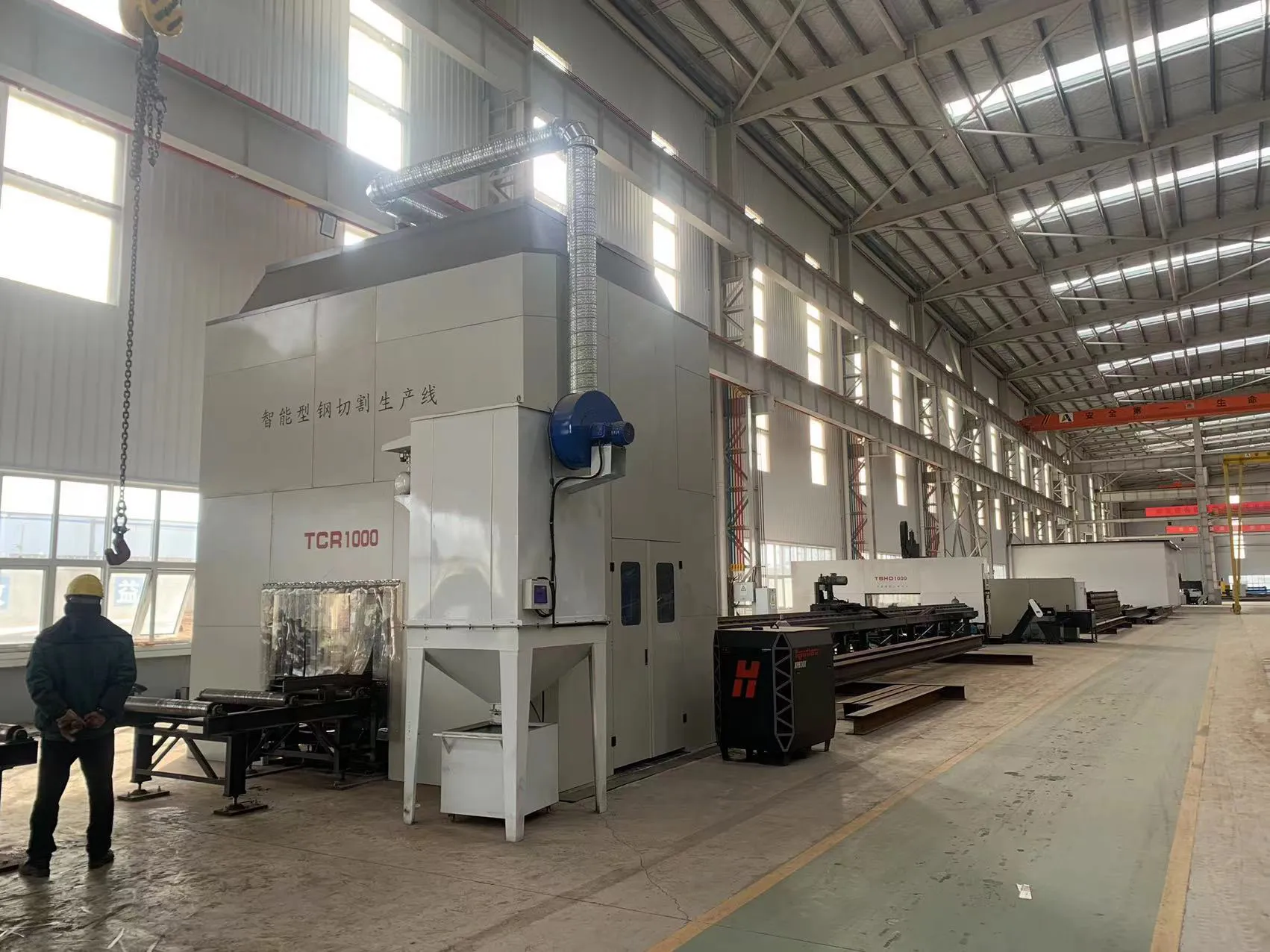
– Integrated Dust Extraction: Heavy-duty beds are equipped with multi-zone partitioned vacuum systems. These systems open only the suction vents directly under the cutting head, ensuring maximum removal of zinc fumes and metal dust, protecting the health of the operators and complying with local SEMARNAT regulations.
Conclusion
For the elevator industry in Mexico City, the 12kW Fiber Laser Cutting Machine is the ultimate tool for scaling production while maintaining the highest engineering standards. The combination of a Plate-welded Heavy Duty Bed and high-power fiber technology provides the stability, speed, and precision necessary to process galvanized steel with zero defects.
By investing in this technology, factory owners are not just purchasing a machine; they are upgrading their entire production workflow. The result is a more durable product, a faster time-to-market, and a significant competitive advantage in the rapidly growing Latin American infrastructure sector. Engineers can rest assured that the mechanical foundation—the heavy-duty bed—will provide the consistent accuracy required for the safety-critical components that define the elevator industry.
















