
The Strategic Integration of 12kW Fiber Laser Technology in Guadalajara’s Kitchenware Industry
The manufacturing landscape in Guadalajara, Jalisco, has undergone a significant transformation, evolving into a critical hub for high-end appliance and kitchenware production in North America. For factory owners and lead engineers, the transition from traditional CO2 lasers or mechanical stamping to high-power fiber laser systems is no longer a luxury but a competitive necessity. The 12kW Fiber Laser Cutting Machine represents the current “gold standard” for processing galvanized steel—a material ubiquitous in the production of industrial kitchen cabinets, ventilation systems, and refrigeration units.
This engineering guide examines the technical architecture of the 12kW system, focusing specifically on the structural advantages of the tube-welded standard bed and the precision requirements for handling galvanized coatings without compromising metallurgical integrity.
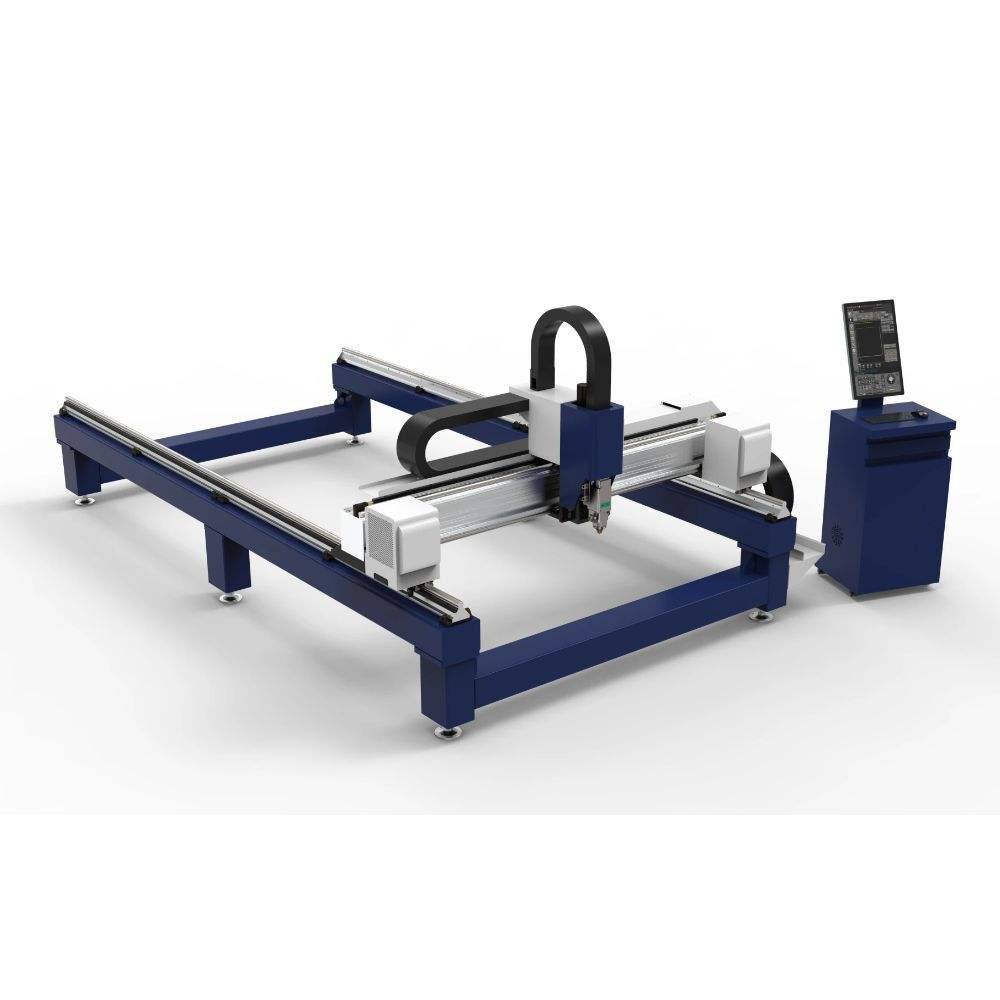
Engineering the Foundation: The Technical Superiority of the Tube-Welded Standard Bed
In high-power laser cutting, the stability of the machine bed is the primary determinant of long-term accuracy. A 12kW laser head moves at high accelerations (often exceeding 1.2G to 1.5G). Without a robust foundation, the resulting vibrations lead to “chatter marks” on the cutting edge and premature wear on the motion system.
The tube-welded standard bed is engineered using high-quality carbon steel structural tubes. Unlike lighter aluminum frames or thinner sheet-metal beds, the tube-welded structure undergoes a rigorous stress-relief process. This involves heating the entire frame to approximately 600°C in a specialized annealing furnace and cooling it at a controlled rate. This process eliminates internal stresses generated during welding, ensuring that the bed remains dimensionally stable for over 20 years of continuous operation.
From a data-driven perspective, the tube-welded bed offers a superior strength-to-weight ratio. The hollow rectangular sections of the tubes provide high torsional rigidity. For a Guadalajara-based kitchenware factory operating three shifts a day, this translates to a positioning accuracy of ±0.03mm and a repeatability of ±0.02mm. When cutting large batches of galvanized panels for industrial ovens, this structural integrity ensures that the first piece and the thousandth piece are identical in dimension.
Optimizing 12kW Power for Galvanized Steel Processing
Galvanized steel presents a unique challenge for laser cutting due to the zinc coating. Zinc has a significantly lower melting point (419°C) than the underlying steel (approx. 1500°C). During the cutting process, the zinc layer tends to vaporize and can interfere with the laser beam or create “dross” (hardened slag) on the bottom of the cut.
A 12kW fiber laser overcomes these challenges through sheer energy density and speed. At 12,000 watts, the laser can maintain a cutting speed that is significantly faster than the rate of heat conduction into the surrounding material. For 2mm galvanized steel, a 12kW system can achieve cutting speeds of 45 to 60 meters per minute depending on the gas configuration.
The high power allows for the use of high-pressure nitrogen (N2) or compressed air as the assist gas. Nitrogen prevents the oxidation of the steel edge, but more importantly, it provides a mechanical “flushing” action that ejects the molten zinc and steel before they can bond. This results in a clean, silver-bright edge that requires zero secondary grinding—a critical factor for kitchenware where aesthetics and hygiene are paramount.
Precision Cutting Dynamics: Achieving Micro-Tolerance in Kitchenware
In the production of professional kitchenware, such as stainless and galvanized workstations or exhaust hoods, precision is required not just for the outer dimensions but for the intricate internal cutouts, hinge holes, and interlocking tabs. The 12kW system utilizes a specialized Boci or Precitec auto-focus cutting head, which adjusts the focal point in real-time based on the material thickness and surface irregularities.
Data indicates that 12kW systems reduce the Heat Affected Zone (HAZ) by nearly 40% compared to 4kW or 6kW systems when cutting thin-to-medium gauge galvanized sheets. A smaller HAZ means the protective zinc layer remains intact closer to the cut edge, significantly improving the corrosion resistance of the final product. This is a vital selling point for Guadalajara manufacturers exporting to coastal regions where humidity and salt air are prevalent.
Furthermore, the integration of high-precision rack and pinion systems (typically YYC or Atlanta brands) paired with Japanese Yaskawa or Fuji servo motors allows the 12kW machine to execute complex geometries with a kerf width as narrow as 0.1mm. This level of detail allows engineers to design tighter nesting patterns, reducing material waste by up to 15%—a direct boost to the factory’s bottom line.

Operational Efficiency and Gas Management in the Guadalajara Market
For factory owners in Jalisco, the operational cost of a 12kW machine is often a concern. However, a data-driven ROI analysis shows that the increased throughput of a 12kW system lowers the “cost per part” significantly. While the initial investment is higher, the machine’s ability to process 3x the volume of a 4kW machine means that the overhead (labor, factory floor space, and electricity) is amortized over a much larger output.
A critical component of this efficiency is the gas management system. When cutting galvanized steel, gas consumption is the largest variable cost. Modern 12kW machines are equipped with proportional valves and digital gas control. This allows the software to automatically adjust the gas pressure based on the cutting speed and path. For example, when the laser head slows down to negotiate a sharp corner in a kitchen drawer handle cutout, the gas pressure is reduced to prevent over-burning, then instantly ramped up for a high-speed straight-line cut.
Additionally, many Guadalajara factories are now opting for high-pressure air compressors (15-20 bar) instead of liquid nitrogen. A 12kW laser has sufficient power to produce a high-quality cut on galvanized steel using filtered, dry compressed air. This can reduce gas costs by up to 70%, making the 12kW machine the most economical choice for high-volume kitchenware production.
Maintenance Protocols for High-Power Fiber Lasers
To maintain the high-precision standards required for engineering-grade kitchenware, a strict maintenance protocol must be followed. The 12kW fiber source is a solid-state component with a lifespan of approximately 100,000 hours, but the peripheral components require attention:
1. Optical Lens Cleaning: The protective window in the cutting head must be inspected daily. Even a microscopic speck of dust can absorb 12kW of energy, leading to thermal lens effects or catastrophic failure of the optic.
2. Bed Calibration: Every six months, the tube-welded bed should be checked for levelness. Guadalajara’s seismic activity, though generally mild, can necessitate minor recalibrations to maintain sub-millimeter precision.
3. Chillers: The 12kW source generates significant heat. The dual-circuit water chiller must be maintained with deionized water and biocide to prevent scaling in the laser source’s cooling channels.
Conclusion: The Future of Kitchenware Manufacturing in Jalisco
The 12kW fiber laser cutting machine is more than just a cutting tool; it is a comprehensive solution for the modern kitchenware factory. By combining the structural rigidity of a tube-welded standard bed with the high-velocity processing capabilities of a 12,000-watt source, manufacturers in Guadalajara can achieve unprecedented levels of productivity and precision.
For the engineer, it provides the freedom to design complex, interlocking galvanized steel components that assemble perfectly without manual rework. For the owner, it provides a scalable platform that reduces waste, lowers the cost per part, and ensures the factory remains at the forefront of the Mexican manufacturing sector. As the demand for high-quality, durable kitchenware continues to grow, the 12kW fiber laser stands as the essential investment for those looking to dominate the market.
















