The Evolution of 12kW Fiber laser cutting in Toluca’s Industrial Sector
The industrial landscape of Toluca, State of Mexico, has long been a cornerstone of the nation’s manufacturing prowess. As a hub for automotive, aerospace, and electrical engineering, the demand for precision metal fabrication has never been higher. Among the technological advancements driving this sector forward, the 12kW fiber laser cutting machine stands out as a transformative tool. This high-power system offers unparalleled speed and precision, particularly when processing non-ferrous metals like brass, which have historically presented significant challenges for traditional thermal cutting methods.
For manufacturers in Toluca, transitioning to 12kW fiber technology is not merely an upgrade in power; it is a strategic shift toward high-efficiency production. The ability to process thick materials with high edge quality while maintaining rapid throughput allows local workshops to compete on a global scale. This guide explores the technical intricacies of utilizing a 12kW fiber laser for brass fabrication and why this specific power level is the “sweet spot” for Toluca’s diverse industrial requirements.
Understanding the 12kW Fiber Laser Advantage
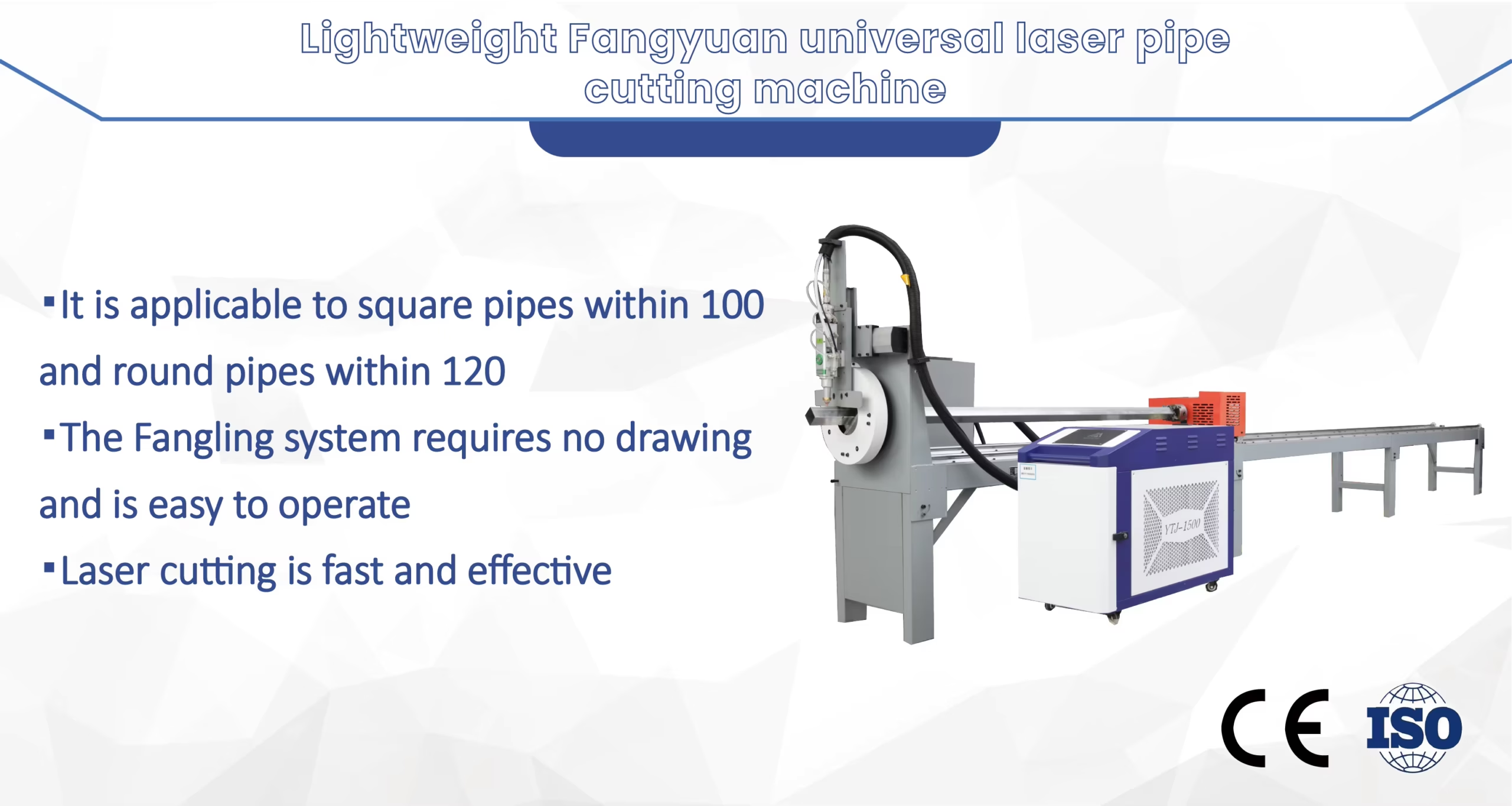
A fiber laser operates by generating a laser beam through a series of laser diodes, which is then amplified in specially doped optical fibers. At a 12kW power rating, the energy density at the focal point is immense. This allows the laser cutting process to transition from a simple melt-and-blow operation to a highly controlled evaporation and expulsion phase, even in materials with high thermal conductivity.
One of the primary advantages of the 12kW system is its wavelength. Operating at approximately 1.06 microns, the fiber laser beam is absorbed much more efficiently by metals—especially yellow metals like brass—compared to the 10.6-micron wavelength of older CO2 lasers. This increased absorption rate translates directly into faster cutting speeds and a reduced heat-affected zone (HAZ), ensuring the structural integrity of the brass components is maintained.
Technical Challenges of Laser Cutting Brass
Brass is an alloy of copper and zinc, known for its excellent electrical conductivity, corrosion resistance, and aesthetic appeal. However, from a laser cutting perspective, it is classified as a “highly reflective” material. In the early days of laser technology, reflecting beams could travel back through the delivery optics and destroy the laser source. Modern 12kW fiber lasers are equipped with advanced back-reflection protection systems, making the processing of brass safe and reliable.
Overcoming Reflectivity with Power Density
The 12kW power threshold is significant because it provides the necessary “punch” to overcome the initial reflectivity of brass. When the laser first hits the surface of a brass plate, a portion of the energy is reflected. However, with 12,000 watts of power concentrated into a tiny spot, the material reaches its melting point almost instantaneously. Once the surface is breached and a “keyhole” is formed, the absorption rate increases dramatically, allowing for a stable and continuous laser cutting process.
The Role of Auxiliary Gases
In the context of Toluca’s manufacturing environment, choosing the right auxiliary gas is critical for brass. While oxygen can be used to increase cutting speed through an exothermic reaction, it often leaves a darkened, oxidized edge that requires secondary cleaning. For the high-precision requirements of the electronics and decorative industries in Toluca, nitrogen is the preferred choice. Nitrogen acts as a shielding gas, blowing away the molten brass before it can react with atmospheric oxygen, resulting in a bright, clean, and burr-free edge that is ready for assembly or plating.

Optimizing 12kW Laser Cutting for Toluca’s High-Altitude Environment
Toluca sits at an elevation of approximately 2,660 meters (8,730 feet) above sea level. For engineering professionals, this altitude introduces specific variables that must be accounted for when operating high-power laser cutting machinery. The lower atmospheric pressure and thinner air can affect the cooling efficiency of the chiller systems and the flow dynamics of the assist gases.
Chiller Performance and Thermal Management
A 12kW fiber laser generates a substantial amount of heat within the resonator and the cutting head. In Toluca’s thinner air, traditional air-cooled components may not dissipate heat as effectively as they would at sea level. It is essential to ensure that the water chiller is rated for high-altitude operation, with oversized heat exchangers if necessary. Maintaining a stable temperature for the optical path is vital; even a minor thermal drift can cause the focal point to shift, leading to inconsistent cuts in thick brass plates.
Gas Pressure and Flow Dynamics
The density of the ambient air affects the behavior of the nitrogen or oxygen jet as it exits the nozzle. Operators in Toluca may find that they need to slightly increase their gas pressures compared to standard sea-level parameters to achieve the same kinetic energy required to clear the melt pool. Precision calibration of the nozzle height and centering becomes even more critical to ensure the gas stream remains laminar and efficient.
Applications of Brass Laser Cutting in Toluca’s Industries
The versatility of the 12kW fiber laser opens up a wide range of applications across Toluca’s industrial parks. Brass is a staple material in several key sectors, each with its own set of quality standards.
Automotive and Electrical Components
Toluca is home to numerous automotive OEMs and Tier 1 suppliers. Brass is frequently used for terminals, connectors, and decorative interior trim. The 12kW laser cutting machine allows for the rapid production of these parts with tolerances as tight as +/- 0.05mm. The ability to cut thin-gauge brass shim stock alongside thick busbars on the same machine provides the flexibility needed for just-in-time manufacturing cycles.
Architectural and Decorative Hardware
Mexico has a rich tradition of decorative metalwork. In Toluca, modern architectural firms utilize brass for high-end signage, furniture inlays, and custom hardware. The 12kW fiber laser excels here by producing intricate geometries that would be impossible with mechanical shearing or CNC milling. The high power allows for “fly-cutting” techniques on thinner brass sheets, where the laser moves at incredible speeds to create perforated patterns or complex filigrees without distorting the material.
Aerospace and Precision Engineering
As the aerospace sector grows in the State of Mexico, the need for specialized brass alloys for bushings and aerospace-grade connectors increases. These materials often contain small amounts of other elements to improve strength, which can alter their melting points. The programmable parameters of a 12kW laser cutting system allow engineers to fine-tune the frequency, pulse width, and power output to accommodate these specialized alloys, ensuring a consistent kerf width and minimal thermal distortion.
Best Practices for Maintaining a 12kW Fiber Laser
Investing in a 12kW fiber laser cutting machine is a significant capital expenditure. To ensure a high return on investment (ROI) and a long service life in an industrial setting like Toluca, a rigorous maintenance schedule is mandatory.
Optical Cleanliness
The most critical component of any fiber laser is the cutting head optics. Even a microscopic dust particle on the protective window can absorb the 12kW energy, heat up, and shatter the lens. In Toluca’s industrial zones, where dust from neighboring construction or manufacturing can be an issue, maintaining a clean-room environment for lens changes is essential. Using high-purity cleaning agents and lint-free swabs is a non-negotiable part of daily operations.
Beam Path Alignment
While fiber lasers do not require the complex mirror alignments of CO2 lasers, the centering of the beam through the nozzle is paramount. A beam that is slightly off-center will result in an asymmetrical gas flow, causing dross to adhere to one side of the brass cut. Regular “tape tests” and automated nozzle calibration routines should be performed at the start of every shift.
Consumable Management
Laser cutting brass is demanding on nozzles. Because brass is soft and can sometimes “spatter” during the piercing process, copper nozzles can become contaminated. Operators should use chrome-plated or high-durability nozzles and inspect them frequently for wear. Using a “cool-cut” or oil-mist system during the pierce phase can help prevent molten brass from sticking to the nozzle, extending its lifespan and maintaining cut quality.
The Economic Impact of High-Power Laser Cutting
For a fabrication shop in Toluca, the move to 12kW isn’t just about technical capability; it’s about the bottom line. The speed increase when cutting brass is exponential compared to 4kW or 6kW systems. For example, a 12kW laser can cut 6mm brass several times faster than a 4kW machine, significantly reducing the “cost per part.”
Furthermore, the high power allows for “Nitrogen High-Pressure Cutting” on thicker sections of brass that previously required slow, expensive oxygen cutting or secondary machining. By eliminating these secondary processes—such as grinding off oxide layers or deburring—manufacturers can shorten lead times and increase their throughput, allowing them to take on more contracts and grow their business within the competitive Mexican market.
Conclusion
The integration of 12kW fiber laser cutting technology represents a major leap forward for the manufacturing community in Toluca. By mastering the nuances of brass fabrication—from managing reflectivity to optimizing gas flow in a high-altitude environment—local engineers can unlock new levels of productivity and precision. As the demand for high-quality metal components continues to rise in the automotive, electrical, and aerospace sectors, the 12kW fiber laser will remain an indispensable tool, driving innovation and economic growth in the heart of Mexico’s industrial corridor.