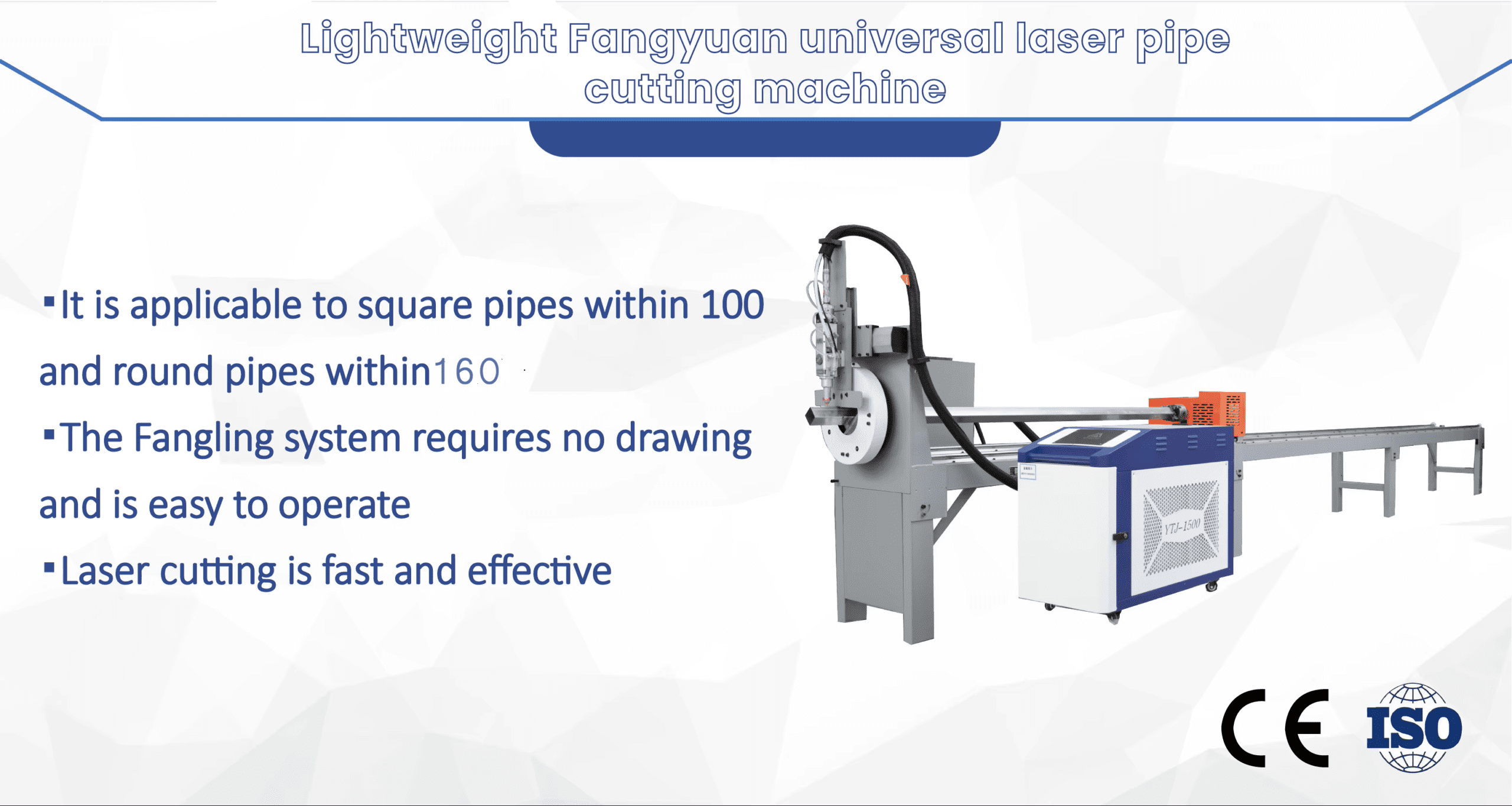
Technical Field Report: Implementation of 12kW CNC Beam and Channel Laser Systems in Silesian Wind Energy Infrastructure
1. Executive Summary: The Industrial Transition in Katowice
The industrial landscape of Katowice, historically the epicenter of Polish coal and heavy metallurgy, is currently undergoing a systemic pivot toward renewable energy manufacturing. This report analyzes the deployment of 12kW CNC Beam and Channel Laser Cutters equipped with ±45° beveling kinematics within the production of wind turbine towers. The integration of high-wattage fiber laser sources into structural steel processing represents a departure from traditional plasma and oxy-fuel methods, addressing the stringent tolerances required for Eurocode 3 compliance and EN 1090-2 execution classes.
2. 12kW Fiber Laser Source: Power Dynamics and Material Interaction
The heart of the system is the 12kW ytterbium-doped fiber laser source. In the context of wind turbine tower fabrication—which utilizes heavy-gauge S355 and S420 structural steel—the power density offered by a 12kW source is critical.
At 12kW, the laser achieves a high-intensity focal point that facilitates “high-speed melt-extraction” in thicknesses up to 30mm for structural beams and channels. Unlike lower-power alternatives, the 12kW source maintains a stable plasma plume, minimizing dross adhesion on the lower flange surfaces of I-beams and U-channels. The narrower Heat Affected Zone (HAZ) associated with the 12kW fiber source, compared to high-definition plasma, ensures that the metallurgical properties of the Silesian-sourced steel remain intact, preventing embrittlement at the cut edges—a failure point often scrutinized during wind tower vibration fatigue analysis.
3. Kinematics of ±45° Bevel Cutting in Heavy Structural Sections
The most significant technical advancement evaluated in this field report is the 5-axis 3D cutting head capable of ±45° beveling. In wind turbine tower construction, the internal structural components—such as cable tray supports, platform brackets, and reinforcement ribs—require complex weld preparations.
3.1. Elimination of Secondary Processing
Traditional beam processing requires a two-step approach: orthogonal cutting followed by manual or mechanical chamfering to create V, Y, or K-shaped grooves for welding. The ±45° CNC laser head executes these geometries in a single pass. By modulating the torch angle dynamically as it traverses the web and flanges of a channel, the system produces “ready-to-weld” edges. The precision of the CNC interpolation ensures that the root face and bevel angle are consistent within ±0.2mm, a tolerance unattainable by manual grinding or plasma beveling.
3.2. Geometrical Accuracy in 3D Space
Cutting a ±45° bevel on a curved or non-planar surface (such as the intersection of a channel and the cylindrical wall of a tower) involves complex parametric calculations. The CNC controller utilizes real-time compensation algorithms to adjust the focal length and gas pressure as the angle of incidence changes. This prevents the “over-burn” typical at acute angles and ensures uniform penetration for the subsequent Submerged Arc Welding (SAW) or Flux-Cored Arc Welding (FCAW) processes used in Katowice’s assembly halls.
4. Application Specifics: Wind Turbine Tower Components
Wind turbine towers are not merely hollow tubes; they are complex structural assemblies. The internal “tower internals” (Ladders, platforms, and structural stiffeners) are where the CNC Beam and Channel Laser Cutter provides the highest ROI.
4.1. Large Diameter Flange and Channel Integration
The 12kW system in Katowice is tasked with processing heavy C-channels that form the scaffolding for internal service platforms. These channels must contour precisely to the inner radius of the tower segments. Using the ±45° beveling capability, the laser can cut “fish-mouth” joints and complex miter cuts that allow the internal beams to be flush-mounted against the curved shell. This precision reduces the gap volume, significantly lowering the consumption of expensive welding consumables.
4.2. Bolt Hole Integrity and Precision
Wind tower sections are bolted using high-strength friction grip (HSFG) bolts. The 12kW laser allows for the cutting of bolt holes with a diameter-to-thickness ratio of 1:1 or better. The CNC precision ensures that hole cylindricity is maintained, which is essential for the load distribution across the tower’s flange segments. The high-speed piercing cycles of the 12kW source reduce the thermal input per hole, preventing the distortion of the beam’s web.
5. Synergy Between Laser Power and Automatic Structural Processing
The efficiency of the Katowice facility is driven not just by the laser source, but by the automation surrounding the CNC gantry.
5.1. Material Handling and Sensing
The system employs an automated material feeding line equipped with laser-based profiling sensors. Before the 12kW head begins the cut, the sensors map the actual dimensions of the beam or channel. Structural steel often suffers from mill tolerances (twists or bows). The CNC software adjusts the cutting path in real-time to compensate for these deviations, ensuring that the ±45° bevel remains centered relative to the actual geometry of the workpiece, rather than the theoretical CAD model.
5.2. Software and Nesting Optimization
The integration of specialized 3D nesting software allows Katowice engineers to maximize material utilization. For wind tower internals, where steel grades are high-cost, reducing scrap by 5-8% via intelligent nesting of beveled parts offers significant annual savings. The software calculates the “unfolded” geometry of the beveled channels, accounting for the kerf width of the 12kW beam, which is substantially narrower than that of a plasma torch.
6. Metallurgical and Quality Assurance Considerations
In the Silesian wind energy sector, quality assurance is non-negotiable. The 12kW laser cutting process was subjected to micrographic analysis to evaluate the impact on the S355J2+N steel substrates.
6.1. Heat Affected Zone (HAZ) Analysis
Results indicated that the HAZ of the 12kW fiber laser at the ±45° bevel face was 60% shallower than that produced by high-definition plasma. This reduction in the thermal footprint preserves the normalized grain structure of the steel, ensuring that the fatigue resistance of the wind tower is not compromised. Furthermore, the laser-cut edge exhibits lower surface roughness (Rz values), which improves the wetting characteristics of the molten weld pool during the assembly phase.
6.2. Gas Dynamics and Edge Oxidation
The use of high-pressure Nitrogen (N2) as a shielding gas during the 12kW cutting process produces an oxide-free surface. In the Katowice plant, this eliminates the need for acid pickling or shot blasting of the cut edges before welding. Even when cutting 25mm flanges at a 45° tilt, the gas flow dynamics within the specialized bevel nozzle maintain a laminar flow, ejecting the melt efficiently and preventing re-solidification on the cut face.
7. Efficiency Metrics and Throughput Evolution
Quantitative analysis of the 12kW system vs. legacy 6kW systems and plasma units reveals a stark contrast:
- Linear Speed: 12kW fiber laser processes 20mm structural web at speeds 2.5x faster than 6kW counterparts.
- Secondary Labor: The elimination of manual beveling reduced the man-hours per internal platform by 40%.
- Energy Consumption: While the peak power is higher, the “time-per-part” reduction leads to a 15% decrease in KWh per ton of processed steel.
8. Conclusion: The Future of Silesian Steel Processing
The implementation of the 12kW CNC Beam and Channel Laser Cutter with ±45° beveling technology in Katowice represents a paradigm shift in wind tower manufacturing. By solving the dual challenges of precision in heavy-gauge structural sections and the need for high-throughput weld preparation, this technology positions local manufacturers at the forefront of the European green energy supply chain. The synergy of high-wattage fiber lasers, 5-axis kinematics, and automated material compensation establishes a new benchmark for structural steel fabrication where efficiency and structural integrity are no longer mutually exclusive.
Field Report Prepared by:
Senior Lead Engineer, Structural Laser Systems Division
Katowice Technical Assessment Group













