The Dawn of High-Power Structural Laser Profiling
As a fiber laser expert, I have witnessed the rapid evolution of solid-state laser technology, but few applications are as transformative as the leap to 12kW for structural steel. Traditionally, the fabrication of offshore platform components—heavy beams and channels—relied on mechanical sawing, radial drilling, and manual plasma torching. These methods are not only labor-intensive but also introduce significant thermal distortion and mechanical stress.
The 12kW fiber laser resonator changes the equation. At this power level, the laser beam possesses the energy density required to pierce and profile thick-walled structural members (up to 25mm or more, depending on the alloy) with a microscopic Heat Affected Zone (HAZ). In the context of Mexico City’s burgeoning manufacturing sector, which serves as a primary supplier for Gulf of Mexico oil and gas projects, the 12kW threshold is the “sweet spot.” It offers the perfect balance between cutting speed and edge quality, ensuring that the structural steel used in offshore jackets, decks, and heliports maintains its crystalline integrity.
Anatomy of the 12kW CNC Beam and Channel Cutter
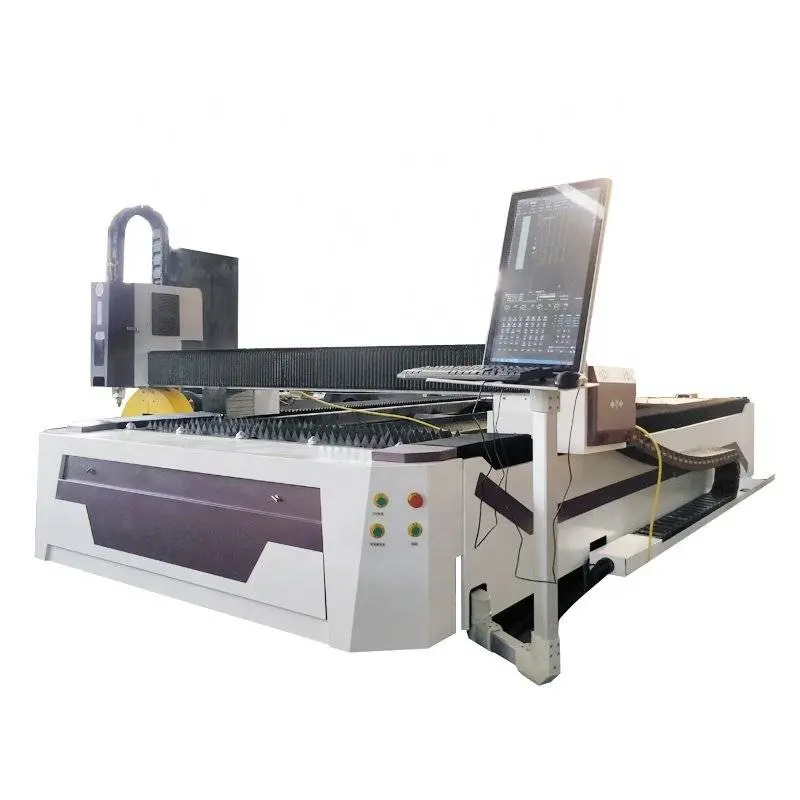
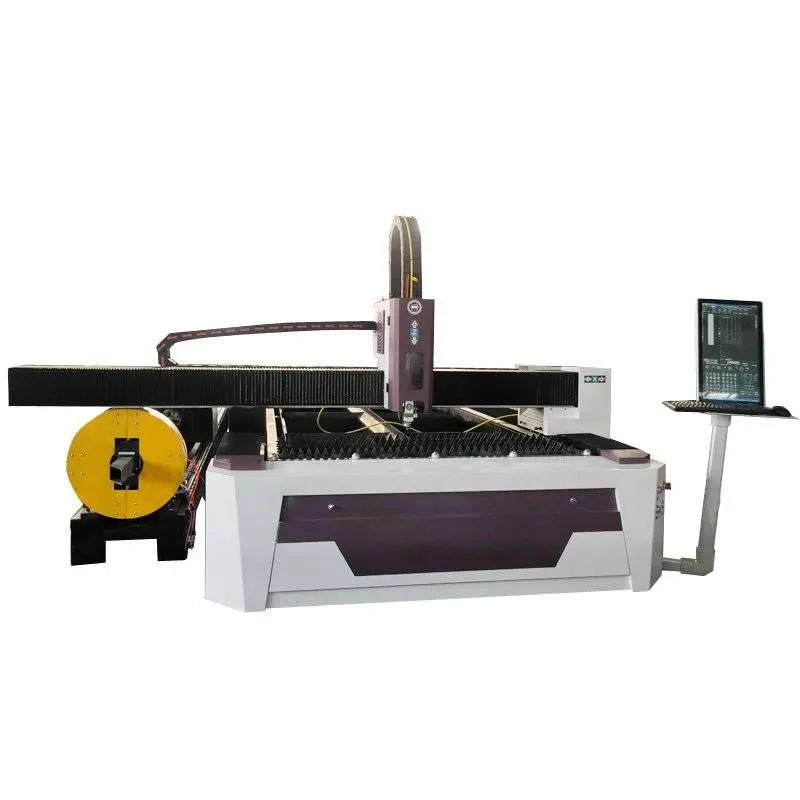
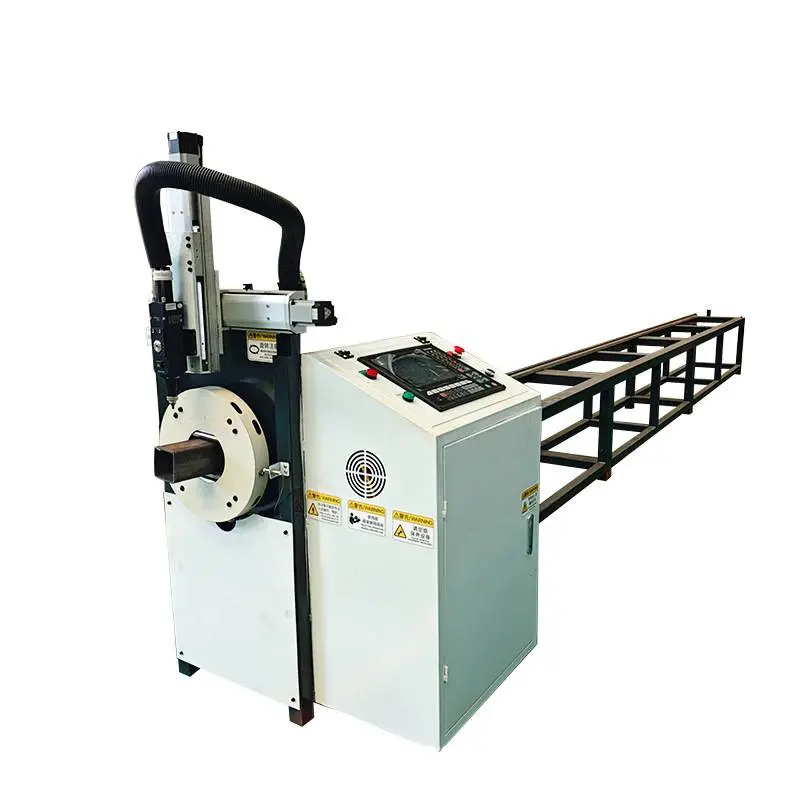
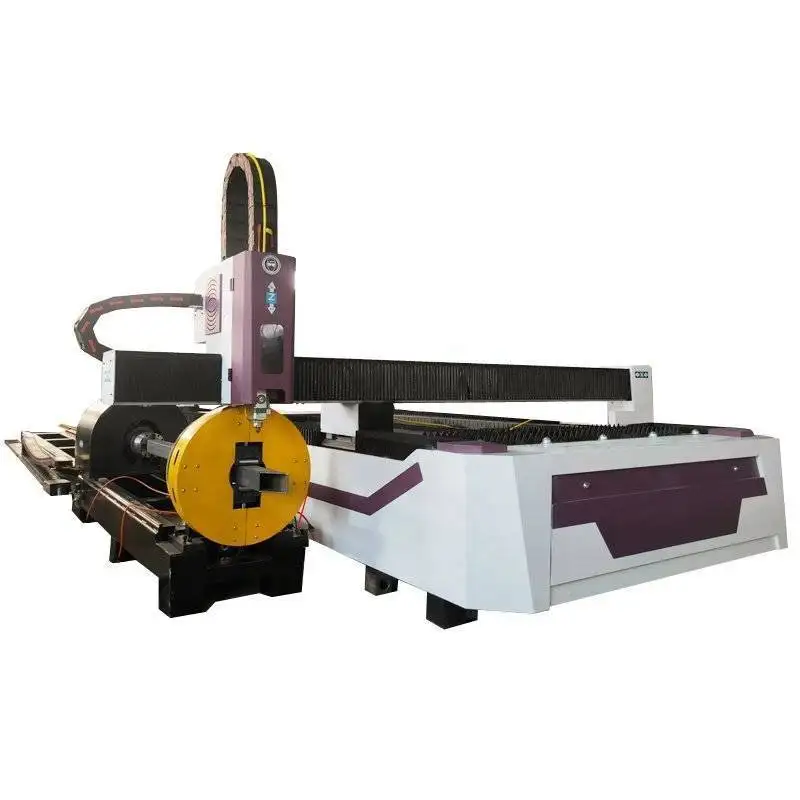
Unlike flat-bed lasers, a CNC Beam and Channel Laser Cutter is a multi-axis marvel. These machines utilize a series of synchronized chucks—often four—to rotate and feed long-form structural members through the cutting zone. The 12kW head is typically mounted on a 5-axis or 6-axis robotic arm or a specialized gantry that allows for beveling.
In offshore construction, beveling is non-negotiable. For a beam to be welded into a platform’s primary structure, it requires precise V, Y, or K-shaped edge preparations. A 12kW laser can execute these complex bevels in a single pass, eliminating the need for secondary grinding. The CNC control system manages the transition between the flange and the web of the beam, adjusting the focal point and gas pressure in real-time to account for the varying thickness and geometry of the structural member.
Zero-Waste Nesting: The Economics of Precision
In the offshore industry, material costs for high-grade marine steel (such as AH36 or DH36) are exorbitant. Traditional nesting for beams often results in “drops” or offcuts that are too short to be useful, leading to significant financial waste. Zero-waste nesting software, integrated into the CNC environment, utilizes sophisticated algorithms to “puzzle-piece” different parts onto a single length of raw material.
This software performs “common line cutting,” where two parts share a single cut path, effectively eliminating the scrap that would usually exist between them. Furthermore, the 12kW laser’s narrow kerf (the width of the cut) means that parts can be nested closer together than ever before. For a fabrication shop in Mexico City, reducing material waste by even 5-8% across a multi-ton offshore project can result in savings of hundreds of thousands of dollars. This efficiency is a cornerstone of modern sustainable manufacturing, aligning with global ESG (Environmental, Social, and Governance) goals.
Mexico City: A Strategic Hub for Offshore Fabrication
While the offshore platforms are located hundreds of miles away in the Gulf of Mexico, Mexico City serves as the intellectual and logistical nerve center for their construction. The city’s industrial zones, such as Vallejo or the surrounding State of Mexico, offer a concentrated pool of highly skilled engineers and technicians.
Installing a 12kW CNC beam cutter in Mexico City leverages the city’s robust infrastructure and its proximity to the country’s primary steel mills and transport arteries. Beams processed here can be precision-cut and then shipped via high-capacity rail or road to the shipyards in Veracruz or Tampico for final assembly. This centralized precision-cutting model ensures that the “heavy lifting” of geometry creation is done in a controlled, high-tech environment, leaving only the assembly and specialized welding for the coastal yards.
Technical Challenges and the 12kW Advantage
Cutting structural beams is vastly more complex than cutting flat sheets. Beams often have internal stresses from the rolling process that can cause them to “spring” or bow when cut. A 12kW laser system handles this through advanced sensing technology. Integrated laser scanners map the actual dimensions of the beam—which often deviate from the theoretical CAD model—and adjust the cutting path in milliseconds.
The 12kW power also allows for the use of nitrogen as a shielding gas on thinner sections of the beam to achieve a “bright cut” (oxidation-free). For the thicker sections prevalent in offshore platforms, high-pressure oxygen cutting is used. The 12kW resonator provides the “punch” needed to maintain a high feed rate even when navigating the thick radius where the flange meets the web, preventing the “dross” or slag buildup that can plague lower-powered systems.
Meeting Offshore Standards: AWS and Beyond
Offshore platforms operate in one of the most hostile environments on Earth. They are subject to constant salt spray, extreme pressure, and cyclic loading from waves. Therefore, the structural components must adhere to strict codes, such as those set by the American Welding Society (AWS D1.1).
The precision of a 12kW CNC laser ensures that bolt holes are perfectly circular and that notches for interlocking beams are tight-tolerance. This level of accuracy is vital for the “plug-and-play” assembly required on-site. When a beam arrives at a shipyard from a Mexico City facility, the fit-up must be perfect. If a hole is misaligned by even 2mm on a 20-meter deck section, it can cause catastrophic delays. The CNC laser’s ability to hold tolerances within +/- 0.1mm eliminates these field errors, drastically reducing the total cost of installation.
The Role of Fiber Laser Innovation in the Energy Transition
As Mexico continues to develop its energy sector—transitioning between traditional oil platforms and the emerging potential for offshore wind—the versatility of the 12kW CNC laser becomes even more apparent. Offshore wind turbine foundations (monopiles and jackets) require even more complex structural members than oil rigs.
The 12kW fiber laser is uniquely suited for the high-strength, low-alloy steels used in wind energy. The ability to switch between different beam profiles (from standard I-beams to complex custom-welded sections) via software allows Mexico City fabricators to pivot their production lines quickly. This flexibility is essential for staying competitive in a global market where the energy mix is rapidly shifting.
Sustainability and the Zero-Waste Mission
Sustainability is no longer a buzzword; it is a requirement for modern industrial contracts. The 12kW fiber laser is inherently more energy-efficient than older CO2 lasers or plasma systems. When combined with zero-waste nesting, the carbon footprint of each structural member is significantly reduced.
By minimizing the amount of raw steel that must be melted, rolled, and transported, and by reducing the electricity consumed per meter of cut, Mexico City’s laser facilities are setting a new standard for “green” heavy industry. Furthermore, the precision of the laser reduces the amount of welding wire and shielding gas needed during assembly, as the joints are cleaner and require less filler material to bridge gaps.
Concluding Thoughts from the Expert
The deployment of a 12kW CNC Beam and Channel Laser Cutter in Mexico City is not merely an upgrade in machinery; it is an upgrade in industrial philosophy. By embracing the high-power density of fiber lasers and the mathematical elegance of zero-waste nesting, Mexican fabricators are positioning themselves as leaders in the global offshore supply chain.
As we look to the future, the integration of AI-driven nesting and real-time monitoring will only further enhance the capabilities of these 12kW systems. For the offshore platforms of tomorrow—whether they are extracting hydrocarbons or harnessing the wind—the foundation of their strength will be laid in the precision-cutting facilities of Mexico City, where light is harnessed to shape the backbone of the ocean’s giants.