
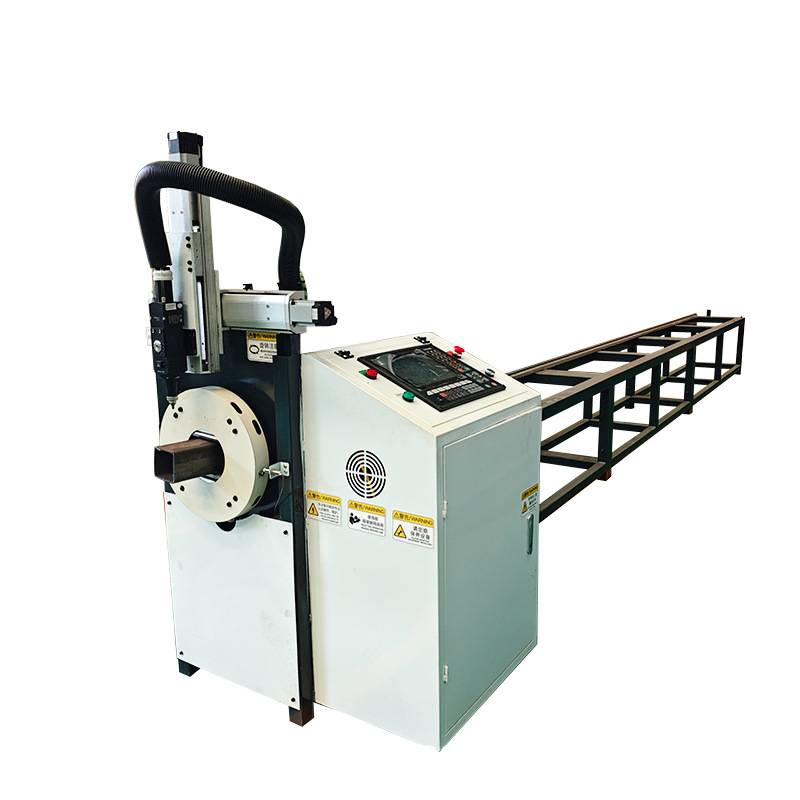
Field Report: Deployment of 12kW CNC Structural Laser Systems in Pune’s Mining Machinery Sector
1. Executive Summary: The Shift to High-Density Thermal Processing
In the industrial corridors of Pune—specifically the Chakan and Pimpri-Chinchwad belts—the fabrication of mining machinery has historically been bottlenecked by the mechanical limitations of traditional plasma cutting and manual layout processes. The introduction of the 12kW CNC Beam and Channel Laser Cutter, equipped with an Infinite Rotation 3D Head, represents a paradigm shift. This report analyzes the technical integration of high-wattage fiber laser sources into the production of heavy-duty structural components such as vibratory screen frames, crusher chassis, and conveyor galleries.
The objective of this deployment is to eliminate secondary machining operations. By leveraging a 12kW power density, manufacturers can achieve precise geometries in high-tensile structural steels (S355JR, S460QL) while maintaining a minimal Heat Affected Zone (HAZ), which is critical for equipment subjected to the extreme cyclic loading found in mining environments.
2. Technical Specifications of the 12kW Fiber Source in Heavy Sectioning
The selection of a 12kW fiber laser source is not merely for speed; it is dictated by the physics of “thick-section” piercing and cutting. In the mining sector, C-channels and H-beams often exceed 15mm in web and flange thickness.
A. Kerf Control and Piercing Dynamics:
At 12kW, the power density allows for “flash piercing,” reducing the time the beam dwells on a single coordinate. This prevents localized heat accumulation that typically leads to thermal deformation in thinner webs of large beams. The high-energy beam ensures a narrower kerf width (typically 0.3mm to 0.5mm), allowing for tighter tolerances in interlocking joints.
B. Assist Gas Dynamics:
For Pune’s fabrication standards, the use of High-Pressure Oxygen (O2) for mild steel and Nitrogen (N2) for stainless components is optimized through CNC-controlled proportional valves. At 12kW, the system maintains a stable laminar flow of gas through the nozzle, which is essential for clearing the high-viscosity slag generated during the processing of 25mm thick-walled rectangular hollow sections (RHS).
3. The Mechanics of the Infinite Rotation 3D Head
The core technological differentiator in this field report is the “Infinite Rotation” capability of the 3D laser head. Traditional 5-axis heads are often limited by cable-wrap constraints, requiring “unwinding” moves that break the continuous cut path.
A. N×360° Kinematics:
The infinite rotation head utilizes slip-ring technology or advanced fiber-routing geometries to allow the cutting head to rotate indefinitely around the C-axis. In mining machinery—where beams require complex bevels for weld preparation (V, X, and K-cuts)—this allows for a single, continuous motion. This continuity is vital for maintaining the integrity of the cut edge and ensuring that the bevel angle remains constant across the entire flange-to-web transition.
B. Compensating for Structural Irregularities:
Structural steel, unlike cold-rolled sheet metal, possesses inherent deviations (camber, sweep, and twist). The 3D head is integrated with high-speed capacitive sensors that perform real-time surface mapping. As the beam or channel moves through the chuck system, the 3D head adjusts its Z-axis and tilt angle instantaneously to maintain a constant focal point relative to the material surface, compensating for mill-standard tolerances in real-time.
4. Application Analysis: Mining Machinery Components
The mining sector in Pune produces heavy-duty equipment that must withstand abrasive environments and high vibrations. The 12kW 3D laser addresses three specific structural challenges:
A. Vibratory Screen Frames:
These units require precise bolt-hole patterns and circular cutouts in heavy C-channels. Manual drilling or plasma cutting often creates micro-fissures or hardened edges that lead to fatigue failure. The 12kW laser produces a finished edge with a surface roughness (Ra) that often eliminates the need for post-cut grinding, significantly increasing the fatigue life of the frame.
B. Complex Intersections in Lattice Girders:
Mining conveyors often utilize complex tube-to-beam intersections. The Infinite Rotation 3D head allows for the cutting of “fish-mouth” joints and complex saddle cuts on round and square pipes that must interface perfectly with H-beams. The precision of the 12kW cut ensures a “zero-gap” fit-up, reducing the volume of weld filler metal required and minimizing weld distortion.
C. Hardened Steel Processing:
Many mining components utilize abrasion-resistant (AR) steels. These materials are sensitive to heat. The speed of the 12kW laser minimizes the time-at-temperature, preserving the metallurgical properties of the AR steel near the cut edge more effectively than oxy-fuel or standard plasma methods.
5. Synergy Between 12kW Power and Automatic Structural Processing
The efficiency of the system is not solely dependent on the cutting head, but on the automation of the beam handling.
A. Four-Chuck Clamping Systems:
To handle the heavy mass of mining-grade beams (up to 300kg/m), a four-chuck system is utilized. This allows for “zero-tailing” processing. The 3D head can cut between the chucks, and the system can shift the beam dynamically to ensure the entire length is utilized, significantly reducing material waste—a critical factor given the rising cost of high-grade steel in the Indian market.
B. CAD/CAM Integration (Tekla/SolidWorks):
The software workflow is optimized for structural engineering. Direct ingestion of .STP or .IFC files allows the CNC to calculate the unfolded geometry of a beam. The 3D head’s path is automatically generated to include weld preps. In the Pune industrial context, this enables a “Design for Manufacturing” (DfM) approach where the assembly of a crusher chassis becomes a tab-and-slot exercise, drastically reducing the reliance on highly skilled fitters.
6. Comparative Efficiency: Laser vs. Traditional Methods
Field data gathered from Pune-based mining equipment manufacturers indicates the following performance metrics:
* Throughput: A 12kW laser processes a standard 12-meter H-beam with 20+ holes and 4 bevel cuts in approximately 8 minutes. Traditional methods (manual marking, mag-drilling, and oxy-fuel cutting) require upwards of 90 minutes.
* Precision: Dimensional accuracy is maintained within ±0.2mm over the length of the beam, compared to ±2.0mm in manual fabrication.
* Operational Cost: While the initial capital expenditure (CAPEX) for a 12kW system is higher, the reduction in labor-hours, secondary finishing, and the elimination of consumables (drill bits, grinding discs) results in a 40% reduction in per-part processing cost within 18 months of deployment.
7. Conclusion: The Future of Structural Steel in Pune
The integration of 12kW CNC Beam and Channel Laser cutters with Infinite Rotation 3D technology marks the end of the “approximate” era in heavy steel fabrication. For Pune’s mining machinery sector, this technology provides the necessary precision to compete on a global scale, ensuring that structural components are not only produced faster but are inherently more robust.
The ability of the Infinite Rotation head to handle complex 3D geometries in a single pass, combined with the raw power of a 12kW fiber source, allows for the realization of complex engineering designs that were previously discarded as “too difficult to fabricate.” As the industry moves toward more automated, modular mining equipment, the 3D laser will remain the foundational tool for structural integrity and manufacturing efficiency.
















