
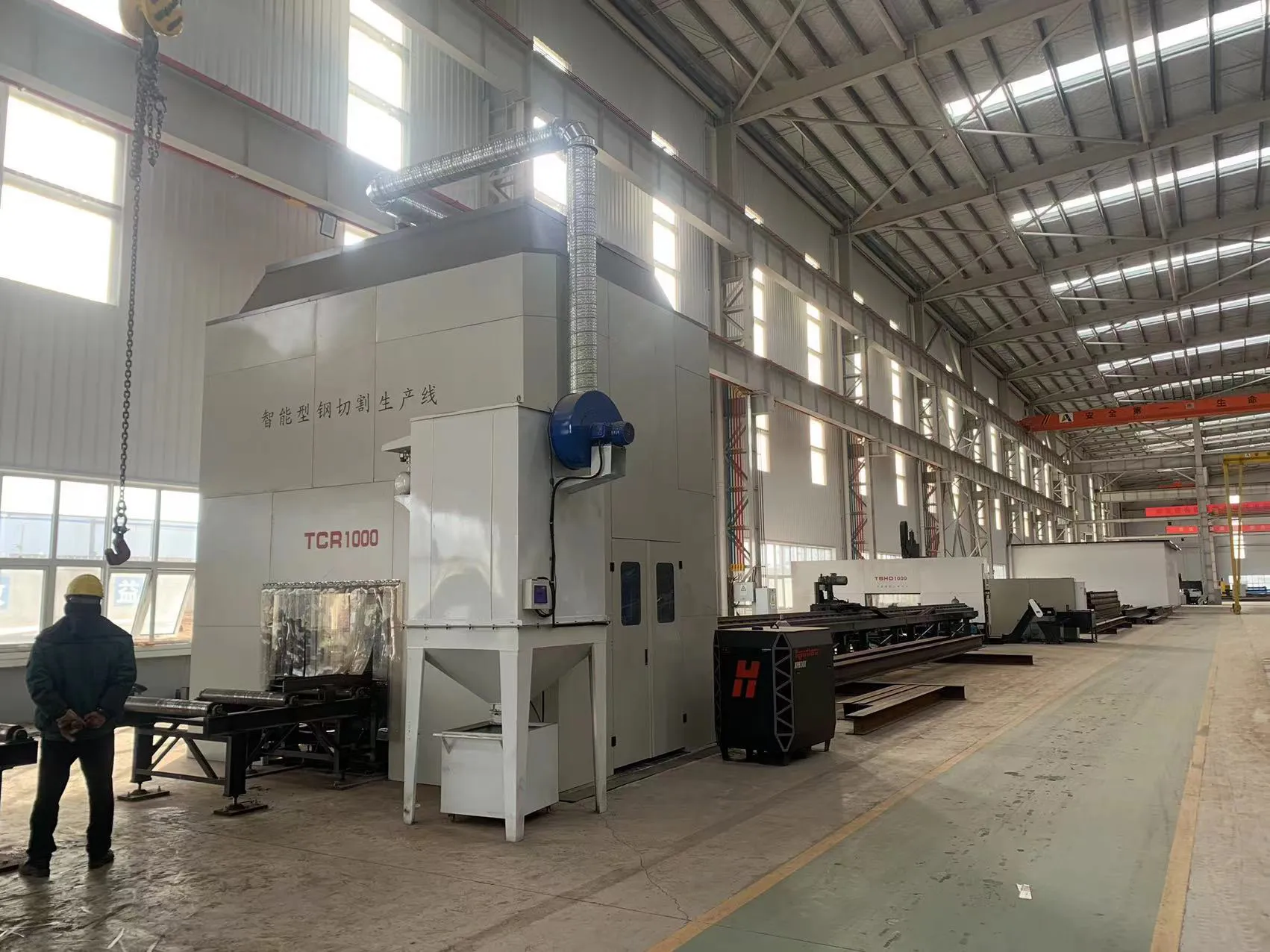
Technical Field Report: Integration of 12kW High-Power CNC Structural Laser Systems in Katowice Bridge Infrastructure Projects
1. Executive Summary and Scope of Operations
This technical report evaluates the deployment of 12kW CNC Beam and Channel laser cutting systems, equipped with synchronized automatic unloading technology, within the heavy structural steel sector of Katowice, Poland. As the Upper Silesian Industrial Region undergoes a significant infrastructural transition, the demand for precision-engineered bridge components—specifically H-beams (HEA/HEB), I-beams (IPE), and U-channels (UPN)—has reached a critical threshold.
Traditional methodologies, including band sawing and plasma arc cutting, are increasingly failing to meet the stringent tolerances required for modern cable-stayed and composite bridge designs. The integration of 12kW fiber laser sources provides the necessary power density to achieve high-speed thermal erosion with minimal Heat Affected Zones (HAZ), while automatic unloading mechanisms mitigate the mechanical bottlenecks inherent in handling 12-meter structural profiles.
2. The Physics of 12kW Fiber Laser Interaction in S355J2+N Steel
The selection of a 12kW ytterbium fiber laser source is not merely an upgrade in speed; it represents a fundamental shift in the photonic interaction with structural carbon steels typically utilized in Polish bridge engineering (S355 series). At 12kW, the power density at the focal point (typically 150-200μm) allows for the “evaporation” mode of cutting even in thick-walled sections up to 20mm, as opposed to the “melt and blow” mode required by lower-wattage systems.
Key Technical Advantages:
- Reduced Kerf Width: The 12kW source maintains a stable kerf width of approximately 0.4mm to 0.6mm, ensuring that bolt-hole geometries for splice plates remain within the ±0.1mm tolerance required for friction-grip bolts.
- HAZ Mitigation: In bridge engineering, fatigue life is paramount. High-speed 12kW cutting reduces the time the beam is exposed to critical temperatures, thereby limiting the depth of the martensitic layer at the cut edge. This is vital for meeting EN 1090-2 execution classes (EXC3 and EXC4).
- Dross-Free Processing: The high kinetic energy of the auxiliary gas (O2 for thick sections, N2 for high-speed thinner sections) ensures that the underside of the beam flange remains free of slag, eliminating the need for secondary grinding.
3. CNC Kinematics and Multi-Axis Structural Processing
Bridge components in Katowice’s recent overpass projects require complex 3D geometries, including cope cuts, miter joints, and web penetrations for utility routing. The CNC system employed utilizes a rotating chuck system (4-axis or 5-axis configuration) that allows for the simultaneous rotation of the beam and the tilt of the laser head.
For U-channels and heavy H-beams, the CNC software must calculate real-time compensation for “beam camber” and “sweep”—natural deviations in the straightness of hot-rolled steel. By utilizing laser sensors to map the actual profile of the steel before the first cut, the system adjusts the cutting path dynamically. This ensures that a 200mm circular penetration in the web is perfectly centered and geometrically true, regardless of the beam’s physical warping.
4. Automatic Unloading: Solving the Throughput Bottleneck
The primary failure point in heavy steel processing is not the cutting speed, but the material handling. A 12-meter HEB 400 beam can weigh over 1,800 kg. Manual unloading using overhead cranes introduces significant downtime and risks deforming the precision-cut edges.
The Mechanical Logic of Automatic Unloading:
The integrated automatic unloading system utilizes a series of hydraulic lift-and-transfer arms synchronized with the CNC outfeed conveyor. As the final cut is completed, the system detects the part’s center of gravity and activates a multi-point support structure.
- Synchronized Outfeed: The unloading arms move in tandem with the longitudinal axis (X-axis) of the machine, preventing any “dragging” or friction-induced scoring of the beam surface.
- Structural Integrity Preservation: By providing continuous support along the beam’s length during the transition from the chucks to the discharge table, the system prevents torsional stress that could lead to micro-fractures in the newly cut sections.
- Cycle Time Optimization: In a field study conducted in the Katowice industrial zone, the implementation of automatic unloading reduced the “part-to-part” cycle time by 42% compared to manual crane-based extraction.
5. Application in Katowice Bridge Engineering
Katowice’s infrastructure projects, such as the modernization of the DTŚ (Silesian Intercity Road) and various railway overpasses, require massive volumes of processed structural steel. The 12kW CNC system specifically addresses the “Execution Class 3” (EXC3) requirements common in these projects.
Bolt Hole Precision: In traditional fabrication, bolt holes are drilled, a slow and expensive process. The 12kW laser allows for “Thermal Drilling” (high-speed laser piercing). Because the CNC maintains such high positional accuracy, the resulting hole patterns in massive bridge girders align perfectly during field assembly, eliminating the need for onsite reaming.
Bevel Cutting for Weld Prep: 12kW systems allow for high-quality beveling (up to 45 degrees) on thick flanges. For the heavy butt-welds required in bridge spans, the laser produces a “V” or “Y” prep that is metallurgically clean, significantly reducing the defect rate in ultrasonic weld testing (NDT).
6. Synergy Between Automation and Power
The true technical superiority of this system lies in the synergy between the 12kW power source and the automated workflow. High power allows for faster cutting, which in turn requires faster unloading to maintain the duty cycle. If a 12kW machine were paired with manual unloading, the laser would remain idle for 60% of the shift.
Furthermore, the integration of CAD/CAM software (such as TEKLA or Lantek Flex3d) allows Katowice engineers to export BIM models directly to the laser’s CNC controller. The machine then nests various bridge components—web stiffeners, splice plates, and main girders—into a single continuous run. The automatic unloading system then sorts these parts based on their final destination in the assembly sequence, effectively acting as a logistics hub within the fabrication shop.
7. Technical Challenges and Mitigation Strategies
Despite the advantages, 12kW cutting of heavy profiles presents challenges:
- Thermal Lensing: At 12kW, the optics can undergo slight deformation. The system must utilize “Auto-Focus” cutting heads with internal cooling and real-time monitoring of protective window health.
- Material Inconsistency: Hot-rolled beams from different batches may have varying carbon equivalents. The CNC system compensates for this by utilizing “Power Ramping” at corners to prevent over-melting.
- Vibration Control: Moving heavy beams at high speeds creates significant inertia. The machine base in the Katowice facility was reinforced with polymer-concrete to dampen vibrations, ensuring the laser beam remains stable at peak acceleration.
8. Conclusion
The deployment of the 12kW CNC Beam and Channel Laser Cutter with Automatic Unloading technology represents the pinnacle of current structural steel fabrication. For the bridge engineering sector in Katowice, it provides a dual-fold benefit: it meets the extreme precision requirements of European structural standards while providing the high-volume throughput necessary for large-scale infrastructure projects. The elimination of manual handling through automatic unloading is no longer an optional efficiency—it is a technical necessity to preserve the integrity and precision of high-power laser-cut structural components.
















