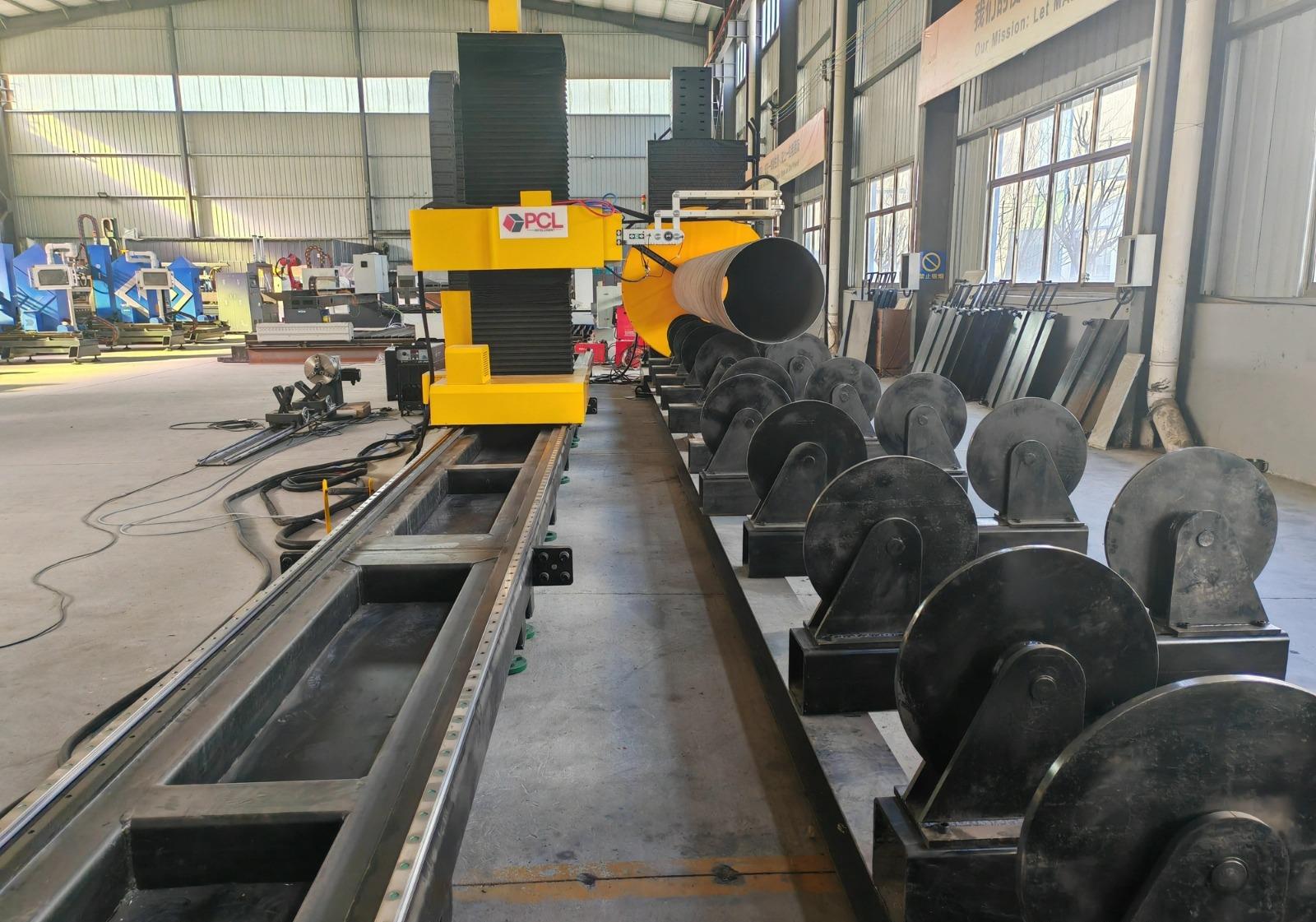
1.0 Technical Scope and Field Site Overview: Edmonton Infrastructure
This report evaluates the operational integration and performance metrics of the 12kW CNC Beam and Channel Laser Cutter, equipped with a 5-axis ±45° beveling head, specifically applied to the structural steel requirements of airport construction projects in Edmonton, Alberta. Given the region’s stringent Building Code requirements—necessitated by extreme thermal cycling and high wind loads associated with prairie environments—the precision of structural junctions is paramount.
The project scope involves the fabrication of large-span hangars and terminal expansion components. These structures rely on heavy H-beams (Universal Beams), I-sections, and C-channels. Traditional fabrication sequences—involving mechanical sawing followed by manual plasma gouging or milling for weld preparation—were identified as the primary bottleneck. The introduction of 12kW fiber laser technology represents a shift toward “all-in-one” processing, where cutting, hole-drilling, and complex beveling occur in a single kinematic sequence.
2.0 12kW Fiber Laser Source: Power Density and Thermal Dynamics
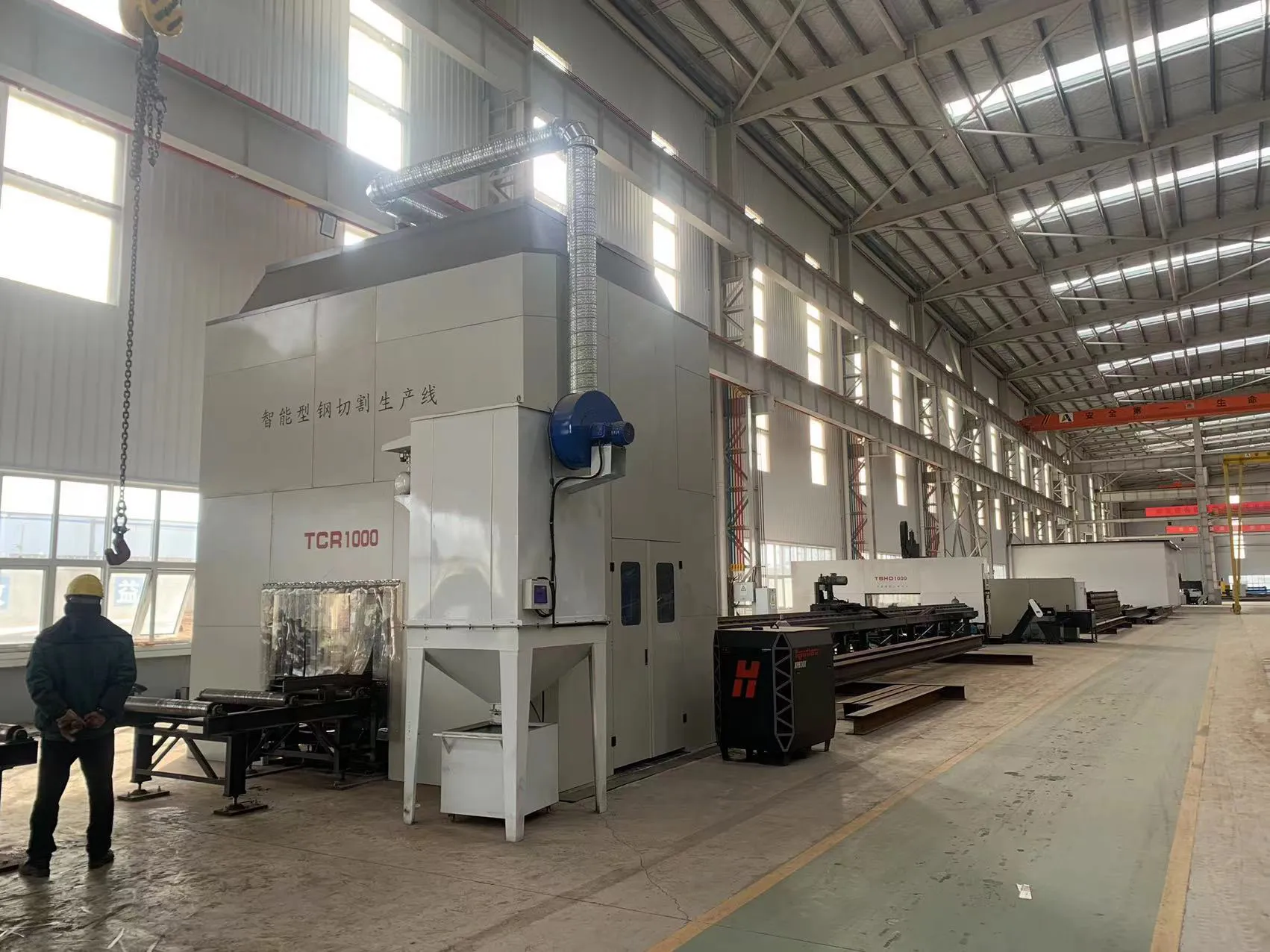
The choice of a 12kW fiber laser source is not merely for speed, but for the management of the Heat Affected Zone (HAZ) in heavy-gauge structural steel. In Edmonton’s construction sector, Grade 350W or 400W structural steel is standard. The 12kW power density allows for significantly higher feed rates compared to 4kW or 6kW variants, which paradoxically results in lower total heat input per linear millimeter.
2.1 Penetration and Kerf Quality
At 12kW, the system maintains a stable melt pool even when traversing the thicker flanges of H-beams (up to 25mm-30mm). The high-intensity beam allows for the use of nitrogen or high-pressure air as an assist gas for thinner sections to prevent oxidation, though oxygen remains the standard for heavy structural sections to facilitate the exothermic reaction required for thick-plate penetration. The resulting kerf is narrow (typically 0.3mm to 0.5mm), ensuring that the geometric tolerances of the final assembly remain within ±0.1mm—a requirement for the friction-bolt connections used in airport terminal skeletons.
2.2 Metallurgy and Post-Cut Characteristics
A critical observation in this field report is the reduction in micro-cracking at the cut edge. High-power laser cutting at rapid velocities minimizes the time the steel spends in the critical temperature transformation range. For Edmonton-based projects, where sub-zero temperatures can induce brittle fractures in compromised steel, maintaining the metallurgical integrity of the beam’s web and flange is a non-negotiable safety requirement.
3.0 ±45° Bevel Cutting: Solving the Weld Preparation Bottleneck
The core technological advantage of the evaluated system is the 5-axis oscillating cutting head capable of ±45° beveling. In heavy steel construction, beams are rarely joined with simple 90-degree butt joints. Complex geometry—specifically for moment-resisting frames and seismic bracing—requires V, Y, X, and K-shaped weld preparations.
3.1 Kinematic Precision in 3D Space
The CNC system must calculate the beam’s rotation and the head’s tilt simultaneously to maintain a constant focal distance. When processing a C-channel, for instance, the laser must transition from the web to the internal radius of the flange without losing the cut. The ±45° capability allows the machine to bevel the edges of these profiles in-situ. This eliminates the need for secondary grinding or manual torching, which are historically prone to human error and inconsistent root faces.
3.2 Optimization of Weld Volume
By achieving a precise 45-degree bevel with a consistent 2mm root face, the system reduces the volume of filler metal required during the welding phase. In the Edmonton airport expansion, where thousands of linear meters of welding are required, a 10% reduction in weld volume translates to significant cost savings and reduced structural distortion from excess heat. The laser-cut bevels provide a “machined-finish” quality that facilitates automated robotic welding, creating a closed-loop high-efficiency fabrication environment.
4.0 Application Specifics: H-Beam and Channel Processing
The CNC Beam and Channel Laser Cutter utilizes a pass-through chuck system or a multi-axis robotic arm to manipulate the profile. The integration of 12kW power allows for the processing of various profiles with unique structural roles.
4.1 H-Beam (Universal Beam) Integration
For the main structural columns of the airport terminal, H-beams require precise cutouts for “rat holes” (weld access holes) and bolt patterns. The 12kW laser executes these features and the beveling of the flange edges in one setup. The report confirms that the positional accuracy of the bolt holes relative to the beveled edge is maintained within 0.2mm, ensuring seamless field assembly without the need for on-site reaming.
4.2 C-Channel and Tension Members
C-channels used in secondary support structures and facade cladding often require “bird-mouth” cuts or complex miters to join at non-orthogonal angles. The 5-axis head’s ability to tilt to 45 degrees ensures that even these complex intersections are prepped for full-penetration welds. This is particularly vital for the aesthetic exposed steelwork in modern airport architecture, where weld aesthetics are as important as structural integrity.
5.0 Synergy Between Automation and Structural Software
The efficiency of the 12kW system is maximized through the direct integration of BIM (Building Information Modeling) and CAD/CAM software like Tekla Structures. The Edmonton project utilized a direct “Model-to-Machine” workflow.
5.1 Automated Nesting and Material Handling
The CNC controller processes DSTV or STEP files directly, nesting parts to minimize drop-off waste. In a high-volume environment like airport construction, the ability to automatically detect the actual dimensions of a beam (which may vary slightly from the nominal mill spec) using laser touch-probes allows the system to compensate for “camber” or “sweep” in real-time. This ensures the bevel angle remains consistent across the entire length of the beam.
5.2 Throughput Metrics
Field data indicates that a 12kW laser system can process a standard 12-meter H-beam—including all bolt holes, copes, and weld preps—in approximately 8 to 12 minutes. Comparatively, traditional mechanical and manual methods required 45 to 60 minutes per member. This 4x to 5x increase in throughput is the primary driver for the technology’s adoption in large-scale infrastructure projects.
6.0 Environmental and Site-Specific Considerations: Edmonton
Operating high-power fiber lasers in the Edmonton region introduces specific challenges related to climate and power stability. The system evaluated includes an integrated industrial chiller with a glycol-mix to prevent freezing during downtime and an enclosed cutting environment to maintain a stable ambient temperature for the sensitive optical components.
Furthermore, the 12kW source’s electrical efficiency is noted. Modern fiber lasers operate at approximately 35-40% wall-plug efficiency, which is significantly higher than older CO2 or plasma systems. This reduces the carbon footprint of the fabrication phase—a metric increasingly monitored in Canadian federal infrastructure projects.
7.0 Conclusion: Technical Validation
The deployment of the 12kW CNC Beam and Channel Laser Cutter with ±45° beveling technology is a validated solution for the complexities of airport construction. The convergence of high power (12kW) and multi-axis kinematics (±45°) addresses the dual requirements of speed and precision. For the Edmonton sector, the ability to produce weld-ready structural members with minimal HAZ and high geometric accuracy ensures that the resulting structures meet the highest safety standards while significantly reducing the construction timeline.
Final assessment: The system is recommended for all heavy structural steel applications where weld prep consistency and high-volume throughput are critical path items. Future iterations should focus on further integrating AI-driven vision systems for real-time compensation of mill-scale inconsistencies on lower-grade recycled steels.