The Dawn of High-Power Fiber Lasers in Jakarta’s Infrastructure
Jakarta is a city defined by its vertical and horizontal expansion. In the realm of bridge engineering, the transition from conventional plasma cutting and mechanical drilling to fiber laser technology represents the most significant advancement in decades. The 12kW fiber laser source is the “engine” of this transformation. At 12,000 watts, the laser density is sufficient to pierce and cut through high-tensile structural steels (such as Q345B or A572 Grade 50) with unprecedented velocity.
In the context of Jakarta’s humid tropical environment and the specific structural requirements of seismic-resistant bridge design, the 12kW fiber laser offers a distinct advantage: a minimal Heat Affected Zone (HAZ). Unlike plasma cutting, which can alter the metallurgical properties of the steel edge due to excessive heat, the fiber laser’s concentrated beam ensures the integrity of the base metal. This is critical for bridge components that must withstand cyclical loading and environmental stress over a 50-to-100-year lifespan.
The Complexity of 3D Structural Steel Processing
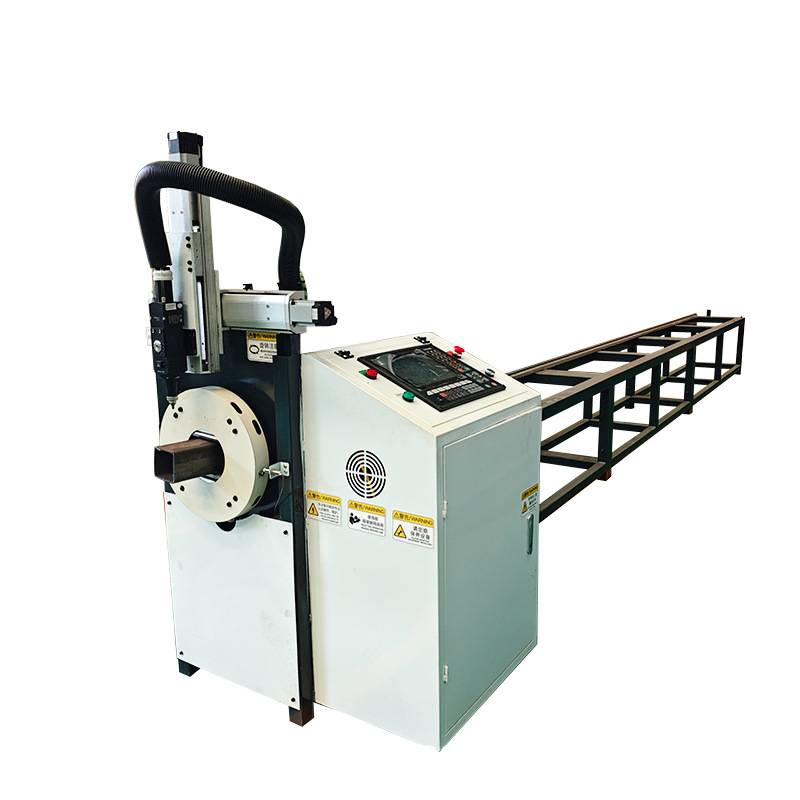
Traditional laser cutters are limited to 2D flat sheets. However, bridge engineering relies on 3D profiles—H-beams, I-beams, C-channels, and rectangular hollow sections (RHS). The 3D Structural Steel Processing Center utilizes a sophisticated gantry or robotic arm system combined with a rotating chuck assembly to process these shapes in a single pass.
In Jakarta’s crowded construction landscape, where workshop space is often at a premium, the ability to perform multiple operations on one machine is invaluable. This system handles “all-in-one” processing: it cuts the beam to length, carves out complex bolt holes, notches the webs for interlocking joints, and engraves part numbers for assembly tracking. By eliminating the need to move 12-meter beams between a saw, a drill press, and a milling machine, the processing center reduces material handling time by up to 70%, drastically increasing the throughput of Jakarta-based fabrication shops.
The Engineering Masterclass: ±45° Bevel Cutting
Perhaps the most critical feature for bridge engineering is the ±45° bevel cutting capability. Bridges are not merely bolted together; they are massive welded structures. For a weld to achieve full penetration and maximum strength, the edges of the steel plates and beams must be beveled.
Standard vertical cuts require secondary manual grinding or specialized beveling machines to create the V, Y, X, or K-shaped grooves necessary for high-quality welding. The 12kW 3D laser system utilizes a 5-axis cutting head that can tilt up to 45 degrees in any direction. This allows the machine to cut the shape and the weld preparation bevel simultaneously.
For a bridge engineer in Jakarta, this precision translates to a perfect fit-up. When beams arrive at the construction site—perhaps for a new flyover in South Jakarta—the beveled edges align with sub-millimeter accuracy. This reduces the amount of “gap-filling” weld metal required, minimizes internal stresses in the joints, and ensures the bridge meets the stringent safety standards set by the Indonesian Ministry of Public Works and Public Housing (PUPR).
Advancing Bridge Engineering: From Truss to Gusset
Bridges come in various forms, from simple girder bridges to complex cable-stayed structures. Each requires specific steel components that benefit from 12kW laser processing:
1. **Truss Systems:** The intricate intersections of truss members require precise “fish-mouth” cuts and complex geometry to ensure load distribution. The 3D laser handles these intersections with ease, ensuring that the load-bearing paths are exactly as the computer model intended.
2. **Gusset Plates:** These are the thick plates that join various structural members. With 12kW of power, even plates up to 30mm or 40mm thick can be cut with clean, vertical edges and perfectly round bolt holes, eliminating the tapering effect common with lower-power lasers.
3. **Orthotropic Decks:** Many modern bridges use steel decks for weight reduction. The high speed of the 12kW laser allows for the rapid fabrication of these large-scale components, keeping massive infrastructure projects on schedule despite Jakarta’s seasonal weather delays.
Economic Impact and ROI for the Jakarta Market
Investing in a 12kW 3D Structural Steel Processing Center is a significant capital expenditure, but the Return on Investment (ROI) for Jakarta-based firms is compelling. The local labor market is evolving; while manual labor was once the default, the rising cost of skilled welders and the demand for faster project delivery are driving automation.
One 12kW laser center can replace the output of three to five traditional manual processing lines. Furthermore, the nesting software integrated with these machines optimizes material usage. Given the fluctuating price of steel in Southeast Asia, reducing scrap by even 5-10% through intelligent nesting can save hundreds of millions of Rupiah annually.
Additionally, the “Jakarta factor”—the need for rapid infrastructure to combat traffic congestion—means that contractors who can deliver components weeks ahead of schedule gain a significant competitive edge in government tenders.
Technical Synergy: Software and Integration
The hardware of a 12kW laser is only as good as the software driving it. Modern processing centers utilize specialized CAD/CAM software (such as Tekla Structures or specialized laser nesting suites) that integrates directly with the engineering office.
In a typical Jakarta project, the bridge design is modeled in 3D. This data is fed directly into the laser center. The machine’s sensors automatically detect the actual dimensions of the loaded beam (accounting for any slight factory deviations in the steel) and adjust the cutting path in real-time. This “digital twin” workflow ensures that what is designed on the computer is exactly what is fabricated on the floor, leaving no room for human error during the layout phase.
Environmental and Safety Considerations
Safety is a paramount concern in Indonesian heavy industry. Traditional steel processing is loud, produces massive amounts of dust, and involves high-risk activities like manual heavy lifting and oxy-fuel cutting. The 12kW 3D Processing Center is an enclosed or semi-enclosed system with integrated dust extraction and filtration.
By capturing the metal particulate and fumes, the system provides a much healthier environment for Jakarta’s workforce. Moreover, the high level of automation means fewer workers are in direct proximity to heavy moving parts or intense heat sources, significantly lowering the Lost Time Injury (LTI) rates for fabrication companies.
Conclusion: The Future of Indonesian Infrastructure
As Jakarta continues its journey toward becoming a global megacity, the infrastructure supporting it must be built with the highest standards of precision and efficiency. The 12kW 3D Structural Steel Processing Center with ±45° Bevel Cutting is not just a tool; it is a catalyst for modern bridge engineering.
By merging the raw power of fiber laser technology with the finesse of 5-axis 3D motion, Indonesian fabricators can now produce complex, high-strength bridge components that were once only possible through expensive imports or labor-intensive manual processes. This technology empowers Jakarta to build taller, longer, and safer structures, ensuring that the city’s bridges are ready to carry the weight of the future. The era of the “smart” steel yard has arrived in Indonesia, and the 12kW fiber laser is leading the way.