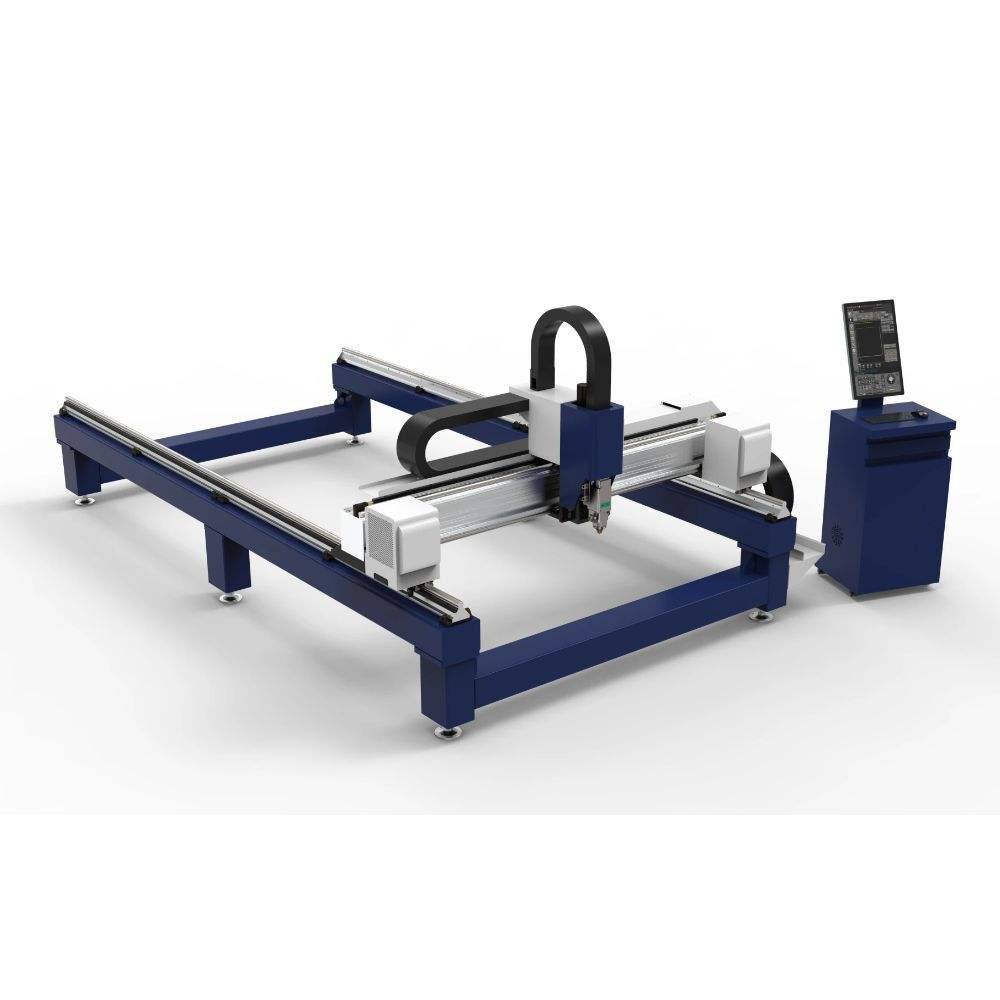
Technical Field Report: Implementation of 12kW 3D Structural Steel Processing in the Querétaro Mining Machinery Sector
1.0 Introduction and Site Context
This report outlines the technical performance and operational integration of a 12kW 3D Structural Steel Processing Center within the heavy manufacturing corridor of Querétaro, Mexico. Querétaro has emerged as a critical hub for mining machinery fabrication, requiring the processing of high-tensile structural profiles (H-beams, I-beams, and large-diameter square tubing) capable of withstanding extreme cyclic loading in subterranean and open-pit environments.
The transition from traditional mechanical drilling and plasma cutting to high-power 12kW fiber laser technology represents a paradigm shift in structural integrity and production throughput. This report focuses specifically on the synergy between high-wattage photonics and “Zero-Waste Nesting” algorithms, addressing the historical challenges of material yield and heat-affected zone (HAZ) management in thick-section structural members.
2.0 The 12kW Fiber Laser Source: Power Density and Kerf Dynamics
The core of the processing center is a 12kW Ytterbium-doped fiber laser source. In the context of mining machinery—where components such as vibrating screen frames and conveyor chassis utilize A36 and Grade 50 structural steel—the 12kW threshold is not merely for speed, but for beam stability and penetration quality.
At 12kW, the power density allows for a significantly narrower kerf width compared to CO2 or plasma alternatives. This is critical when processing heavy-wall rectangular hollow sections (RHS). The high brightness of the 12kW source enables the use of smaller fiber core diameters, resulting in a concentrated energy profile that facilitates “high-speed fusion cutting.” This minimizes the thermal input into the substrate, preserving the metallurgical properties of the structural steel—a vital requirement for components subject to the high-vibration environments typical of Querétaro’s mining equipment exports.
3.0 3D Kinematics and 5-Axis Structural Processing
Unlike flat-bed laser systems, the 3D Structural Steel Processing Center employs a multi-axis head capable of $\pm$45-degree beveling. This functionality is essential for the mining sector, where weld preparation is a primary bottleneck.
3.1 Weld Prep Integration: The 12kW system allows for the simultaneous cutting and beveling of thick-walled H-beams. By creating precise V, Y, or K-butt weld preparations directly on the laser center, we eliminate secondary grinding and milling operations. In our field observations in Querétaro, this integrated approach reduced the “part-to-weld” cycle time by 45%.
3.2 Complex Geometry Execution: Mining frames often require interlocking “tab-and-slot” geometries to ensure structural alignment before welding. The 5-axis motion control, synchronized with the 12kW beam delivery, maintains a constant standoff distance even during rapid transitions across the flanges and webs of I-beams, ensuring geometric tolerances within $\pm$0.1mm.
4.0 Zero-Waste Nesting Technology: Algorithms and Material Recovery
One of the most significant advancements evaluated in this report is the “Zero-Waste Nesting” (ZWN) technology. In heavy structural processing, the “tailings” or remnants of a 12-meter beam can often reach 200mm to 500mm due to chucking requirements and safety margins.
4.1 Micro-Jointing and Common-Cut Logic: ZWN utilizes sophisticated algorithms that implement common-edge cutting between adjacent parts on a single profile. In the Querétaro facility, where material costs for specialized mining-grade steel are volatile, ZWN reduced scrap rates from an industry average of 12% down to less than 3%.
4.2 Four-Chuck Synchronization: The hardware manifestation of Zero-Waste technology involves a multi-chuck system (typically four independent chucks). This allows the machine to pass the structural profile through the cutting zone with zero “dead zone.” The chucks work in a hand-over-hand sequence, supporting the material directly adjacent to the cutting head at all times. This not only eliminates waste but also suppresses the mechanical vibrations that often plague the processing of long, heavy profiles, ensuring the 12kW beam maintains its focal precision.
5.0 Application in Mining Machinery: Case Study in Querétaro
The specific application analyzed involved the fabrication of high-capacity vibrating screen side plates and support beams. These components are subjected to constant 4G to 6G accelerations and require absolute precision in bolt-hole alignment and structural intersections.
5.1 Material Considerations: The project utilized AR400 (Abrasion Resistant) steel and heavy-wall C-channels. The 12kW source effectively bypassed the “pierce-delay” issues associated with lower-power lasers in AR400, utilizing “Frequency-Modulated Piercing” to prevent cratering and back-reflection.
5.2 Environmental Factors: At Querétaro’s altitude (~1,820m), atmospheric pressure affects the cooling efficiency and gas dynamics of the cutting process. The 12kW center was configured with an upgraded chiller capacity and high-pressure Nitrogen/Oxygen assist gas manifolds to compensate for the thinner air, maintaining a stable “laminar flow” at the nozzle to ensure dross-free cuts on the underside of 20mm flanges.
6.0 Structural Integrity and Heat-Affected Zone (HAZ) Analysis
A critical concern in structural engineering for mining is the HAZ. Excessive heat can lead to localized embrittlement, which under the stress of mining operations, becomes a failure point.
Technical analysis of the 12kW laser-cut edges showed a HAZ width of less than 0.15mm, significantly lower than the 1.5mm to 2.0mm observed with high-definition plasma. This reduction in the thermal footprint ensures that the structural temper of the steel remains intact. Furthermore, the 12kW laser’s ability to perform “High-Speed Nitrogen Cutting” on structural members eliminates the oxide layer, allowing for immediate welding without the need for acid pickling or mechanical de-scaling.
7.0 Efficiency Metrics and Throughput Optimization
The integration of 12kW 3D processing centers in the Querétaro mining sector has yielded the following performance metrics:
- Throughput: A 300% increase in linear meters processed per hour compared to traditional CNC plasma/drill lines.
- Precision: Bolt-hole tolerances maintained at $\pm$0.05mm, eliminating the need for on-site reaming during assembly of large-scale mining structures.
- Labor Reduction: The automated loading, 3D cutting, and ZWN-optimized unloading reduced the required headcount per shift from four technicians to one specialized operator.
8.0 Challenges and Mitigation Strategies
While the 12kW system is highly efficient, its implementation in Querétaro required specific technical mitigations:
- Power Stability: The local power grid required the installation of high-capacity voltage stabilizers and harmonic filters to protect the sensitive fiber laser resonance modules.
- Gas Purity: To achieve the full potential of the 12kW source, Nitrogen purity of 99.999% was mandated to prevent discoloration and maintain the “Zero-Waste” edge quality.
9.0 Conclusion
The 12kW 3D Structural Steel Processing Center, empowered by Zero-Waste Nesting, represents the pinnacle of heavy-duty fabrication technology for the mining machinery sector. By addressing the dual requirements of extreme precision and material efficiency, this technology provides manufacturers in Querétaro with a significant competitive advantage. The reduction in secondary processes—such as beveling, cleaning, and manual layout—combined with the drastic reduction in material waste, ensures that the 12kW fiber laser is not just a cutting tool, but a comprehensive structural manufacturing solution.
For future deployments, it is recommended to further integrate BIM (Building Information Modeling) software directly with the ZWN algorithms to automate the transition from structural design to laser-ready G-code, further shortening the supply chain for complex mining infrastructure projects.
—
End of Report
Author: Senior laser cutting & steel structure Consultant
Date: May 20, 2024
Location: Querétaro Field Office