The Dawn of High-Power 3D Laser Fabrication in Charlotte
Charlotte, North Carolina, has long been a nexus for industrial innovation and a central hub for the Southeast’s booming construction sector. As architectural designs for sports arenas and stadiums become increasingly ambitious—featuring organic curves, massive spans, and complex load-bearing geometries—the limitations of traditional plasma cutting and manual fabrication have become apparent. Enter the 12kW 3D Structural Steel Processing Center.
As an expert in fiber laser technology, I have witnessed the evolution from flat-sheet cutting to the current state of “total volume” fabrication. The 12kW power level is the “sweet spot” for structural steel. It provides enough energy to pierce through thick-walled sections (up to 25mm-30mm and beyond) while maintaining the feed rates necessary to keep a project on schedule. In the context of stadium construction, where thousands of tons of steel must be processed, the efficiency gains of a 12kW source over a 6kW or 8kW system are not merely incremental; they are transformative.
The Technical Mastery of the Infinite Rotation 3D Head
The “crown jewel” of this processing center is undoubtedly the Infinite Rotation 3D Head. Traditional 5-axis laser heads often suffer from “cable wrap,” a mechanical limitation where the head must “unwind” after rotating a certain number of degrees. In the world of structural steel, where the laser must often travel around the perimeter of a large rectangular tube or follow a complex bevel path on a circular pipe, these resets are catastrophic to productivity and edge quality.
The infinite rotation capability uses slip-ring technology or advanced rotational couplings for the cooling, gas, and fiber optics, allowing the head to spin indefinitely on its C-axis. When combined with the A/B-axis tilting (typically up to +/- 45 degrees), the laser can perform complex bevel cuts—K, Y, and X joints—essential for high-strength welding in stadium trusses. This means the machine can cut the hole, the profile, and the weld prep in a single continuous motion, ensuring that when the steel arrives at the Charlotte job site, the fit-up is perfect.
Optimizing Stadium Steel: From Cantilevers to Complex Trusses
Stadium architecture is characterized by its scale and its need for safety. Whether it is the soaring canopies of a modern NFL stadium or the intricate secondary steel for seating bowls, the structural integrity of every joint is paramount.
Using a 12kW fiber laser allows for a significantly smaller Heat Affected Zone (HAZ) compared to plasma cutting. This is critical for structural steel because an oversized HAZ can lead to material embrittlement, a major concern for structures subject to dynamic loads and vibrations (like 70,000 fans jumping in unison). The precision of the 3D head ensures that “Bird’s Nest” style designs, which require hundreds of unique, intersecting pipe joints, can be modeled in BIM software and exported directly to the laser.
The 12kW beam creates a kerf so narrow and a cut so clean that secondary grinding is almost entirely eliminated. For a project manager in Charlotte overseeing a multi-million dollar stadium build, this represents a massive reduction in man-hours and a significant tightening of the supply chain.
Efficiency and Throughput: The 12kW Advantage
Why 12kW? In the fiber laser world, power equals speed, but it also equals “processing range.” When cutting structural H-beams or thick-walled HSS (Hollow Structural Sections), the laser must often maintain a stable “keyhole” through the material. A 12kW source provides the high photon density required to maintain this keyhole even when the gas pressure fluctuates or the material composition varies slightly.
In Charlotte’s competitive fabrication market, throughput is the primary metric of success. A 12kW 3D center can process a 40-foot beam—including all bolt holes, cope cuts, and beveling—in a fraction of the time it would take a traditional beam line involving drilling and sawing. Furthermore, because the laser is a non-contact tool, there is no tool wear. The 10,000th cut is as precise as the first, ensuring that the last section of the stadium roof fits just as perfectly as the first.
Integration with BIM and Digital Twin Technology
Modern stadium construction relies heavily on Building Information Modeling (BIM). The 12kW 3D Processing Center is not a standalone island; it is a digitally integrated component of the construction ecosystem.
Software suites like Tekla Structures or Autodesk Revit generate complex files that the processing center’s controller translates into G-code. The infinite rotation head excels here, as it can navigate the complex “wrap” paths required for these digital designs. In Charlotte, where architectural firms and engineering offices are increasingly adopting “Digital Twin” strategies, having a laser that can speak the same digital language is indispensable. This “file-to-factory” workflow reduces human error, which is the leading cause of delays in large-scale structural projects.
The Economic Impact on the Charlotte Region
The installation of a 12kW 3D Structural Steel Processing Center in Charlotte does more than just build stadiums; it strengthens the regional economy. By localizing high-tech fabrication, developers no longer need to source complex pre-processed steel from overseas or distant states. This reduces the carbon footprint associated with transport and allows for “just-in-time” delivery to the construction site.
Furthermore, this technology fosters a new class of skilled labor. Operators and technicians in North Carolina are moving from manual welding and layout to high-level CNC programming and laser optics management. The presence of such advanced machinery attracts further investment, positioning Charlotte as a leader in the “Steel 4.0” revolution.
Safety and Precision in High-Stress Joints
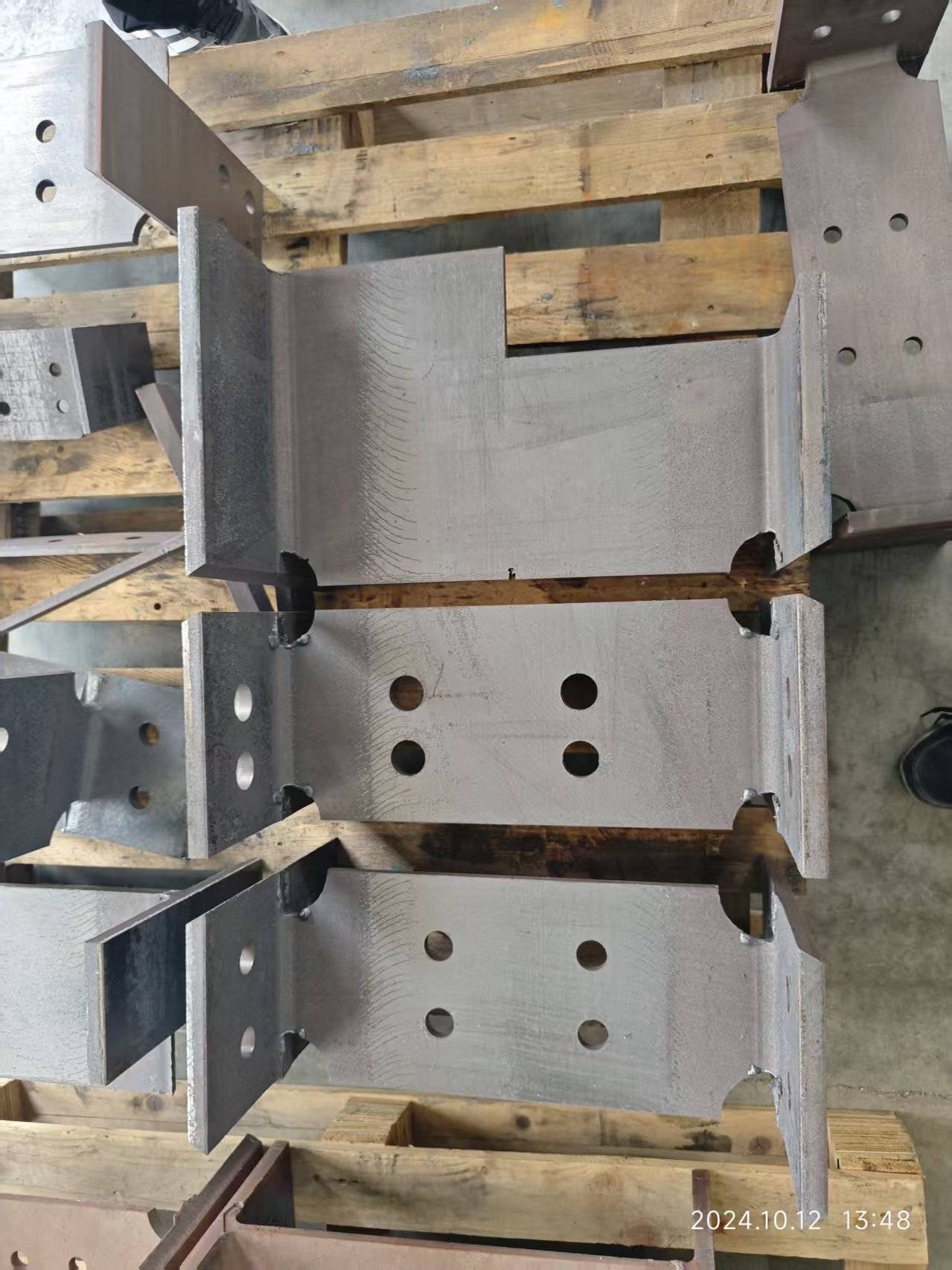
One often overlooked benefit of the 12kW 3D head is the precision of bolt-hole geometry. In stadium construction, tension-controlled bolts are the lifeblood of the structure. Traditional punching or thermal cutting can sometimes create tapered or irregular holes, leading to stress concentrations.
The fiber laser’s ability to cut perfectly cylindrical holes with zero taper—even in thick material—is a massive safety advantage. When the 3D head tilts to accommodate the slope of a stadium seating raker, it ensures that every bolt hole remains perpendicular to the flange or follows the specific angular requirement of the engineer. This level of precision is virtually impossible to achieve consistently with manual methods.
Environmental Considerations and Sustainability
Finally, as an expert, I must highlight the sustainability aspect. The 12kW fiber laser is remarkably energy-efficient compared to older CO2 lasers or high-def plasma systems. The “wall-plug efficiency” of fiber technology means more of the electricity goes into the cut and less into wasted heat.
Additionally, the precision of the 3D processing center allows for better nesting of parts on a single length of steel, significantly reducing scrap rates. In an era where “Green Construction” and LEED certification are often requirements for new stadium projects, the ability to demonstrate reduced material waste and lower energy consumption per ton of steel processed is a significant competitive edge for Charlotte-based fabricators.
Conclusion: The Future of the Charlotte Skyline
The 12kW 3D Structural Steel Processing Center with Infinite Rotation is not just a machine; it is a catalyst for architectural possibility. By removing the mechanical constraints of rotation and the speed limits of lower-power lasers, it allows architects to dream bigger and engineers to build safer.
As Charlotte continues to grow and its sports infrastructure evolves, this technology will be at the heart of the transformation. From the intricate lattice of a new arena roof to the robust columns supporting a grandstand, the 12kW fiber laser is carving the future of structural steel, one perfect bevel at a time. For any stadium project looking to combine aesthetic brilliance with structural uncompromising integrity, this technology is no longer an option—it is a necessity.