
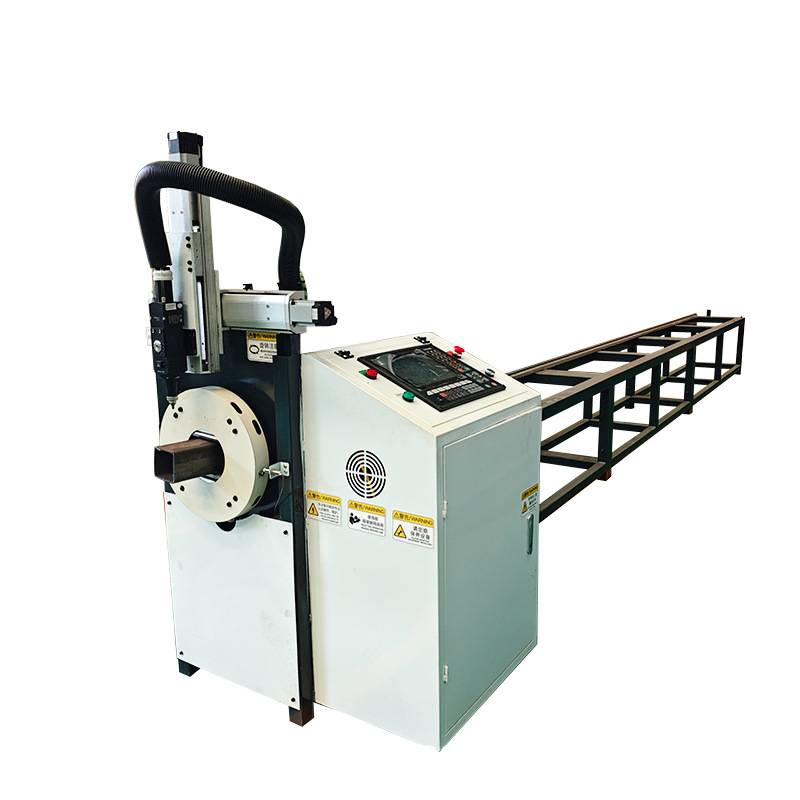
Field Technical Report: Integration of 12kW 3D Structural Steel Processing Center in Haiphong’s Crane Manufacturing Sector
1. Executive Overview: The Shift to High-Power 3D Laser Processing
The heavy engineering landscape in Haiphong, Vietnam—a critical hub for maritime and industrial crane manufacturing—is currently undergoing a fundamental transition from conventional thermal cutting (plasma/oxy-fuel) to high-brightness fiber laser processing. This report evaluates the field performance of the 12kW 3D Structural Steel Processing Center equipped with Infinite Rotation 3D Head technology.
In the fabrication of gantry cranes, overhead bridge cranes, and port-side loading equipment, the structural integrity of H-beams, I-beams, and box girders is paramount. Traditional methods often necessitate secondary machining for weld preparation and bolt-hole precision. The deployment of a 12kW fiber source integrated with an infinite-rotation multi-axis head eliminates these secondary processes by achieving finished-part tolerances within ±0.05mm over complex three-dimensional geometries.
2. Technical Specification of the 12kW Fiber Laser Source
The selection of a 12kW power rating is not merely for speed but for the stabilization of the “keyhole” effect in thick-walled structural steel. In Haiphong’s crane sector, typical material thicknesses range from 12mm to 30mm for web plates and flanges.
At 12kW, the energy density allows for:
- High-Speed Nitrogen Cutting: Achieving dross-free edges on 16mm stainless or high-tensile carbon steel components, crucial for anti-corrosive maritime applications.
- Oxygen-Assisted Thick Cutting: Stable processing of 25mm+ carbon steel with a minimized Heat Affected Zone (HAZ). This is critical for maintaining the metallurgical properties of S355JR and S460QL steels commonly used in load-bearing crane structures.
- Beam Quality (BPP): The narrow kerf width minimizes material wastage and thermal distortion, ensuring that long-span beams (up to 12 meters) remain within straightness tolerances post-cutting.
3. Mechanics of the Infinite Rotation 3D Head
The “Infinite Rotation” capability represents the pinnacle of 5-axis kinematic design in laser cutting. Traditional 3D heads are often limited by internal cabling, requiring a “rewind” movement after a 360-degree rotation. This creates dwell marks on the cut surface and increases cycle times.
3.1. Kinematic Fluidity and N-Rotation
The infinite rotation head utilizes advanced slip-ring technology or high-flex internal conduit routing to allow the C-axis to rotate indefinitely. This is indispensable when processing the transition zones of H-beams or circular hollow sections (CHS). In crane manufacturing, where lattice booms require complex intersection cuts (saddle cuts), the ability to maintain a constant vector relative to the material surface is vital.
3.2. Beveling Precision (V, Y, K, and X Joints)
The head’s A/B axis allows for tilting up to ±45 degrees (and in some high-end configurations, ±50 degrees). For heavy crane welding, the 12kW 3D head can execute precise bevels during the initial cut. This eliminates the need for manual grinding or secondary beveling machines. The synergy between the 12kW source and the 3D head ensures that even at an angle—where the effective thickness of the material increases (e.g., a 45-degree cut on 20mm plate results in a 28.2mm effective path)—the laser maintains sufficient power density to ensure a clean separation.
4. Application Analysis: Crane Manufacturing in Haiphong
Haiphong’s industrial environment presents unique challenges, including high humidity and a requirement for massive throughput for international port projects.
4.1. Box Girder Fabrication
The 12kW 3D system allows for the high-precision cutting of diaphragm plates and internal stiffeners. The infinite rotation head enables the cutting of internal access holes with pre-beveled edges for weld penetration, directly impacting the fatigue life of the crane’s main girder.
4.2. Precision Bolt-Hole Arrays
Crane runway beams and column connections require high-tolerance bolt-hole arrays. Traditional plasma cutting often produces a slight taper in the hole. The 12kW fiber laser, with its high beam stability, produces perfectly cylindrical holes with a surface finish that meets the requirements for high-strength friction-grip (HSFG) bolts without further reaming.
4.3. Complex Lattice Structures
For maritime cranes utilizing pipe-truss booms, the 3D head handles the intersection geometry between the chord and stay members. The software calculates the changing bevel angle along the complex curve of the intersection, ensuring a tight fit-up that reduces weld volume and consumable usage.
5. Automation and Workflow Integration
The “Processing Center” designation implies more than just a cutting machine; it is a fully integrated material handling system. In the observed Haiphong facility, the 12kW unit is coupled with:
- Automatic Loading/Unloading: Heavy-duty conveyors capable of handling 400kg/m linear weight.
- Real-Time Material Sensing: Laser touch-probes or vision systems that detect the actual dimensions and deformations (camber/sweep) of the raw structural steel, adjusting the 3D cutting path in real-time to ensure dimensional accuracy of the finished part.
- Nesting for Structural Shapes: Advanced CAD/CAM integration that allows for the nesting of different crane components (e.g., gusset plates within the flange of a beam) to maximize material utilization.
6. Engineering Advantages: HAZ and Structural Integrity
A critical concern in crane engineering is the Heat Affected Zone (HAZ). Excessive heat input during cutting can lead to localized hardening and potential crack initiation sites. The 12kW fiber laser’s high processing speed significantly reduces the total heat input compared to plasma.
Micro-structural analysis of 20mm S355 steel cut with the 12kW system shows a HAZ depth of less than 0.2mm. In the context of the dynamic loading seen in Haiphong’s port cranes, this reduction in the HAZ translates to a significantly higher fatigue resistance and lower risk of brittle fracture at the weld interface.
7. Economic and Operational Impact
From a senior engineering perspective, the transition to 12kW 3D laser processing provides a measurable ROI in three areas:
- Labor Reduction: Elimination of manual beveling and secondary hole drilling reduces man-hours per ton of steel by approximately 40%.
- Consumable Efficiency: While the initial investment in a 12kW source is higher, the cost-per-meter is lower due to increased speeds and the use of compressed air for thinner sections.
- Weld Volume Optimization: The precision of the 3D head allows for a “zero-gap” fit-up. In a 50-meter crane girder, reducing the weld gap by even 1mm across all joints results in a massive reduction in wire consumption and welding time.
8. Conclusion
The deployment of the 12kW 3D Structural Steel Processing Center with Infinite Rotation technology represents the current state-of-the-art for heavy fabrication. In the specific context of Haiphong’s crane manufacturing sector, the technology addresses the dual requirements of extreme structural reliability and high-volume throughput. By consolidating cutting, beveling, and hole-making into a single automated cycle, the system establishes a new benchmark for precision in heavy-duty steel processing. The infinite rotation head, in particular, proves to be the enabling component for the complex geometries required in modern maritime engineering, ensuring that Haiphong remains competitive in the global structural steel market.
















