The Industrial Evolution: 12kW Fiber Laser Power in Riyadh
The industrial sector in Riyadh is currently undergoing a radical transformation, driven by the ambitious goals of Saudi Vision 2030. At the heart of this expansion is the need for rapid infrastructure development, specifically in the realm of electricity transmission and “Smart City” connectivity. The introduction of the 12kW 3D Structural Steel Processing Center represents a quantum leap over traditional CO2 lasers and plasma cutting systems.
A 12kW fiber laser source provides a power density that allows for the high-speed sublimation of carbon steel, the primary material in power tower fabrication. At 12,000 watts, the laser beam can penetrate structural steels up to 30mm or more with a narrow kerf width and a minimal heat-affected zone (HAZ). In the context of Riyadh’s manufacturing hubs, where throughput is king, the 12kW engine enables cutting speeds that are 3 to 5 times faster than traditional mechanical sawing or lower-wattage laser systems. This power is not just about speed; it is about the “edge quality” on thick-walled sections, ensuring that the structural integrity of the steel is maintained for decades of service in the harsh Arabian desert.
3D Kinematics and Structural Versatility
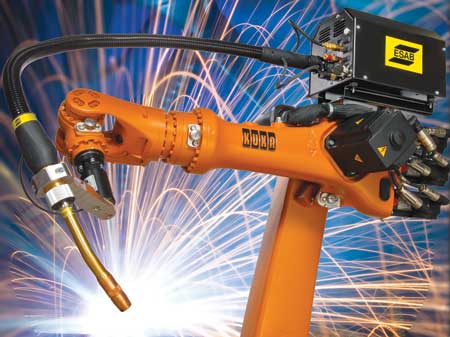
Traditional flatbed lasers are limited to 2D sheets. However, power towers—whether they are lattice structures or tubular monopoles—rely on 3D geometry. The 3D Structural Steel Processing Center utilizes a multi-axis gantry or robotic arm system that allows the laser head to maneuver around H-beams, I-beams, C-channels, and L-angles.
In Riyadh’s fabrication facilities, this means a single machine can handle the entire workflow of a structural element. A long H-beam can be loaded onto the conveyor, and the 12kW laser can simultaneously cut the beam to length, carve out bolt holes with sub-millimeter precision, and create complex notches for interlocking joints. This “all-in-one” processing reduces the footprint of the factory floor and minimizes the risk of human error associated with moving heavy beams between different workstations.
Mastering the ±45° Bevel: The Key to Weld Preparation
The most critical feature for power tower fabrication is the ±45° bevel cutting capability. Power towers are subject to immense cyclical loads and environmental stressors. To ensure structural safety, the welding of these components must be flawless. Traditional square-edge cuts require secondary manual grinding to create the “V” or “Y” grooves necessary for full-penetration welding.
The 5-axis fiber laser head solves this by tilting up to 45 degrees in either direction. As the 12kW beam moves along the edge of a thick steel section, it creates a precise chamfer. Because the laser is controlled by sophisticated CNC software, the bevel angle can be varied dynamically along a single cut. This is particularly vital for the intersections of tubular poles where the “saddle” joint requires a changing bevel angle to maintain a consistent weld gap. By delivering a “ready-to-weld” component directly from the laser, the Riyadh-based fabricator can reduce labor costs by up to 60% and significantly shorten the production cycle of a single transmission tower.
Precision Engineering for Power Tower Fabrication
Power towers are essentially giant puzzles made of thousands of unique steel components. The precision required for the bolt holes is exacting; if a hole is off by even two millimeters at the base, the entire 50-meter structure may lean or fail to assemble in the field.
The 12kW fiber laser offers a positioning accuracy of ±0.05mm. When processing the heavy-duty S355 or S275 structural steel common in Saudi electrical projects, the laser ensures that every hole is perfectly perpendicular or beveled as required, with no dross or burrs. This level of precision is critical for the “Lattice Towers” used in high-voltage transmission lines. Furthermore, for tubular monopoles, the 12kW laser can handle large-diameter pipes, cutting complex apertures for handholes, base plate connections, and arm attachments with a speed that plasma simply cannot match while maintaining a much higher degree of surface finish.
Adapting to Riyadh’s Environmental Challenges
Operating high-power fiber lasers in Riyadh requires specific engineering considerations due to the extreme ambient temperatures and dust. A 12kW laser generates significant heat within the resonator and the cutting head. The processing centers deployed in this region are equipped with advanced, high-capacity industrial chillers featuring dual-circuit cooling to regulate the temperature of both the laser source and the optics.
Moreover, the “3D” nature of the machine means more moving parts are exposed. Leading-edge systems in Riyadh utilize pressurized bellows and hermetically sealed optical paths to prevent the fine desert sand from contaminating the protective windows or the fiber delivery cable. The integration of specialized dust extraction systems is also a priority, as the high-speed vaporization of 12kW cutting produces significant particulate matter that must be filtered to maintain a safe working environment and protect the machine’s precision components.
Economic Impact and Vision 2030 Alignment
The investment in a 12kW 3D Structural Steel Processing Center is a strategic move for any Saudi enterprise looking to align with the “In-Kingdom Total Value Add” (IKTVA) programs. By localizing the production of high-tech steel components, Riyadh-based firms reduce their reliance on imported pre-fabricated steel.
From an ROI perspective, the 12kW laser minimizes material waste through “nesting” software optimized for 3D profiles. By calculating the most efficient way to cut multiple parts from a single structural beam, the system saves tons of steel annually. Additionally, the speed of the 12kW source means that a single facility can fulfill larger contracts for the Saudi Electricity Company (SEC) or NEOM’s infrastructure projects in a fraction of the time required by traditional methods. This efficiency is the engine that will power the next generation of Saudi Arabia’s industrial capability.
The Future: Digital Integration and BIM
The modern 12kW processing center in Riyadh is not an isolated island of machinery; it is a node in a digital ecosystem. These machines are increasingly integrated with Building Information Modeling (BIM) and Tekla structures. A designer in an office in downtown Riyadh can send a 3D model directly to the laser’s software. The software automatically identifies the bevels, the hole diameters, and the cut lengths, translating the CAD data into G-code without manual intervention.
This digital workflow ensures that the “as-built” tower matches the “as-designed” model perfectly. For power tower fabrication, where safety and structural longevity are non-negotiable, this traceability and digital accuracy provide an extra layer of quality assurance. As we look toward the future, the combination of 12kW power, 3D flexibility, and beveling precision will remain the gold standard for structural steel processing in the Middle East.
Conclusion
The 12kW 3D Structural Steel Processing Center with ±45° Bevel Cutting is more than just a tool; it is a catalyst for Riyadh’s industrial maturity. By solving the most difficult challenges in power tower fabrication—namely, the high-speed processing of thick materials and the automation of complex weld preparations—this technology empowers Saudi manufacturers to compete on a global stage. As the Kingdom continues to build the grid of the future, the precision and power of the fiber laser will be the silent force standing behind every pylon and pole that traverses the landscape.