
1.0 Executive Summary: The Evolution of Structural Fabrication in Pune
The infrastructure landscape in Pune, characterized by rapid expansion in metro rail networks, elevated corridors, and heavy industrial zoning, has necessitated a paradigm shift in steel fabrication. Traditional methods—comprising manual oxy-fuel cutting, plasma arc machining, and secondary mechanical grinding—are increasingly failing to meet the stringent tolerances required for modern bridge engineering. This technical report evaluates the deployment of the 12kW 3D Structural Steel Processing Center, specifically focusing on its ±45° beveling capabilities and its impact on the structural integrity and throughput of bridge components.
By transitioning to a high-density 12kW fiber laser source integrated into a multi-axis 3D kinematic system, fabricators in the Pune region are now achieving “weld-ready” components directly from the machine bed. This eliminates secondary processing, significantly reduces the Heat Affected Zone (HAZ), and ensures that the complex geometries of H-beams, I-beams, and C-channels are maintained within sub-millimeter tolerances.
2.0 Technical Analysis of the 12kW Fiber Laser Source
2.1 Photon Density and Kerf Control
The 12kW power rating is not merely a measure of speed; it is a critical factor in the stabilization of the cutting process for thick-walled structural steel (12mm to 30mm). At 12kW, the laser maintains a higher photon density, allowing for a narrower kerf width and a more stable melt pool. In the context of Pune’s bridge engineering requirements, where ASTM A572 or IS 2062 Grade E350/E450 steel is common, the high power allows for high-pressure nitrogen or oxygen-assisted cutting with minimal dross adhesion.
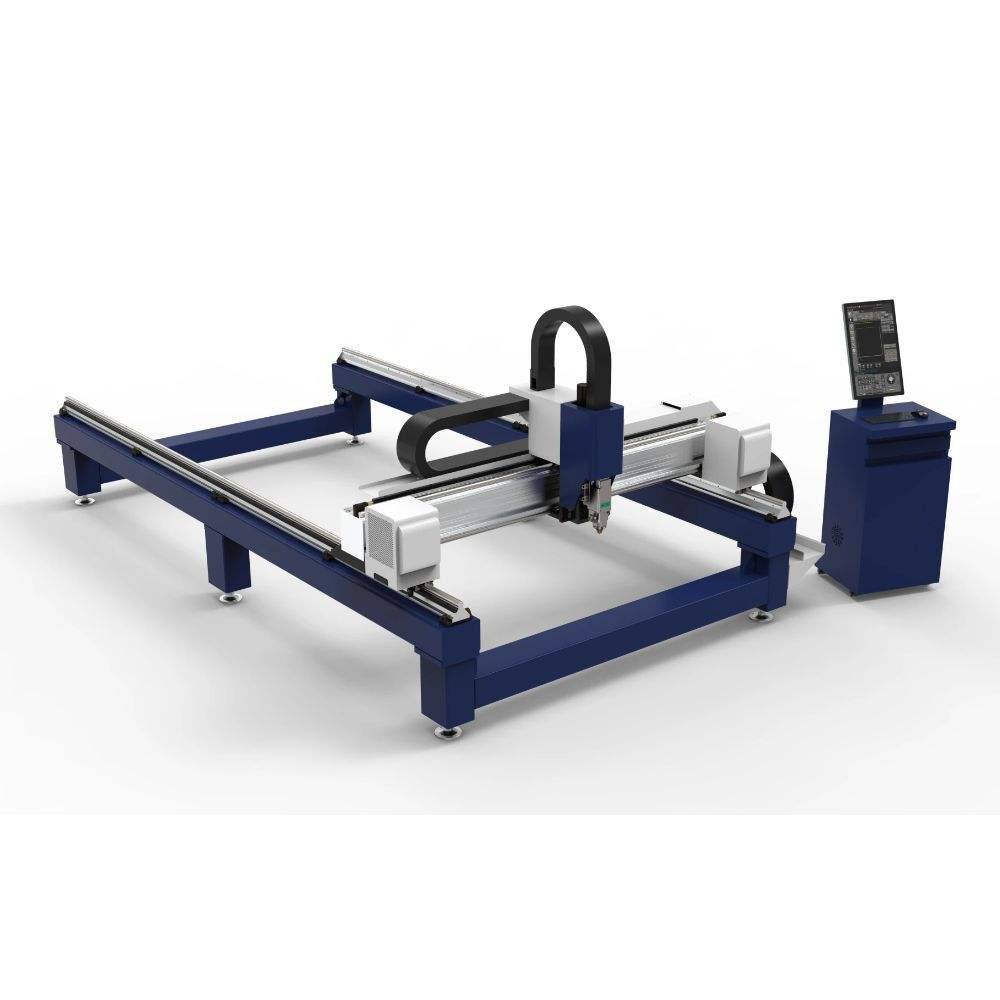
2.2 Thermal Management and HAZ Minimization
One of the primary concerns in bridge engineering is the alteration of metallurgical properties due to excessive heat input. Conventional plasma cutting generates a significant HAZ, which can lead to embrittlement and micro-cracking at the edges. The 12kW fiber laser, through its high-speed processing capabilities, minimizes the duration of thermal exposure. The resulting HAZ is negligible, preserving the base metal’s grain structure and ensuring that the fatigue resistance of the bridge girders remains within design parameters.
3.0 3D Kinematics and ±45° Bevel Cutting Technology
3.1 The Mechanics of 5-Axis Processing
The 3D Structural Steel Processing Center utilizes a sophisticated 5-axis head capable of ±45° tilt. Unlike standard flatbed lasers, this system employs a coordinated motion control algorithm that compensates for the beam’s focal length in real-time as it traverses the flanges and webs of structural profiles. In bridge engineering, where diagonal bracing and complex truss connections are standard, the ability to execute precise miter cuts and compound bevels is indispensable.
3.2 Achieving “Weld-Ready” Edges
The core bottleneck in Pune’s heavy fabrication shops has historically been the preparation of weld grooves (V, Y, and K-type joints). Manual beveling is inconsistent and labor-intensive. The ±45° beveling technology allows the 12kW laser to pre-cut these grooves during the initial fabrication phase.
- Precision: The angular accuracy is maintained within ±0.5°, ensuring uniform root gaps during fit-up.
- Surface Quality: The laser-cut surface typically achieves a roughness (Ra) of 12.5–25 μm, which meets the requirements for high-strength friction grip (HSFG) bolt connections and high-penetration welding without further grinding.
4.0 Application in Pune’s Bridge Engineering Sector
4.1 Metro Rail Elevated Girders
Pune’s Metro Rail projects require massive quantities of composite girders. These structures rely on the perfect alignment of shear studs and splice plates. The 12kW processing center automates the bolt-hole drilling (via laser piercing) and the profiling of splice plates with beveled edges, ensuring that when components arrive at the construction site in areas like Baner or Pimpri-Chinchwad, they require zero field adjustment.
4.2 Seismic Resilience and Joint Integrity
Pune is situated in Seismic Zone III. Bridge structures must exhibit high ductility. The precision of 3D laser cutting ensures that joints fit with interference-level accuracy, reducing the residual stresses introduced during the welding of poorly fitted parts. By using ±45° beveling to create perfect J-grooves or V-grooves, the volume of weld metal required is optimized, further reducing the total heat input into the structure and enhancing its seismic performance.
5.0 Synergistic Automation and Structural Processing
5.1 Material Handling and Geometric Compensation
Structural steel beams are rarely perfectly straight; they often exhibit “camber” or “sweep” from the rolling mill. The 3D Structural Steel Processing Center is equipped with laser-based sensing systems that scan the profile before cutting. The CNC controller then dynamically adjusts the cutting path to account for these deviations. This level of automation is critical for Pune-based fabricators who handle large-format beams (up to 12 meters in length), ensuring that every cut remains relative to the actual center line of the material.
5.2 Nesting and Material Utilization
Sophisticated nesting software integrated with the 12kW system allows for the optimization of beam usage. By intelligently sequencing cuts and bevels across a single length of steel, scrap rates are reduced by 15-20%. In a market where steel prices are volatile, this efficiency directly impacts the feasibility of large-scale infrastructure tenders.
6.0 Comparative Analysis: Laser vs. Traditional Methods
| Feature | Conventional Plasma/Oxy-fuel | 12kW 3D Laser Processing |
|---|---|---|
| Edge Quality | High dross, requires grinding | Clean, weld-ready |
| Bevel Accuracy | ±2.0° (Manual/Semi-Auto) | ±0.5° (CNC 5-Axis) |
| HAZ Depth | 1.5mm – 3.0mm | <0.2mm |
| Hole Precision | Poor (requires reaming) | H11 Tolerance (ready for bolting) |
| Labor Intensity | High (Multiple operators) | Low (Single operator/Automated) |
7.0 Challenges and Engineering Solutions
7.1 Beam Warpage and Support
The high-speed movement of a 12kW head requires a rigid machine bed and sophisticated support chucks. In the Pune field report, it was observed that the use of pneumatic or hydraulic “following” supports is essential to prevent vibrations that could induce striations on the beveled surface. The 3D center’s ability to maintain a constant standoff distance (capacitive sensing) even at extreme angles is the primary defense against focal drift.
7.2 Fume Extraction in Heavy Cutting
Processing 25mm steel with a 12kW laser generates significant particulate matter. For local compliance and operator safety, high-volume zone-based dust extraction systems are integrated into the processing center. This ensures that the optics remain uncontaminated and the workshop environment adheres to industrial health standards.
8.0 Conclusion
The integration of a 12kW 3D Structural Steel Processing Center with ±45° beveling technology represents the technological vanguard for bridge engineering in Pune. The synergy between high-power fiber laser sources and multi-axis kinematic control solves the dual challenges of precision and productivity. By providing beveled, high-tolerance components that require no post-processing, this technology ensures that the next generation of Pune’s infrastructure—from the Ring Road flyovers to the sprawling metro network—is built with unprecedented structural integrity and efficiency. The shift from “fabrication” to “precision engineering” of steel is now complete.
Field Report Authored By:
Senior Expert, Laser Systems & Structural Engineering
Technical Division
















