Introduction to 1.5kW Tube laser cutting Technology
The industrial landscape of Mexico City (CDMX) has seen a significant transformation with the integration of fiber laser technology. Among the various power configurations, the 1.5kW tube laser cutter has emerged as a versatile workhorse for small to medium-scale fabrication shops. This power level provides an optimal balance between initial capital investment and operational efficiency, particularly when processing stainless steel profiles. In the high-altitude environment of the Valley of Mexico, understanding the nuances of laser cutting is essential for maintaining precision and throughput.
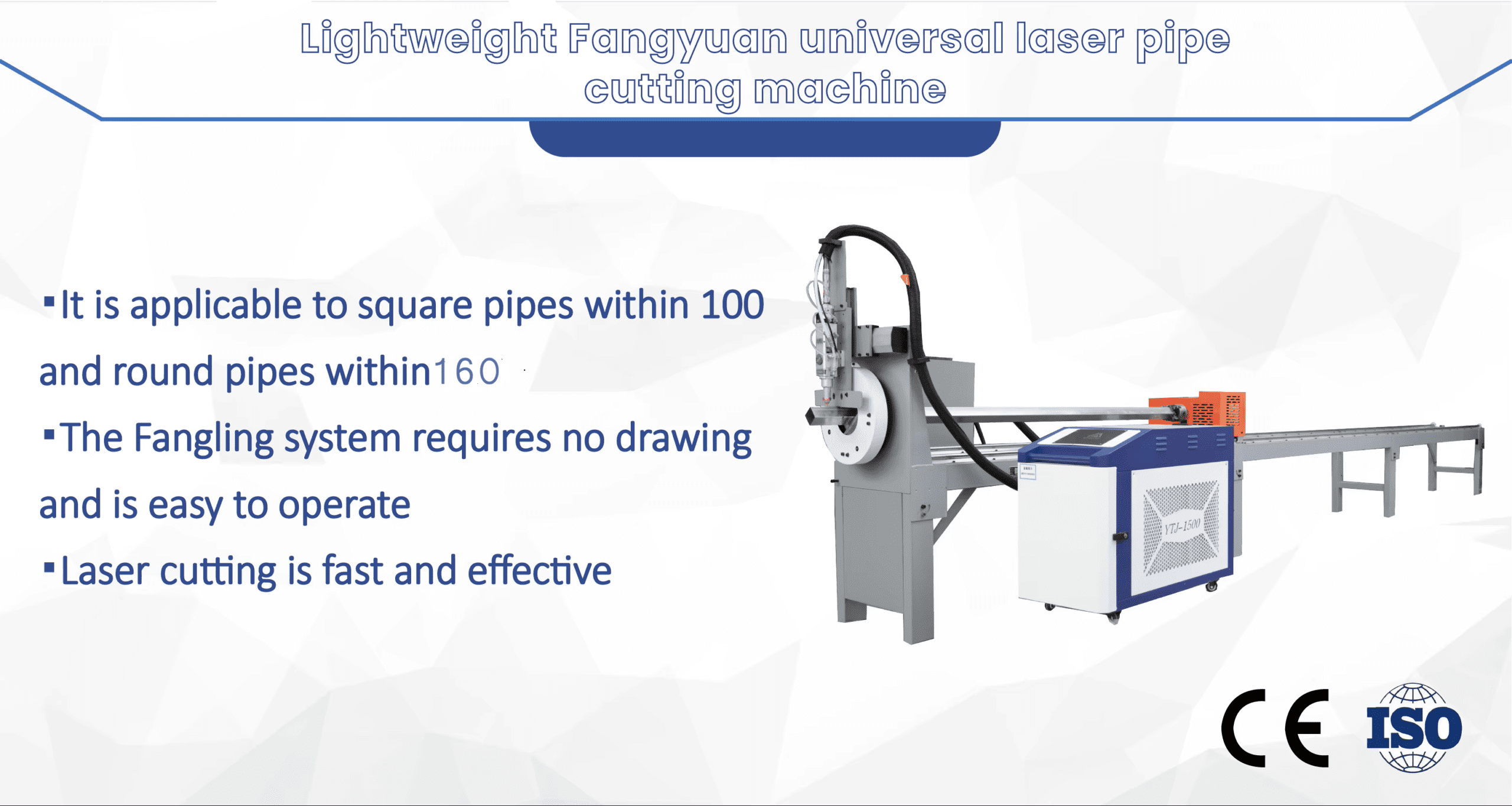
A 1.5kW fiber laser source is specifically engineered to handle the reflective nature of stainless steel while maintaining a narrow kerf width. Unlike CO2 lasers of the past, fiber technology utilizes an optical fiber doped with rare-earth elements, resulting in a beam quality that is significantly more stable and energy-efficient. For tube processing, this technology allows for the intricate cutting of rounds, squares, rectangles, and special profiles that were previously labor-intensive to manufacture using traditional mechanical methods.
The Engineering Advantage of 1.5kW Power
In the context of tube fabrication, 1.5kW represents a “sweet spot” for wall thicknesses ranging from 0.5mm to 5mm in stainless steel. While higher power sources exist, the 1.5kW density is sufficient to achieve high-speed sublimation cutting when paired with the correct assist gases. The engineering advantage lies in the beam’s high brightness and small spot size, which minimizes the Heat Affected Zone (HAZ). This is critical for stainless steel, as excessive heat can lead to carbide precipitation, compromising the material’s corrosion resistance—a vital factor for industries in Mexico City ranging from food processing equipment to architectural installations.
Processing Stainless Steel in Mexico City’s Industrial Climate
Operating a laser cutting system in Mexico City presents unique environmental challenges that engineers must account for. At an elevation of approximately 2,240 meters above sea level, the atmospheric pressure is lower than at coastal regions. This affects the dynamics of assist gases and the cooling efficiency of the machine’s chiller system. For stainless steel, where nitrogen is typically used as the assist gas to prevent oxidation, the flow dynamics at high altitude require precise calibration of the nozzle pressure and standoff distance.
Material Grades and Laser Interaction
Stainless steel grades 304 and 316 are the most common materials processed in the CDMX metropolitan area. Grade 304 is widely used for kitchen equipment and decorative elements, while 316 is preferred for chemical processing and medical applications due to its molybdenum content. When laser cutting these alloys, the 1.5kW beam must overcome the material’s inherent reflectivity. Modern fiber lasers operate at a wavelength of approximately 1.06 microns, which is absorbed much more readily by stainless steel than the 10.6 microns of a CO2 laser. This allows for faster piercing and cleaner cut edges without the need for anti-reflective coatings.
Assist Gas Optimization: Nitrogen vs. Oxygen
For high-quality stainless steel tube fabrication, nitrogen is the preferred assist gas. It acts as a shielding agent, blowing away the molten metal before it can react with atmospheric oxygen. This results in a “bright” cut edge that requires no secondary finishing. In Mexico City’s competitive manufacturing market, reducing post-processing time is a key factor in profitability. While oxygen can be used to cut thicker sections by initiating an exothermic reaction, it leaves an oxide layer that must be removed if the part is to be welded or aesthetically polished. With a 1.5kW source, nitrogen cutting is highly effective for the majority of tube gauges found in the local furniture and automotive sectors.
Technical Specifications and Machine Calibration
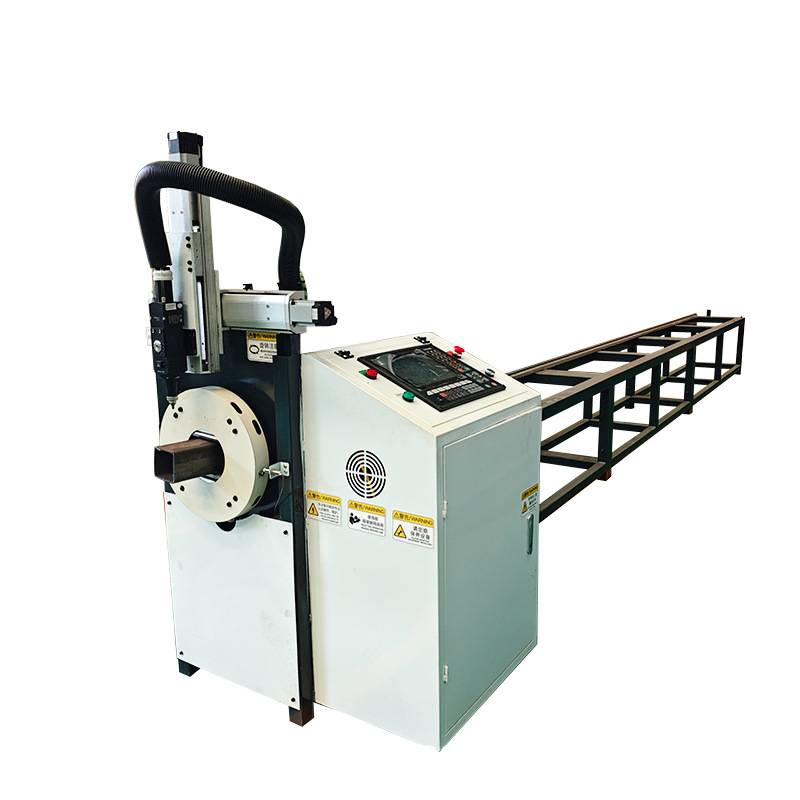
A 1.5kW tube laser cutter is typically equipped with a CNC-controlled chuck system, often featuring a front and rear pneumatic or electric chuck. Precision in tube laser cutting is dependent on the machine’s ability to rotate the workpiece with zero backlash while the laser head moves along the linear axes. Calibration must account for the “bow and twist” often found in commercially available stainless steel tubes in Mexico. Advanced systems utilize “seam detection” and “center-finding” sensors to ensure that holes and notches are placed accurately relative to the tube’s actual geometry rather than its theoretical model.
Focusing and Nozzle Selection
The focal position is perhaps the most critical parameter when cutting stainless steel. For 1.5kW systems, the focus is typically set slightly below the surface of the material to ensure that the kerf remains wide enough for the nitrogen to eject the melt. Nozzle selection also plays a vital role; a double-layer nozzle is often used to stabilize gas flow. In the thin-air environment of CDMX, engineers may find that increasing the nozzle diameter slightly or adjusting the gas pressure by 5-10% compared to sea-level specifications helps maintain a dross-free finish on the bottom of the tube.
Nesting and Software Integration
Efficiency in laser cutting is not just about the machine’s speed but also about material utilization. Professional nesting software designed for tube cutting allows for the “common line cutting” of parts, which reduces the number of pierces and the total travel distance of the laser head. In the high-cost stainless steel market, saving even 3% of material through better nesting can significantly impact the bottom line of a project in industrial zones like Tlalnepantla or Naucalpan.
Operational Challenges and Solutions in CDMX
Beyond altitude, the electrical grid in Mexico City can occasionally experience voltage fluctuations. A 1.5kW fiber laser is sensitive to power quality. It is highly recommended to install a high-precision voltage stabilizer and an isolation transformer to protect the laser source and the CNC control system. Furthermore, the dust and particulate matter in the urban environment of CDMX necessitate a robust filtration system. Stainless steel cutting produces fine metallic dust that, if not properly extracted, can contaminate the optical path or the mechanical guide rails.
Cooling Systems and Thermal Management
The chiller is the heart of the 1.5kW laser system. Fiber lasers are efficient, but the small amount of heat generated must be dissipated to maintain the stability of the laser wavelength. At high altitudes, the cooling capacity of air-cooled chillers is reduced because there are fewer air molecules to carry away heat. Operators in Mexico City should ensure their chillers are oversized for the application or located in well-ventilated areas to prevent “high-temperature” alarms during the hot afternoons of the dry season.
Safety Protocols in the Workshop
Laser cutting stainless steel involves high-intensity light that is invisible to the human eye but can cause permanent retinal damage. The 1.5kW fiber laser falls under Class 4 laser safety standards. In a professional Mexican workshop, this requires a fully enclosed machine housing with certified laser-safe glass (OD6+ rating). Additionally, the fumes generated from cutting stainless steel contain chromium and nickel, which are hazardous. A high-volume extraction system with HEPA filtration is mandatory to comply with local environmental and workplace safety regulations (NOM standards).
Maintenance and Long-Term Reliability
To maximize the lifespan of a 1.5kW tube laser cutter, a strict maintenance schedule is required. The optical path, specifically the protective window in the cutting head, must be inspected daily. Even a tiny speck of dust can absorb laser energy, heat up, and shatter the lens. In the industrial corridors of Mexico City, where humidity can vary, maintaining a clean-room environment for optical maintenance is ideal. Lubrication of the chuck gears and the linear guides ensures that the high-speed movements required for thin-walled stainless steel cutting remain fluid and accurate.
Local Technical Support
For businesses in Mexico City, the availability of local technical support and spare parts is a critical consideration. Choosing a machine with a reputable laser source (such as IPG, Raycus, or Max) ensures that components like delivery fibers and modules can be serviced. Local distributors in the Vallejo or Iztapalapa areas often provide training for operators, which is essential for mastering the nuances of the CNC software and the specific parameters for stainless steel alloys.
Conclusion: The Future of Tube Fabrication in Mexico
The 1.5kW tube laser cutter represents a significant leap forward for the Mexican manufacturing sector. By providing the precision required for high-end stainless steel products, it allows local shops to compete with international suppliers. As the “nearshoring” trend continues to bring more automotive and aerospace manufacturing to Mexico, the demand for high-quality laser cutting services will only grow. Engineers and business owners who invest in understanding the technical requirements of these machines—especially within the unique environmental context of Mexico City—will find themselves at the forefront of the region’s industrial evolution.
Whether producing complex exhaust systems, sleek laboratory furniture, or structural components for the construction industry, the 1.5kW fiber laser offers a path to increased productivity and superior quality. By mastering gas dynamics, optical focus, and preventive maintenance, fabricators in CDMX can ensure their operations remain efficient, safe, and highly profitable in an increasingly demanding market.