
Introduction to 1.5kW Tube laser cutting in Leon’s Industrial Landscape
The industrial sector in Leon has undergone a significant transformation over the last decade, transitioning from traditional manufacturing methods to high-precision automated solutions. At the forefront of this evolution is the 1.5kW tube laser cutting machine. This specific power rating—1500 watts—has emerged as the “sweet spot” for many local enterprises, particularly those involved in the fabrication of automotive components, structural furniture, and HVAC systems.
In a city where efficiency and precision are paramount to remaining competitive within the Bajío region’s supply chain, mastering laser cutting technology is no longer optional. The 1.5kW fiber laser source provides a perfect balance between capital investment and operational capability, especially when processing the high-demand material of the region: galvanized steel. This guide explores the technical nuances, operational strategies, and maintenance protocols required to maximize the output of a 1.5kW tube laser in the Leon industrial context.
The Technical Superiority of 1.5kW Fiber Technology
The 1.5kW fiber laser is engineered to deliver a high-density beam that is absorbed efficiently by metallic surfaces. Unlike CO2 lasers of the past, fiber technology operates at a wavelength of approximately 1.06 microns. This shorter wavelength allows for a smaller focal spot and higher absorption rates in reflective materials like galvanized steel.
Energy Efficiency and Beam Quality
For workshops in Leon, energy consumption is a critical factor in overhead costs. A 1.5kW fiber laser offers a wall-plug efficiency of nearly 30-35%, significantly higher than traditional methods. The beam quality, often measured by the M2 factor, is exceptionally high in these units, ensuring that the energy is concentrated precisely where the cut is needed. This concentration minimizes the Heat Affected Zone (HAZ), which is vital for maintaining the structural integrity of thin-walled tubes.

Processing Galvanized Steel: Challenges and Solutions
Galvanized steel is a staple in Leon’s construction and automotive sectors due to its corrosion resistance. However, laser cutting galvanized material presents unique challenges that require specific engineering adjustments. The primary issue lies in the zinc coating, which has a much lower melting point (approximately 419°C) than the underlying steel (approximately 1500°C).
Managing the Zinc Vapor Barrier
As the laser heats the metal, the zinc layer vaporizes before the steel melts. This vapor can interfere with the laser beam and create turbulence in the molten pool, leading to “dross” or slag at the bottom of the cut. To counteract this, 1.5kW systems must be calibrated with high-pressure assist gases. In Leon’s high-production environments, using Nitrogen as an assist gas is often preferred over Oxygen. Nitrogen acts as a cooling agent and mechanical force, blowing the molten zinc and steel out of the kerf before they can re-solidify, resulting in a silver, burr-free edge.
Fume Extraction and Safety
The vaporization of zinc produces zinc oxide, a white smoke that is hazardous if inhaled. Engineering a robust extraction system is mandatory for any 1.5kW tube laser installation in Leon. High-volume dust collectors with HEPA filtration are necessary to ensure compliance with local environmental and workplace safety regulations.
Optimizing Parameters for Tube Geometry
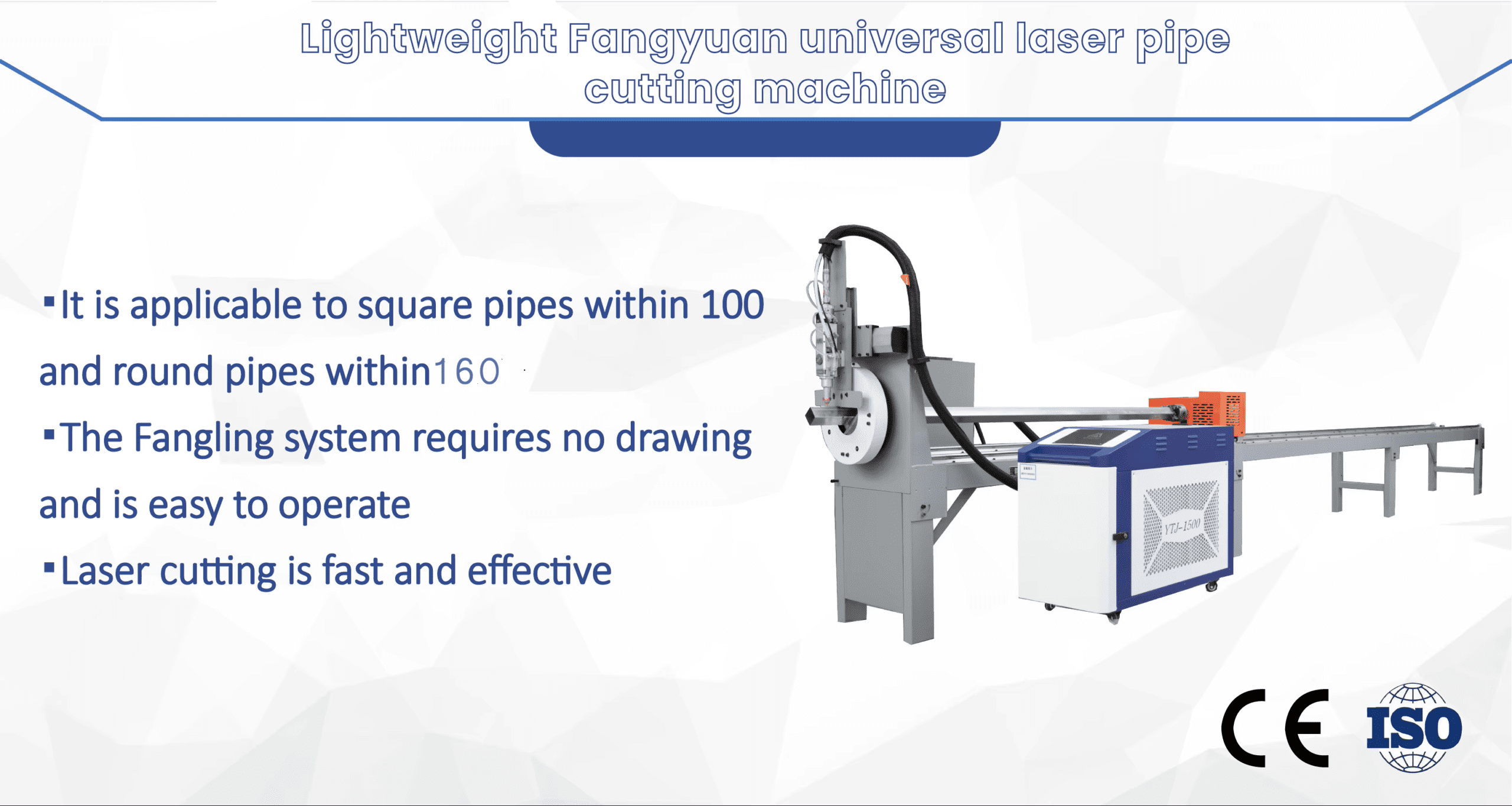
Tube laser cutting differs significantly from flat sheet cutting due to the dynamics of the workpiece. Whether processing round, square, or rectangular profiles, the 1.5kW machine must adjust its focal point and feed rate in real-time as the tube rotates.
Corner Dynamics in Square Tubes
One of the most difficult tasks for a 1.5kW laser is maintaining cut quality around the corners of a square galvanized tube. At the corners, the material thickness effectively increases, and the machine’s linear speed often drops due to the inertia of the chucks. To prevent over-burning or “rounding” of the corners, advanced CNC controllers utilize power ramping. This feature automatically reduces the 1.5kW output in proportion to the speed reduction, ensuring a consistent kerf width throughout the geometry.
Assist Gas Selection for Leon’s Fabricators
The choice of assist gas is the single most influential factor in the cost-per-part for laser cutting operations in Leon.
Oxygen (O2) Cutting
Oxygen is typically used for thicker carbon steels where an exothermic reaction is desired to speed up the process. However, on galvanized steel, Oxygen can cause excessive oxidation of the zinc layer, leading to a blackened edge that may require post-processing before welding or painting.
Nitrogen (N2) and High-Pressure Air
Nitrogen provides the cleanest finish, essential for “ready-to-assemble” parts. However, for many cost-conscious shops in Leon, high-pressure compressed air is becoming a popular alternative. When used with a 1.5kW source, compressed air (properly dried and filtered) can cut galvanized tubes up to 3mm thick with acceptable quality, drastically reducing the cost of consumables.
Maintenance Protocols for High-Uptime Operations
In the demanding industrial environment of Leon, machine downtime is costly. A 1.5kW fiber laser requires a disciplined maintenance schedule to ensure the optical path remains pristine.
Optical Component Care
The protective window (cover glass) is the most vulnerable component when laser cutting galvanized steel. Zinc spatter can easily reach the lens if the nozzle distance and gas pressure are not perfectly synchronized. Daily inspections of the cover glass and regular cleaning with optical-grade isopropyl alcohol are mandatory. If the 1.5kW beam passes through a contaminated lens, the heat absorption will quickly destroy the optic.
Mechanical Calibration
The chucks and the gantry must be lubricated and checked for alignment weekly. In tube cutting, the concentricity of the rotation is vital. If the tube wobbles by even half a millimeter, the focal point will shift, leading to incomplete cuts or excessive dross, especially on the reflective surface of galvanized steel.
Economic Impact and ROI in the Leon Region
Investing in a 1.5kW tube laser cutter offers a rapid Return on Investment (ROI) for Leon-based manufacturers. By consolidating multiple operations—sawing, drilling, and milling—into a single laser cutting process, shops can reduce labor costs by up to 60%.
Integration with Local Supply Chains
Leon’s proximity to major automotive assembly plants means that local suppliers must meet stringent ISO standards. The precision of a 1.5kW fiber laser ensures that tolerances of +/- 0.1mm are consistently met, allowing local shops to bid on high-value contracts that were previously out of reach. Furthermore, the ability to cut complex interlocking tabs and slots into tubes simplifies the subsequent welding process, further increasing the throughput of the entire production line.
Conclusion: The Future of Fabrication in Leon
The 1.5kW tube laser cutter represents the modern standard for versatile, efficient, and high-quality metal fabrication. For the engineers and business owners in Leon, mastering this technology—particularly for galvanized steel—is the key to unlocking new levels of productivity. By understanding the interaction between the 1500-watt beam and the zinc coating, optimizing assist gas delivery, and maintaining rigorous mechanical standards, Leon’s industrial sector will continue to thrive as a leader in precision manufacturing.
As laser cutting technology continues to advance, the 1.5kW platform remains the most accessible and effective tool for those looking to bridge the gap between traditional craftsmanship and the future of Industry 4.0.
















