
Introduction to 1.5kW Fiber laser cutting in Tijuana’s Industrial Sector
The manufacturing landscape in Tijuana, Baja California, has undergone a significant transformation over the last decade. As a primary hub for the maquiladora industry, the region demands high-precision tools that can handle high-volume production with minimal downtime. Among these tools, the 1.5kW tube laser cutting machine has emerged as a cornerstone for metal fabrication shops specializing in carbon steel. This power level—1.5kW—represents a strategic balance between capital investment and operational capability, particularly for shops processing light to medium-gauge structural tubing.
In the context of Tijuana’s proximity to the United States border, local manufacturers are often integrated into North American supply chains for automotive, medical, and aerospace sectors. These industries require the tight tolerances and clean finishes that only fiber laser cutting can provide. Moving away from traditional mechanical sawing and drilling toward automated laser systems allows local shops to compete on a global scale, offering faster turnaround times and superior part quality.
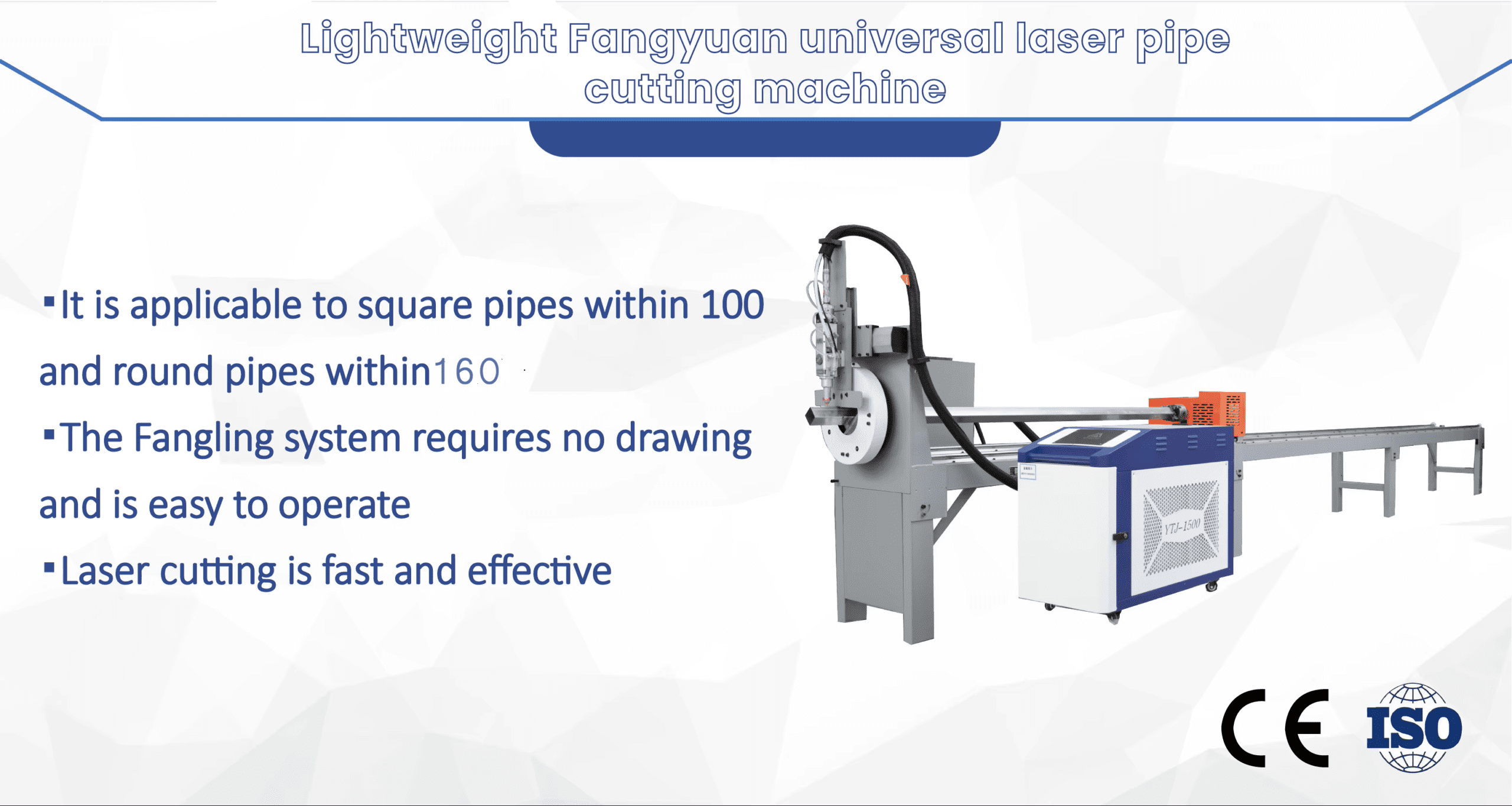
The Technical Superiority of 1.5kW Fiber Lasers for Carbon Steel
Carbon steel is the most commonly processed material in Tijuana’s construction and furniture manufacturing sectors. The 1.5kW fiber laser source is specifically optimized for these applications. Unlike CO2 lasers of the past, fiber technology uses a solid-state gain medium, resulting in a beam with a much smaller spot size and higher energy density. When applied to carbon steel, this translates to a narrower kerf and a significantly reduced heat-affected zone (HAZ).
Material Thickness and Cutting Speeds
For a 1.5kW system, the “sweet spot” for carbon steel typically ranges from 1mm to 6mm in wall thickness. While the machine can often sever up to 8mm or 10mm at slower speeds, the efficiency peak is found in the 2mm to 4mm range. In this bracket, laser cutting speeds can exceed several meters per minute, depending on the complexity of the geometry. This speed is crucial for Tijuana-based fabricators who must manage high-volume orders for rack systems, automotive frames, and commercial furniture components.
The Role of Oxygen as an Assist Gas
When laser cutting carbon steel with a 1.5kW source, oxygen (O2) is the standard assist gas. The oxygen acts as a catalyst, creating an exothermic reaction with the heated steel. This reaction adds thermal energy to the process, allowing the laser to penetrate thicker materials than would be possible with nitrogen alone at the same power level. However, this process leaves a thin oxide layer on the cut edge. For many industrial applications in Tijuana, this is acceptable, though it may require a quick cleaning if the parts are to be powder-coated or painted to ensure maximum adhesion.
Engineering Advantages of Dedicated Tube Processing
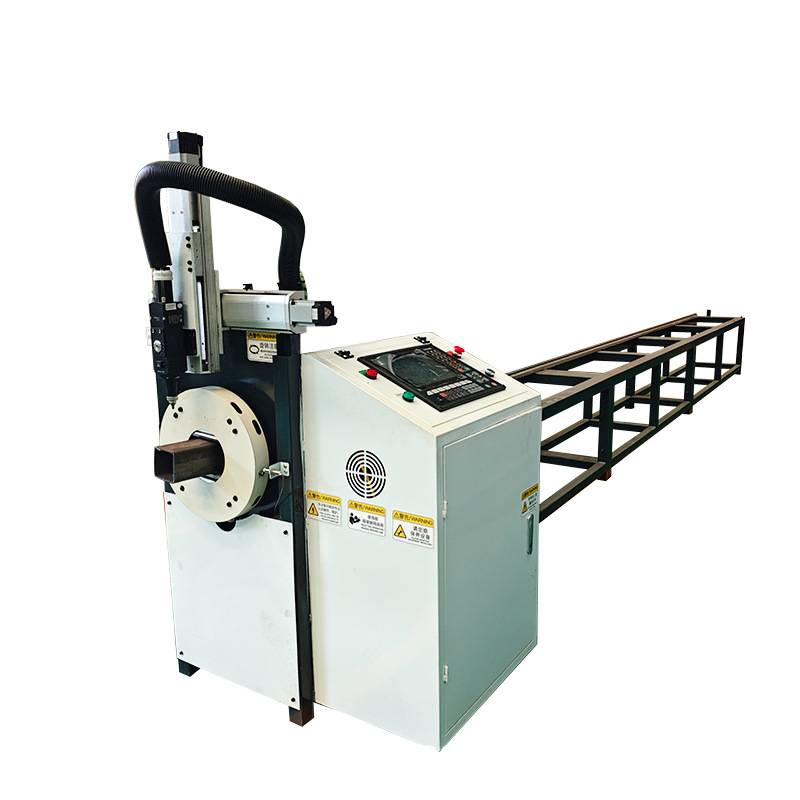
A dedicated tube laser cutting machine differs significantly from a flat-bed laser with a rotary attachment. The engineering of a 1.5kW tube-specific system focuses on material handling and rotational precision. In Tijuana’s competitive market, the ability to process round, square, rectangular, and even oval profiles on a single machine is a major competitive advantage.
Automatic Chucking and Centering
Modern 1.5kW systems utilize pneumatic or electric chucks that provide self-centering capabilities. This is vital when working with carbon steel tubes that may have slight dimensional variances or “bowing” from the mill. The chucks ensure that the center of rotation is perfectly aligned with the laser head’s focal point. This precision allows for the creation of complex interlocking joints, such as “tab and slot” designs, which drastically reduce assembly and welding time in downstream production.
Advanced Nesting Software
The efficiency of laser cutting is not just about the hardware; it is about the software. For Tijuana manufacturers, utilizing specialized nesting software for tubes allows for the optimization of raw material. By nesting multiple parts on a single 6-meter or 9-meter length of carbon steel, scrap rates are minimized. The software can also handle “common line cutting,” where a single pass of the laser creates the edges of two adjacent parts, further increasing throughput and reducing gas consumption.
Applications in Tijuana’s Industrial Ecosystem
Tijuana’s economy is heavily bolstered by the “Maquiladora” program, which involves thousands of factories. The 1.5kW tube laser is perfectly suited for several specific niches within this ecosystem.
Automotive and Transportation
The region is home to several major automotive assembly plants and their Tier 2 and Tier 3 suppliers. These companies require precision-cut carbon steel tubing for roll cages, exhaust components, and chassis reinforcements. The 1.5kW laser cutting process ensures that every hole, notch, and miter is identical, which is essential for robotic welding cells that require high repeatability.
Medical Device Infrastructure
Tijuana is one of the largest medical device manufacturing clusters in North America. While many medical instruments are stainless steel, the infrastructure surrounding the manufacturing—such as specialized cleanroom carts, storage racks, and equipment frames—is often made from high-quality carbon steel. Laser cutting provides the burr-free finish required in these sensitive environments.
Architecture and Construction
With the rapid expansion of industrial parks in Otay Mesa and El Florido, there is a constant demand for structural steel components. 1.5kW lasers are used to cut architectural tubing for railings, decorative facades, and structural supports. The ability to cut complex angles and shapes into large tubes allows architects more creative freedom while maintaining structural integrity.
Maintenance and Operational Longevity in the Tijuana Climate
Operating high-tech machinery in Tijuana requires an understanding of the local environment. The region can be dusty, and power stability can occasionally fluctuate. To maintain a 1.5kW laser cutting system, several engineering protocols must be followed.
Climate Control and Chiller Systems
The fiber laser source and the cutting head are sensitive to temperature. A dual-circuit water chiller is mandatory. In Tijuana’s warmer months, the chiller must work efficiently to remove heat from the 1.5kW source and the optics. Failure to maintain a consistent temperature can lead to beam divergence and premature failure of the laser diodes. Local shops often house these machines in temperature-controlled environments to protect the electronics from the coastal humidity and dust.
Optical Path Integrity
The “cutting head” is the most critical component of the laser cutting system. It contains the focusing lens and protective windows. In a carbon steel environment, “spatter” from the oxygen-assisted cutting process can damage these optics. Regular inspection and cleaning of the protective lens are necessary to prevent “thermal lensing,” where contaminants on the glass absorb laser energy, heat up, and distort the beam profile.
Economic Impact: Why 1.5kW is the Right Investment
For many fabricators in Baja California, the jump from 1kW to 1.5kW is the most cost-effective upgrade. While 3kW or 6kW machines offer higher speeds for very thick materials, the 1.5kW unit covers 80% of the standard tubing wall thicknesses used in general manufacturing at a fraction of the cost. The lower power consumption also leads to lower monthly utility bills, a significant factor for small to medium-sized enterprises (SMEs) in Tijuana.
Furthermore, the ease of training operators on a 1.5kW system allows shops to scale quickly. Modern CNC interfaces are intuitive, often allowing an operator to go from a CAD file to a finished cut tube in a matter of minutes. This agility is what allows Tijuana’s manufacturing sector to remain a leader in the global market.
Conclusion: The Future of Metal Fabrication in Baja
The integration of 1.5kW tube laser cutting technology is no longer a luxury for Tijuana’s metal shops; it is a necessity. As the demand for carbon steel components grows across the border and within Mexico, the precision, speed, and versatility of fiber lasers will continue to drive industrial growth. By investing in dedicated tube processing hardware, local manufacturers ensure they can meet the rigorous standards of the international market while optimizing their internal production costs. The 1.5kW fiber laser stands as a testament to the engineering progress of the region, providing a robust solution for the diverse needs of the modern “Maquiladora.”
















