
The Rise of Precision Fabrication: 1.5kW Tube laser cutting in Queretaro’s Industrial Landscape
The industrial corridor of Queretaro has emerged as Mexico’s premier hub for advanced manufacturing, aerospace, and automotive engineering. As the region continues to attract global Tier 1 and Tier 2 suppliers, the demand for high-precision metal fabrication has skyrocketed. Central to this technological shift is the 1.5kW tube laser cutter, a machine that represents the perfect balance between power, efficiency, and capital investment for medium-gauge carbon steel applications. In an environment where “just-in-time” delivery and zero-defect quality are the norms, understanding the nuances of fiber laser technology is essential for any competitive workshop in the Bajío region.
A 1.5kW fiber laser source is specifically engineered to handle the rigors of industrial production. Unlike traditional CO2 lasers, fiber technology utilizes an optical fiber doped with rare-earth elements to amplify light, resulting in a beam with a wavelength of approximately 1.07 microns. This specific wavelength is highly absorbed by carbon steel, making the laser cutting process significantly more energy-efficient and faster than legacy methods. For the manufacturers in Queretaro, this translates to lower electricity costs and higher throughput per square meter of floor space.
Technical Specifications and Carbon Steel Performance
When discussing 1.5kW systems, it is vital to define the operational envelope for carbon steel—the most common material used in the construction of automotive chassis, furniture frames, and structural supports. Carbon steel, known for its excellent weldability and structural integrity, reacts exceptionally well to the concentrated energy of a fiber laser.
A 1.5kW tube laser cutter typically handles wall thicknesses ranging from 0.5mm to 8mm for carbon steel. While the machine can technically pierce thicker materials, the “sweet spot” for high-speed production lies within the 1mm to 6mm range. Within this bracket, the laser can maintain high feed rates while ensuring a minimal Heat Affected Zone (HAZ). This is critical for industries in Queretaro that require post-process welding, as a smaller HAZ prevents the brittleness often associated with excessive thermal input.
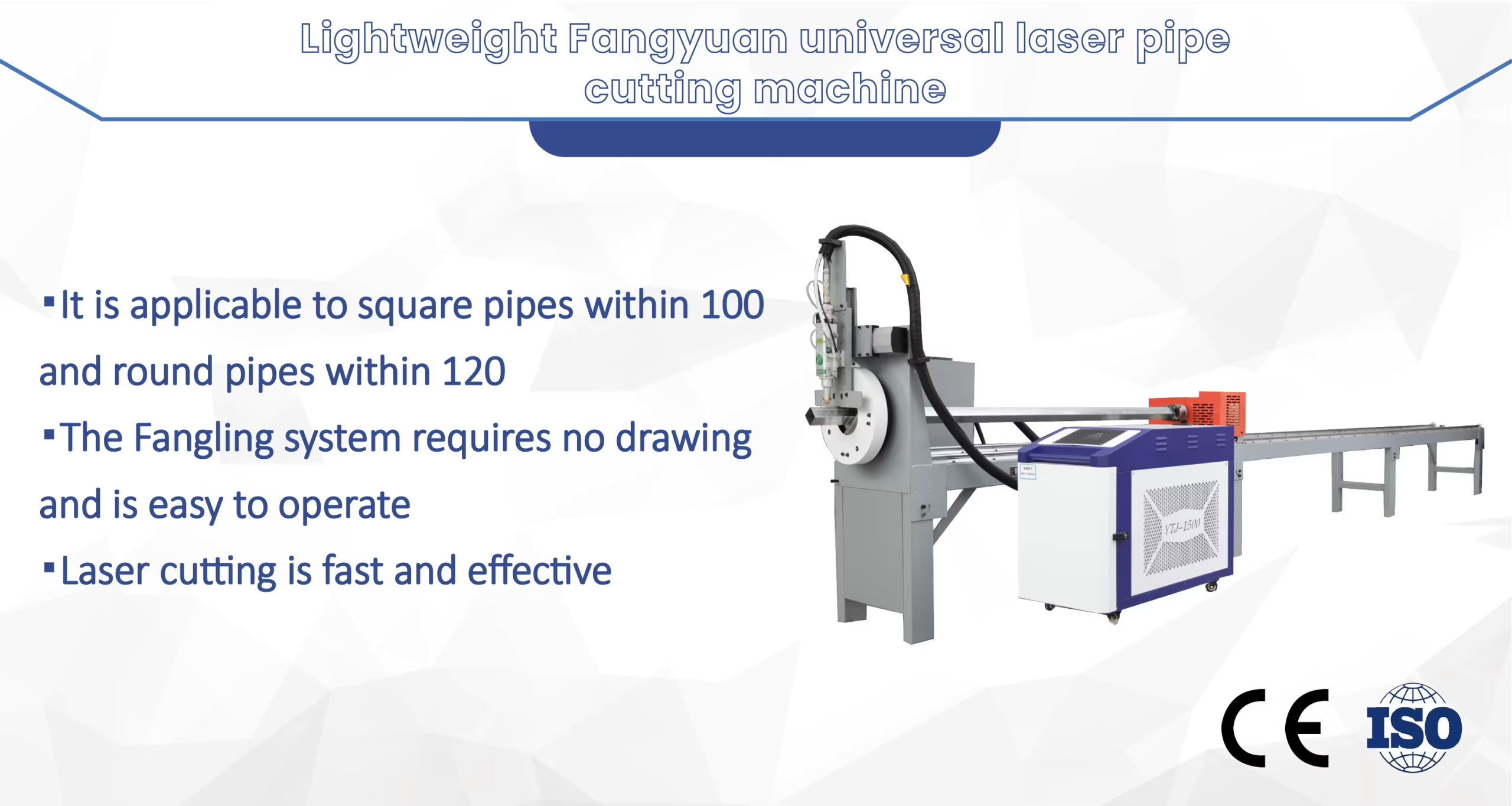 laser cutting machine MAK120″ style=”width:100%; max-width:800px; height:auto; margin: 20px 0;”>
The Strategic Advantage for Queretaro’s Automotive Sector
Queretaro’s automotive sector relies heavily on tubular components for exhaust systems, seat frames, and safety cages. The transition to 1.5kW laser cutting technology allows local manufacturers to move away from traditional mechanical sawing and drilling. Mechanical methods often introduce deformation and require secondary deburring processes. In contrast, a CNC-controlled tube laser performs complex geometries—such as bird-mouth joints, miter cuts, and intricate hole patterns—in a single setup.
The precision of a 1.5kW system ensures that the kerf width remains extremely narrow, often under 0.1mm. This level of accuracy is vital for robotic welding cells used in Queretaro’s large-scale assembly plants. When parts are cut with such high tolerance, the fit-up is perfect every time, reducing the need for expensive jigs and minimizing weld filler consumption. This efficiency is what allows local shops to compete with international manufacturers on both price and quality.
Optimization of Assist Gases: Oxygen vs. Nitrogen
In the context of carbon steel laser cutting, the choice of assist gas is a primary factor in determining edge quality and operational cost. For a 1.5kW system, oxygen is the most common assist gas used for carbon steel. The oxygen reacts exothermically with the heated metal, adding thermal energy to the cutting process and allowing for faster speeds on thicker sections. This results in a clean, square edge, though it does leave a thin oxide layer that may need to be removed if the part is to be powder-coated.
However, for thinner carbon steel tubes (under 2mm), some high-end shops in Queretaro are experimenting with high-pressure nitrogen or compressed air. Nitrogen cutting is a purely mechanical process where the gas blows the molten metal out of the kerf without a chemical reaction. This results in an oxide-free surface, which is ideal for parts requiring immediate painting or plating. While nitrogen requires more power and higher gas volumes, the 1.5kW fiber source is efficient enough to make this a viable option for specific high-speed, thin-walled applications.
Integration with Industry 4.0 and Nesting Software
Modern tube laser cutting is as much about software as it is about hardware. In the industrial parks of El Marqués and Balvanera, engineers are increasingly utilizing sophisticated CAD/CAM nesting software to maximize material utilization. Because carbon steel is a commodity with fluctuating prices, reducing scrap is a direct way to increase profitability.
Advanced nesting algorithms allow for “common line cutting,” where two parts share a single cut path, and “tab-and-slot” designs that simplify assembly. For a 1.5kW machine, the CNC controller can precisely manage the laser power during cornering—a process known as power ramping. This prevents the “over-burning” of corners in square or rectangular tubes, ensuring that the structural integrity of the tube is maintained throughout its geometry. This level of control is a hallmark of the 1.5kW fiber systems currently being deployed across Central Mexico.
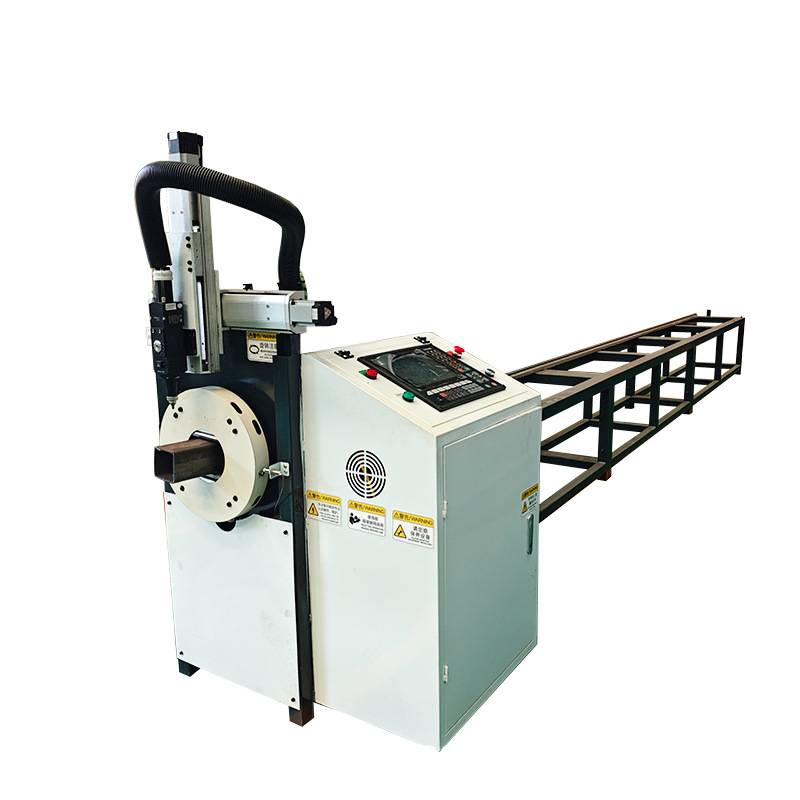
Maintenance and Durability in the Bajío Climate
Queretaro’s environment, characterized by moderate temperatures but occasional high dust levels from surrounding industrial construction, necessitates a robust maintenance regimen for 1.5kW tube lasers. Fiber lasers are inherently more durable than CO2 lasers because they have no moving parts or mirrors in the beam generation path. However, the external optics and the chiller system require diligent care.
The chiller is the heart of the 1.5kW system, maintaining the laser source and the cutting head at a constant temperature. In the semi-arid climate of Queretaro, ensuring that the cooling water is deionized and free of microbial growth is essential to prevent internal corrosion. Furthermore, the cutting head’s protective window—the final piece of glass before the laser exits the nozzle—must be inspected daily. Even a microscopic speck of carbon steel dust can absorb laser energy, heat up, and shatter the lens, leading to costly downtime.
Economic Impact and Return on Investment (ROI)
For a medium-sized workshop in Queretaro, the acquisition of a 1.5kW tube laser cutter is a transformative investment. The ROI is typically realized through three channels: labor reduction, material savings, and expanded service offerings. By consolidating sawing, drilling, and milling into a single laser cutting operation, a company can often reduce its labor requirements for a specific part by up to 70%.
Furthermore, the ability to offer high-precision tube cutting allows local shops to bid on contracts that were previously outsourced to the United States or Asia. As the “nearshoring” trend continues to bring more manufacturing to Mexico, having an in-house 1.5kW fiber laser provides the flexibility needed to handle prototype runs and high-volume production with equal efficiency. The lower maintenance costs of fiber technology compared to CO2 also mean that the total cost of ownership (TCO) is significantly lower over a five-to-ten-year horizon.
Conclusion: The Future of Metal Fabrication in Queretaro
The 1.5kW tube laser cutter is more than just a tool; it is a catalyst for industrial maturity in Queretaro. By specializing in the precision laser cutting of carbon steel, local manufacturers are elevating their capabilities to meet global standards. The combination of the region’s skilled workforce and high-efficiency fiber laser technology creates a powerful synergy that drives innovation in the automotive, aerospace, and structural engineering sectors.
As we look forward, the integration of 1.5kW systems with automated loading and unloading racks will further enhance productivity, allowing for “lights-out” manufacturing. For any business looking to solidify its position in the Bajío industrial heartland, mastering the art and science of tube laser fabrication is no longer optional—it is the baseline for success in a rapidly evolving global market. The 1.5kW fiber laser stands at the forefront of this revolution, providing the precision, speed, and reliability required to turn raw carbon steel into the backbone of modern industry.
















