Introduction to 1.5kW Tube laser cutter Technology
The advent of fiber laser technology has revolutionized the metal fabrication industry, particularly in the precision processing of tubular components. A 1.5kW tube laser cutter represents a significant milestone in this evolution, offering a balanced combination of power, precision, and cost-effectiveness. For manufacturers in industrial hubs like Leon, where the demand for high-quality metal components in the automotive, furniture, and hardware sectors is surging, adopting this technology is no longer a luxury but a strategic necessity.
laser cutting technology utilizes a high-intensity beam of light to melt, burn, or vaporize material along a programmed path. In the context of a 1.5kW system, the fiber laser source generates a wavelength that is highly absorbable by metals, allowing for efficient energy transfer. When applied to tube processing, the machine integrates a rotary axis (chuck system) with a moving laser head, enabling complex geometries, holes, and notches to be cut into round, square, rectangular, and oval profiles with micron-level accuracy.
 laser cutting machine” style=”max-width: 100%; height: auto; margin: 20px 0;”>
The Industrial Landscape of Leon and the Demand for Brass
Leon has established itself as a critical center for manufacturing excellence. While historically known for its leather and footwear industries, the region has diversified significantly into automotive parts, construction hardware, and high-end decorative fixtures. Brass, an alloy of copper and zinc, plays a pivotal role in these sectors due to its corrosion resistance, electrical conductivity, and aesthetic appeal.
The use of brass tubing is particularly prevalent in Leon’s architectural hardware industry—think of high-end door handles, bathroom fixtures, and decorative railings. Furthermore, the automotive sector utilizes brass for specialized bushings and connectors. Traditional methods of processing brass tubes, such as mechanical sawing or manual drilling, often result in burrs, material waste, and inconsistent quality. The implementation of a 1.5kW tube laser cutter allows Leon-based workshops to achieve clean edges and intricate designs that were previously impossible or too expensive to produce.
Why 1.5kW is the Optimal Power for Brass Tubing
In the realm of fiber lasers, “more power” is not always the only solution. For the majority of brass tube applications, which typically involve wall thicknesses ranging from 0.5mm to 4mm, a 1.5kW power rating is exceptionally efficient. Brass is a highly reflective metal, which presents unique challenges for laser cutting. However, modern fiber lasers at the 1.5kW level are equipped with back-reflection protection and high-frequency modulation that allow them to pierce and cut through brass without damaging the laser source.
Technical Challenges: Cutting Reflective Materials
Engineering-wise, brass is classified as a “yellow metal,” characterized by high thermal conductivity and high reflectivity. When a laser beam hits a brass surface, a significant portion of the energy can be reflected back into the cutting head. If not managed correctly, this back-reflection can destroy the optical fibers and the laser diodes.
A professional-grade 1.5kW tube laser cutter solves this through several mechanisms:
- Optical Isolation: Advanced sensors detect reflected light and instantly shut down or adjust the beam to protect the hardware.
- Beam Absorption: The 1.06-micron wavelength of fiber lasers is much better absorbed by brass than the 10.6-micron wavelength of older CO2 lasers.
- High Peak Power: The ability to deliver short bursts of high-intensity energy helps break the surface reflectivity during the initial piercing stage.
Optimizing Cutting Parameters for Brass
To achieve a “burr-free” finish on brass tubes, operators must fine-tune several variables. In Leon’s competitive manufacturing environment, optimizing these parameters is key to reducing post-processing time and costs.
1. Cutting Speed: For a 1.5kW system, 1mm brass can often be cut at speeds exceeding 15-20 meters per minute. As the thickness increases to 3mm, the speed drops significantly to ensure the melt is fully ejected from the kerf.
2. Assist Gas Selection: While Oxygen can be used for thicker sections to add exothermic energy, Nitrogen is the preferred assist gas for brass. Nitrogen acts as a shielding gas, preventing oxidation and leaving a bright, clean edge that requires no polishing. High-pressure Nitrogen (typically 12-18 bar) is necessary to blow the molten brass out of the cut.
3. Focal Position: For brass, the focal point is usually set slightly below the surface of the material. This ensures that the widest part of the beam energy is concentrated where the melt needs to be ejected, preventing the “dross” or slag from sticking to the bottom of the tube.
Mechanical Components of the Tube Laser System
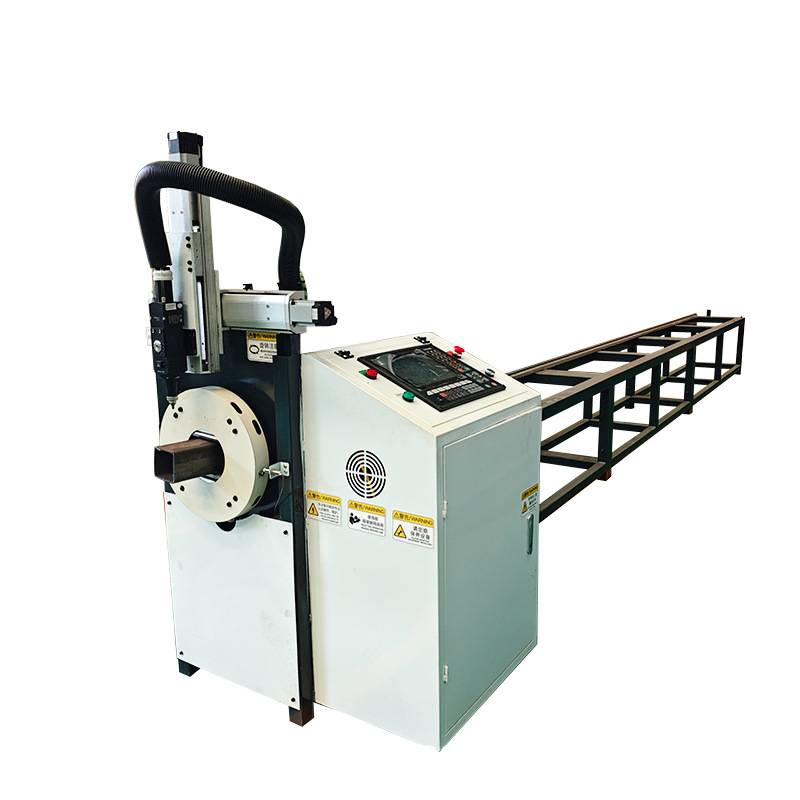
The 1.5kW tube laser cutter is more than just a light source; it is a complex CNC machine designed for 3D spatial movement. The efficiency of laser cutting in Leon’s factories depends heavily on the mechanical stability of the machine bed and the precision of the chucks.
The Dual-Chuck System
Most high-performance tube lasers utilize a pneumatic or electric dual-chuck system. The rear chuck (the feeder) pushes the tube forward, while the front chuck (the rotating head) holds the material close to the cutting nozzle. This minimizes vibration, which is crucial when cutting thin-walled brass tubes that might otherwise deform under mechanical stress. For smaller diameter brass tubes common in Leon’s decorative industries, “self-centering” chucks ensure that the laser remains perfectly perpendicular to the tube surface at all times.
The Cutting Head and Auto-Focus
The cutting head is the “business end” of the machine. For brass applications, an auto-focus cutting head is essential. Because tubes are rarely perfectly straight, the distance between the nozzle and the tube surface can vary. A capacitive sensor in the head maintains a constant “stand-off” distance, adjusting the focus in real-time to prevent collisions and ensure uniform cut quality across the entire circumference of the tube.
Economic Impact for Leon’s Manufacturers
Switching to a 1.5kW tube laser cutter offers a rapid Return on Investment (ROI) for businesses in Leon. Traditional tube processing involves multiple steps: cutting to length, deburring, drilling, and milling. A laser cutting system combines all these into a single operation.
Material Savings
Brass is an expensive raw material. The precision of laser cutting results in a much narrower kerf (the width of the cut) compared to mechanical saws. Furthermore, advanced nesting software can calculate the most efficient way to place parts on a single tube, reducing “tailing” waste to a minimum. In some high-end systems, the “zero-tailing” feature allows the machine to use almost 99% of the raw material, a critical advantage when dealing with high-cost alloys like brass.
Labor and Throughput
In the industrial zones of Leon, labor costs and the availability of skilled operators are constant considerations. A CNC laser cutter requires only one operator to oversee the process, whereas manual fabrication might require a team of three or four. The speed of the 1.5kW fiber laser ensures that large orders—such as thousands of brass connectors for an automotive client—can be fulfilled in a fraction of the time taken by traditional methods.
Maintenance and Safety Protocols
To maintain the longevity of a 1.5kW tube laser cutter, especially when processing reflective materials like brass, a strict maintenance schedule is required. Engineering teams in Leon should focus on the following:
Chiller Unit Maintenance
The fiber laser source and the cutting head generate significant heat. A dual-circuit water chiller is used to maintain a constant temperature. If the chiller fails or the water becomes contaminated, the laser source can overheat, leading to a permanent loss of power or beam quality. Using deionized water and changing filters regularly is mandatory.
Optical Cleanliness
The protective windows (cover slips) in the cutting head must be checked daily. When cutting brass with high-pressure gas, tiny spatters of molten metal can occasionally fly upward. If a speck of dust or metal lands on the lens, the laser energy will heat that speck, potentially cracking the expensive optical glass. Operating in a clean, temperature-controlled environment—as is standard in Leon’s modern industrial parks—greatly extends the life of these components.
Conclusion: The Future of Metalwork in Leon
The integration of 1.5kW tube laser cutting technology represents a leap forward for the manufacturing community in Leon. By mastering the nuances of laser cutting brass—from managing reflectivity to optimizing assist gas pressures—local companies can compete on a global scale. The precision, speed, and versatility of these machines allow for a level of design freedom that fuels innovation in everything from automotive engineering to architectural design.
As the industry continues to move toward automation and Industry 4.0, the 1.5kW tube laser cutter stands as a cornerstone of the modern workshop. For the engineers and business owners of Leon, investing in this technology is not just about cutting metal; it is about cutting a path toward a more efficient, profitable, and technologically advanced future.