
Engineering Precision: The 1.5kW Tube Laser Cutter in Tijuana’s Automotive Supply Chain
The manufacturing landscape of Tijuana, Baja California, has evolved into one of the most sophisticated automotive clusters in North America. As Tier 1 and Tier 2 suppliers increasingly localize production to meet USMCA requirements, the demand for high-precision component fabrication has reached a critical juncture. Among the most challenging materials to process with high repeatability is brass—a material essential for electrical connectors, fuel system components, and decorative trim.
The introduction of the 1.5kW Tube Laser Cutter, specifically engineered with a tube-welded standard bed, represents a significant technological leap for local factories. This guide provides a technical analysis of why this specific configuration is the optimal choice for the Tijuana market, focusing on structural stability and the specialized requirements of brass processing.
The Engineering Advantage of the Tube-Welded Standard Bed
In the realm of CNC laser machinery, the bed (or frame) serves as the foundation for all accuracy. For automotive engineers, the choice between a cast iron bed and a tube-welded bed often comes down to the specific application. For a 1.5kW system optimized for tube processing, the tube-welded standard bed offers several distinct engineering advantages.
The bed is constructed from high-strength structural steel tubes, which undergo a rigorous stress-relief process. This involves high-temperature annealing to eliminate internal stresses generated during the welding process. For a factory in Tijuana, where ambient temperatures can fluctuate and industrial vibrations are common, this structural stability is paramount.

Technically, the tube-welded bed is designed using finite element analysis (FEA) to ensure maximum rigidity while maintaining a weight profile that allows for high acceleration. A 1.5kW laser source typically operates at high speeds on thinner-walled brass tubes; therefore, the machine must handle rapid transitions in the X and Y axes without resonance. The hollow-core design of the welded tubes provides an excellent strength-to-weight ratio, ensuring that the machine maintains a positioning accuracy of ±0.03mm over years of continuous operation.
1.5kW Fiber Laser Source: Optimized for Brass Absorption
Brass is a highly reflective “yellow metal,” which historically posed significant challenges for CO2 lasers. However, the 1.064-micron wavelength of fiber laser technology is much more readily absorbed by non-ferrous metals. The 1.5kW power rating is the “sweet spot” for the automotive sector in Tijuana, which primarily deals with tube wall thicknesses between 0.5mm and 4mm.
At 1.5kW, the energy density at the focal point is sufficient to transition brass from a solid to a molten state almost instantaneously. This minimizes the Heat Affected Zone (HAZ), which is critical for maintaining the metallurgical properties of the brass. In automotive connectors, preserving the electrical conductivity and structural integrity of the brass is non-negotiable. A higher-power laser might be overkill for thin-walled tubes, leading to excessive dross or “burn-back,” while a lower-power laser would struggle with the reflectivity, potentially damaging the laser source through back-reflection.
To mitigate the risks of back-reflection—a common failure point when cutting brass—the 1.5kW systems utilized in professional settings are equipped with optical isolators. These components protect the fiber resonator by diverting reflected light into a cooling block, allowing for continuous cutting of high-polish brass tubes without the risk of hardware failure.
High-Precision Cutting Dynamics for Automotive Components
Precision in the automotive industry is measured in microns. When processing brass tubes for fuel lines or sensor housings, the geometry of the cut must be perfect to ensure fitment during automated assembly. The 1.5kW Tube Laser Cutter achieves this through a combination of advanced CNC control and high-speed servo motors.
The machine typically employs a dual-chuck system—a front pneumatic chuck and a rear pneumatic chuck. These chucks provide synchronized rotation with zero backlash. For brass, which is softer than stainless steel, the clamping pressure must be precisely calibrated to avoid deforming the tube while still providing enough grip to handle high-speed rotations.
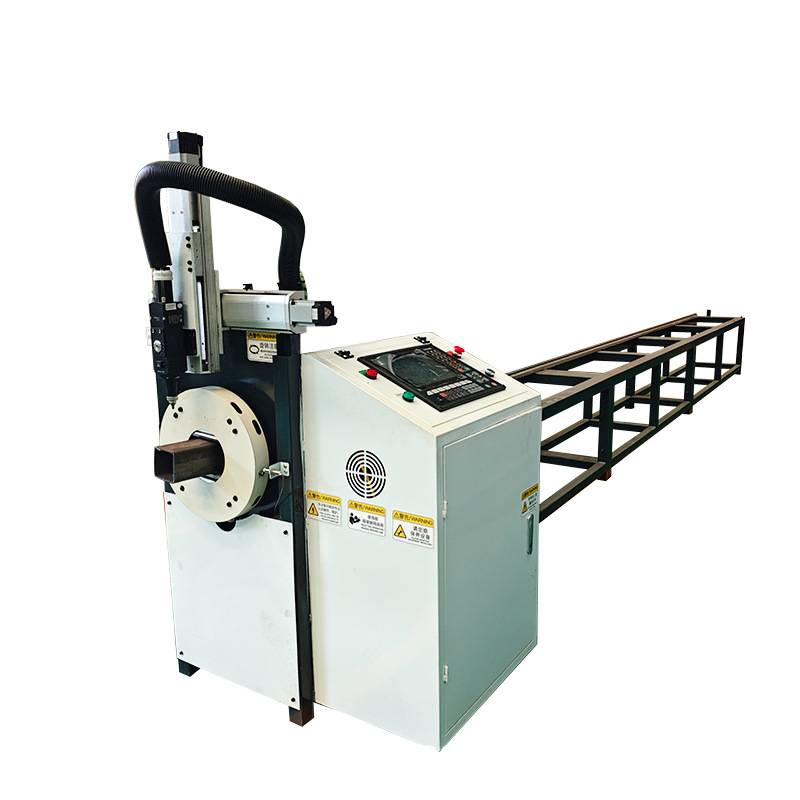
The cutting head features an auto-focus system that adjusts the focal position in real-time (within milliseconds). This is vital for brass tube cutting because even slight variations in the tube’s roundness can change the distance between the nozzle and the material. By maintaining a constant standoff distance, the machine ensures a consistent kerf width and a burr-free finish, eliminating the need for secondary deburring processes—a major cost-saver for Tijuana-based maquiladoras.
Technical Data: Assist Gas Selection and Throughput
The choice of assist gas is a critical variable in the data-driven optimization of brass cutting. While oxygen can be used to increase cutting speed through an exothermic reaction, it often results in an oxidized edge that may require cleaning before soldering or plating.
For high-end automotive applications, Nitrogen (N2) is the preferred assist gas. Operating at pressures of 12-18 bar, Nitrogen acts as a shielding gas, blowing away the molten brass before it can react with atmospheric oxygen. This results in a bright, clean cut edge. Data from local production lines suggests that using Nitrogen with a 1.5kW source on 2mm brass tubing can achieve cutting speeds of up to 15 meters per minute, depending on the complexity of the geometry.
Furthermore, the integration of “Fly-Cutting” technology in the CNC software allows the laser head to move in a continuous path without stopping for every hole. This reduces the non-productive “travel time,” increasing overall throughput by up to 30% compared to traditional tube processing methods.
Strategic Implementation in the Tijuana Market
For factory owners in Tijuana, the decision to invest in a 1.5kW Tube Laser is often driven by the “Nearshoring” trend. As US-based OEMs (Original Equipment Manufacturers) demand faster turnaround times and lower shipping costs, having local, high-precision tube processing capabilities is a competitive necessity.
The 1.5kW system’s footprint is relatively compact, making it ideal for the often-crowded floor spaces of Tijuana’s industrial parks like Otay Mesa or El Florido. Additionally, these machines are designed for compatibility with industry-standard CAD/CAM software (such as SolidWorks or AutoCAD), allowing engineers to move from design to production in a matter of hours. This agility is crucial for the prototyping phases of new automotive models.
From a maintenance perspective, the 1.5kW fiber laser is remarkably efficient. Unlike older CO2 systems that required gas refills and mirror alignments, the fiber laser is a solid-state technology. The tube-welded bed requires minimal maintenance beyond regular lubrication of the guide rails and cleaning of the rack-and-pinion system. For a factory operating on a three-shift schedule, this translates to an uptime of over 95%.
Economic Impact and ROI for Automotive Engineers
The Return on Investment (ROI) for a 1.5kW Tube Laser Cutter in a brass-intensive environment is typically realized within 12 to 18 months. This calculation includes:
1. Reduction in Material Waste: The nesting software optimizes the layout of parts on a single tube, reducing scrap rates by up to 15%.
2. Elimination of Secondary Operations: The high-precision finish on brass eliminates the need for manual grinding or polishing.
3. Lower Energy Consumption: Fiber lasers are significantly more energy-efficient than plasma or CO2 alternatives, reducing the monthly utility overhead for the facility.
4. Labor Savings: One operator can manage multiple machines, and the automated loading systems (optional) further reduce the manual labor required per part.
In the context of Tijuana’s labor market, where skilled technicians are in high demand, the user-friendly interface of modern CNC laser systems allows for faster training cycles and higher productivity per employee.
Conclusion: The Future of Non-Ferrous Tube Processing
The 1.5kW Tube Laser Cutter with a tube-welded standard bed is more than just a piece of machinery; it is a strategic asset for the Tijuana automotive sector. By combining the structural reliability of a stress-relieved welded frame with the precision of a 1.5kW fiber source, manufacturers can meet the most stringent tolerances required for brass components.
As the industry moves toward electric vehicles (EVs), the demand for brass and copper tube processing will only increase, particularly for cooling systems and high-voltage connectors. Engineering firms and factory owners who adopt this technology today will be positioned at the forefront of the region’s industrial evolution, providing the high-speed, high-precision solutions that the global automotive market demands.
















