
Comprehensive Guide to 1.5kW Tube laser cutting of Aluminum Alloys in Tijuana’s Manufacturing Sector
The industrial landscape of Tijuana, Baja California, has evolved into one of North America’s most sophisticated manufacturing hubs. As a critical node in the “Cali-Baja” mega-region, Tijuana hosts an expansive array of aerospace, medical device, and automotive electronics firms. Central to the success of these industries is the ability to process lightweight, high-strength materials with extreme precision. The 1.5kW fiber tube laser cutting system has emerged as a cornerstone technology for local fabricators, offering an optimal balance between power efficiency, capital investment, and high-speed processing of aluminum alloys.
Aluminum alloys, prized for their strength-to-weight ratio and corrosion resistance, present unique challenges during the laser cutting process. However, the 1.5kW fiber laser—utilizing a 1.06-micron wavelength—is specifically engineered to overcome the high reflectivity and thermal conductivity of non-ferrous metals. This guide provides an in-depth technical analysis of optimizing 1.5kW tube laser operations for aluminum within the specific industrial context of Tijuana.

Understanding the 1.5kW Fiber Laser Advantage for Aluminum
For many years, CO2 lasers dominated the market, but they struggled with aluminum due to the material’s tendency to reflect the 10.6-micron wavelength back into the resonator, causing catastrophic damage. The advent of fiber laser technology changed this dynamic. A 1.5kW fiber laser source produces a beam that is more readily absorbed by aluminum, allowing for faster piercing and cleaner edges.
In the 1.5kW power range, the machine is perfectly suited for thin-to-medium wall thicknesses, typically ranging from 0.5mm to 5mm for aluminum tubes. In the context of Tijuana’s medical device manufacturing, where precision and minimal heat-affected zones (HAZ) are paramount, the 1.5kW output provides enough energy density to achieve narrow kerf widths without excessive thermal distortion of the workpiece.
Material Considerations: Common Aluminum Alloys in Tijuana
Tijuana’s export-oriented economy frequently utilizes specific grades of aluminum that require tailored laser cutting parameters:
- 6061-T6 Aluminum: Widely used in structural components and automotive frames. It offers excellent weldability but can be prone to dross formation if the laser gas pressure is not calibrated correctly.
- 5052 Aluminum: Common in marine and electronics enclosures due to its high corrosion resistance. It is softer than the 6000 series, requiring precise feed rate control to prevent “burring” at the exit point of the laser.
- 7075 Aluminum: Primarily found in the aerospace sector (supporting Tijuana’s Boeing and Airbus suppliers). This high-zinc alloy is sensitive to heat; the 1.5kW laser must be operated with high-frequency pulsing to maintain structural integrity.
Technical Challenges: Managing Reflectivity and Heat
Aluminum is both highly reflective and highly conductive. At the start of a cut, the material acts as a mirror. To mitigate this, modern 1.5kW laser cutting systems incorporate back-reflection protection. This optical isolation ensures that any reflected energy is diverted away from the sensitive fiber diodes.
Furthermore, because aluminum dissipates heat rapidly, the laser cutting process must be fast enough to “outrun” the thermal conduction. If the feed rate is too slow, heat builds up ahead of the beam, leading to a wider kerf and poor surface finish. The 1.5kW power level is the “sweet spot” for 1mm to 3mm tubing, providing sufficient wattage to maintain high linear speeds, which is essential for maintaining the metallurgical properties of the alloy.
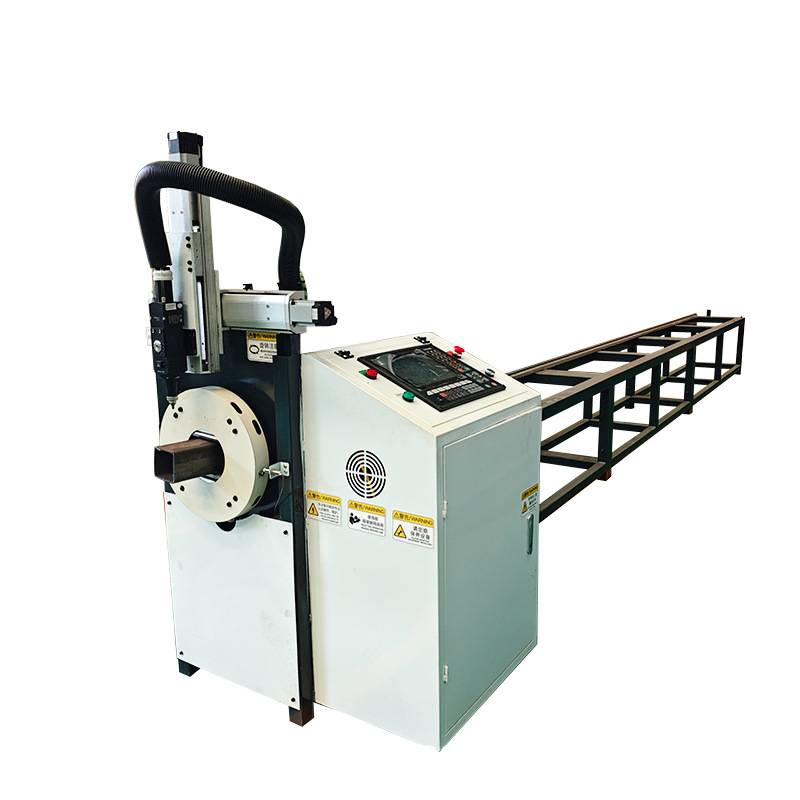
Optimizing Cutting Parameters for 1.5kW Systems
Achieving a “burr-free” finish on aluminum tubes requires a synergy between the laser source, the CNC controller, and the assist gas. For a 1.5kW system, the following parameters are critical:
Assist Gas Selection: Nitrogen vs. Compressed Air
In Tijuana’s high-volume production environments, the choice of assist gas significantly impacts both cost and quality. For aluminum, Nitrogen is the gold standard. High-pressure Nitrogen (typically 12-18 bar) acts as a mechanical force to blow the molten aluminum out of the kerf before it can re-solidify as dross. Since Nitrogen is inert, it prevents oxidation, leaving a clean, shiny edge that is ready for immediate welding or anodizing.
Some shops in Tijuana utilize high-pressure compressed air (passed through specialized dryers and filters) to reduce operational costs. While viable for 1.5kW systems on thinner walls, it may result in a slight oxide layer, which must be considered if the parts are intended for high-end aesthetic applications or aerospace-grade welding.
Nozzle Geometry and Focal Position
For aluminum tube cutting, a “double” nozzle is often preferred to stabilize the gas flow. The focal position is typically set “negative” (below the material surface) to create a slightly wider kerf at the bottom, facilitating the evacuation of the melt. On a 1.5kW machine, a 1.5mm or 2.0mm nozzle diameter is standard for most aluminum wall thicknesses encountered in local maquiladoras.
The Tijuana Advantage: Logistics and Skilled Labor
Operating a 1.5kW tube laser cutter in Tijuana offers distinct strategic advantages. The city’s proximity to the United States allows for “just-in-time” delivery of raw aluminum stock from California distributors, while the finished laser-cut components can be shipped back across the border within hours. This makes Tijuana an ideal location for “rapid prototyping” and high-mix, low-volume production runs.
Moreover, the local workforce has matured significantly. Technical institutes like ITT (Instituto Tecnológico de Tijuana) produce engineers and technicians who are well-versed in CNC programming and laser physics. For a firm installing a 1.5kW tube laser, the availability of local talent capable of optimizing nesting software—to minimize aluminum scrap—is a major factor in maintaining a competitive edge.
Maintenance Protocols for High-Reflectivity Metal Processing
The 1.5kW fiber laser is a low-maintenance tool compared to CO2 variants, but aluminum processing introduces specific requirements. The most significant issue is “aluminum dust.” During the laser cutting process, fine metallic particles are generated. If the extraction system is inadequate, this dust can settle on the external optics or the mechanical rails of the tube chuck.
- Optical Inspection: The protective window (cover glass) must be inspected daily. Any speck of aluminum dust on the lens will absorb laser energy, leading to thermal cracking of the glass.
- Chiller Calibration: Aluminum cutting requires the laser to operate at high duty cycles. Ensuring the water chiller is maintained at exactly 20-25°C is vital for the stability of the 1.5kW fiber source.
- Chuck and Loader Lubrication: Since tube cutting involves constant rotation and longitudinal movement, the mechanical components must be kept free of the abrasive grit often associated with metal fabrication shops.
Safety Standards and Compliance
In Tijuana, manufacturing facilities must adhere to both Mexican STPS (Secretaría del Trabajo y Previsión Social) standards and, frequently, international ISO or OSHA standards to satisfy US-based clients. A 1.5kW fiber laser is a Class 4 laser product. This means the beam is a significant fire hazard and can cause permanent eye damage even from a diffused reflection off an aluminum surface.
Modern tube laser machines feature fully enclosed “light-tight” cabins with certified laser-safe glass. It is imperative that operators use specific 1064nm wavelength safety goggles during maintenance and that the machine’s interlock systems are never bypassed. Given the high reflectivity of aluminum, the enclosure’s integrity is the first line of defense for the shop floor personnel.
Economic Impact and ROI for Tijuana Fabricators
The investment in a 1.5kW tube laser cutter is often justified by the dramatic reduction in secondary processes. Traditionally, aluminum tubes were saw-cut, drilled, and then milled to create complex geometries or interlocking joints. Laser cutting consolidates these steps into a single operation. For a Tijuana-based automotive supplier, this can reduce the “part-to-part” cycle time by up to 70%.
Furthermore, the high precision of the laser allows for “tab-and-slot” designs. This enables tubes to be self-fixtured for subsequent welding, eliminating the need for expensive manual jigs. In a region where labor costs are rising and the demand for quality is increasing, the automation provided by a 1.5kW fiber laser is a key driver of profitability.
Conclusion
The 1.5kW tube laser cutter represents a vital technological asset for the Tijuana manufacturing sector. By mastering the nuances of aluminum alloy processing—from managing reflectivity to optimizing Nitrogen flow—local manufacturers can deliver world-class components to the global market. As the demand for lightweight aluminum structures continues to grow in the electric vehicle (EV) and aerospace industries, those who leverage the precision and efficiency of fiber laser cutting will remain at the forefront of the industrial frontier.
Whether you are a Tier 2 automotive supplier in Otay Mesa or a medical device startup near the Rio Zone, understanding the technical capabilities of your 1.5kW laser is the first step toward achieving operational excellence in the competitive landscape of Baja California.
















