
Engineering Guide: 1.5kW Tube Laser Cutting Systems for Aluminum Alloy in the Leon Industrial Sector
The industrial landscape of Leon has seen a significant shift toward advanced manufacturing, particularly within the agricultural machinery and infrastructure sectors. As factory owners and engineers seek to optimize production cycles and material yields, the implementation of fiber laser technology has become a cornerstone of modern fabrication. This guide explores the technical parameters, structural advantages, and material-specific strategies for utilizing a 1.5kW Tube Laser Cutter, with a specific focus on the processing of Aluminum Alloy—a material increasingly favored for its strength-to-weight ratio and corrosion resistance in agricultural environments.
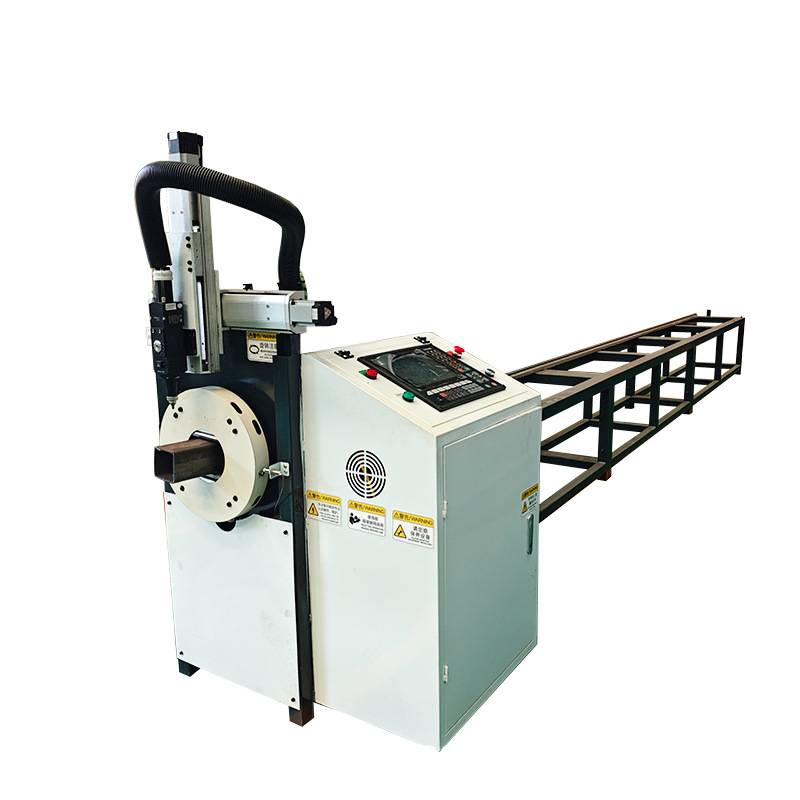
The Structural Foundation: Technical Advantages of the Tube-welded Standard Bed
In the realm of CNC laser cutting, the stability of the machine bed is the primary determinant of long-term accuracy and dynamic performance. For a 1.5kW system, which often operates at high acceleration rates to maximize the efficiency of fiber optics, the “Tube-welded Standard Bed” offers a specific set of engineering advantages tailored to the Leon market’s needs.

The tube-welded bed is constructed using high-quality industrial rectangular pipes. Unlike cast iron beds which are significantly heavier and more expensive to transport, or simple plate-welded frames that may lack internal reinforcement, the tube-welded structure utilizes a honeycomb-like internal geometry. This design provides several critical benefits:
1. Vibration Dampening: The hollow sections of the welded tubes are engineered to dissipate the kinetic energy generated by the high-speed movement of the laser head and the chucks. In Leon’s high-output agricultural factories, where machines may run 16-24 hours a day, this dampening prevents harmonic resonance that can lead to “chatter” marks on the cut surface of aluminum tubes.
2. Thermal Stability: Aluminum cutting requires consistent focal positioning. The tube-welded bed undergoes a rigorous stress-relief annealing process. By heating the frame to over 600°C and cooling it slowly, internal stresses from the welding process are eliminated. This ensures the bed remains dimensionally stable for over 20 years, resisting the deformation that can occur in regions with fluctuating seasonal temperatures.
3. Optimized Strength-to-Weight Ratio: For a 1.5kW power rating, the tube-welded bed provides the necessary rigidity to support rapid traversals (up to 100m/min) without the excessive mass that would require larger, more expensive servo motors. This makes the 1.5kW system an economically viable entry point for Leon-based SMEs looking to transition from manual plasma or band-saw cutting.
High-Precision Processing of Aluminum Alloy
Aluminum alloy (specifically the 5000 and 6000 series) is the material of choice for Leon’s agricultural sector, used in everything from irrigation manifolds to greenhouse structural supports. However, aluminum presents unique challenges for laser cutting due to its high reflectivity and high thermal conductivity.
A 1.5kW fiber laser source is specifically tuned to overcome these hurdles through high-density energy concentration. At a wavelength of approximately 1.06 microns, the fiber laser is absorbed more efficiently by aluminum than traditional CO2 lasers.
Precision Metrics for 1.5kW Aluminum Cutting:
– Positioning Accuracy: ±0.03mm
– Repositioning Accuracy: ±0.02mm
– Maximum Cutting Thickness (Aluminum): 5mm – 6mm (Clean cut)
– Optimal Cutting Speed (2mm Aluminum): 8-12 m/min
To achieve high-precision results, the system employs a specialized cutting head with an automated focusing mechanism. Because aluminum dissipates heat rapidly, the laser must maintain a precise “kerf” (cut width). Engineers in Leon should note that the use of Nitrogen (N2) as a redundant gas is essential when cutting aluminum. Nitrogen prevents the oxidation of the cut edge, ensuring a “silver” finish that requires no post-processing before welding—a critical factor in reducing labor costs in agricultural equipment assembly.
Agricultural Application Analysis: Why 1.5kW is the Strategic Choice
For factory owners in Leon, the 1.5kW power bracket represents the “sweet spot” of investment versus capability. While 3kW or 6kW machines exist, the majority of agricultural tubing—including square, round, and D-shaped profiles—falls within the 1mm to 5mm thickness range.
Specific applications include:
– Irrigation System Components: Precision cutting of holes and slots in aluminum pipes for specialized sprayers. The laser’s ability to cut complex geometries allows for the design of interlocking parts that “snap” together, reducing the need for complex welding jigs.
– Livestock Housing: Aluminum’s resistance to ammonia and moisture makes it ideal for dairy and poultry farm equipment. The 1.5kW laser ensures that even thin-walled tubes (1.5mm) are cut without warping or melting the edges.
– Greenhouse Frames: The high-speed processing of 6061-T6 aluminum alloy tubes allows for the rapid mass production of custom-length structural members with pre-drilled bolt holes, ensuring perfect alignment during site installation.
Data-Driven Comparison: Fiber Laser vs. Traditional Methods
When evaluating the transition to a 1.5kW Tube Laser, Leon’s engineers must look at the operational data. Traditional mechanical sawing and drilling of aluminum tubes involve high tool wear and secondary deburring stages.
Operational Efficiency Table:
– Process: Manual Sawing/Drilling | Time per unit: 12 mins | Precision: ±1.0mm | Secondary Work: Required
– Process: 1.5kW Fiber Laser | Time per unit: 1.5 mins | Precision: ±0.03mm | Secondary Work: None
The 1.5kW system also features a significantly lower “Wall Plug Efficiency” (WPE) cost. Fiber lasers convert approximately 30-35% of electrical input into laser light, compared to the 8-10% seen in older CO2 technology. In a region like Leon, where industrial electricity costs are a factor in overhead, the energy savings alone can contribute significantly to the machine’s Return on Investment (ROI) within the first 18 months of operation.
Technical Maintenance and Local Integration
For the Leon market, the longevity of a tube laser depends on the integration of high-quality components and adherence to maintenance protocols. A 1.5kW system specialized for aluminum must be equipped with:
– Back-reflection Protection: Since aluminum is reflective, the laser source must have an optical isolator to prevent reflected light from damaging the fiber modules.
– Dust Extraction: Aluminum dust is highly conductive and potentially explosive in high concentrations. The tube-welded bed is designed with integrated partitions and high-pressure fans to extract particles immediately from the cutting zone.
– Automatic Lubrication: To maintain the ±0.03mm precision, the linear guides and rack-and-pinion systems require automated oiling, reducing the risk of human error in maintenance.
Engineers should also prioritize systems that utilize standard CNC software (such as CypTube), which allows for the direct import of CAD files from SolidWorks or AutoCAD. This streamlines the workflow from the design office to the factory floor, allowing for “just-in-time” manufacturing of spare parts for agricultural machinery during peak harvest seasons in Leon.
Conclusion: Future-Proofing Leon’s Manufacturing Base
The 1.5kW Tube Laser Cutter with a Tube-welded Standard Bed represents more than just a tool; it is a strategic upgrade for the Leon industrial sector. By focusing on the high-precision processing of Aluminum Alloy, factory owners can produce lighter, more durable, and more complex products that meet international standards.
The combination of structural rigidity provided by the welded bed and the efficiency of the 1.5kW fiber source ensures that local manufacturers can compete on both quality and price. As agriculture continues to move toward automation and high-efficiency systems, the ability to process aluminum tubing with micron-level accuracy will be the dividing line between traditional workshops and modern engineering hubs. Investing in this technology today ensures that Leon remains at the forefront of the regional manufacturing economy, providing the tools necessary for the next generation of agricultural innovation.
















