
Optimizing 1.5kW Tube laser cutter Performance for Aluminum Alloy Fabrication in Guadalajara
The industrial landscape of Guadalajara, often referred to as the “Silicon Valley of Mexico,” has seen a significant transformation in its manufacturing capabilities over the last decade. As the region evolves from electronics assembly to high-precision metal fabrication, the demand for advanced laser cutting technology has surged. Among the various configurations available, the 1.5kW tube laser cutter has emerged as a critical tool for small to medium-sized enterprises (SMEs) and specialized workshops focusing on aluminum alloy components. This guide provides an engineering-grade analysis of utilizing 1.5kW fiber laser technology for aluminum tube processing within the specific industrial context of Jalisco’s capital.
The Technical Profile of 1.5kW Fiber Laser Sources
In the hierarchy of fiber laser power, 1.5kW represents a versatile “sweet spot” for many manufacturers. While higher power sources (6kW to 12kW) are necessary for heavy structural steel, the 1.5kW range is exceptionally efficient for the thin-to-medium wall thicknesses typically found in aluminum furniture, automotive heat exchangers, and aerospace ducting. A 1.5kW fiber laser source produces a high-density beam with a wavelength of approximately 1.06 microns, which is absorbed more effectively by metals compared to traditional CO2 lasers, despite aluminum’s inherent reflectivity.
The choice of a 1.5kW system allows for high-speed processing of aluminum alloys with wall thicknesses ranging from 0.5mm to 4mm. Beyond 5mm, the efficiency of a 1.5kW source begins to diminish, requiring slower feed rates that may affect the Heat Affected Zone (HAZ). However, for the majority of aluminum tube applications in Guadalajara’s electronics and light-manufacturing sectors, this power level offers the best balance between capital investment and operational throughput.

Challenges in Laser Cutting Aluminum Alloys
Aluminum presents unique challenges for laser cutting due to its high thermal conductivity and high reflectivity. When the laser beam first hits a polished aluminum surface, a significant portion of the energy can be reflected back into the cutting head, potentially damaging the optical fiber or the laser source itself. Modern 1.5kW machines are equipped with back-reflection protection systems, but operators must still understand the material’s behavior.
Aluminum alloys like 6061 and 5052—common in Mexican manufacturing—dissipate heat rapidly. This means the laser must deliver energy faster than the material can conduct it away to maintain a stable melt pool. If the feed rate is too slow, the heat accumulates, leading to excessive dross (burrs) on the bottom of the cut. Conversely, if the speed is too high, the laser fails to penetrate the wall entirely. Achieving the perfect “dross-free” cut requires precise synchronization between the 1.5kW power output, the gas pressure, and the CNC motion control.
The Role of Assist Gases: Nitrogen vs. Oxygen
The selection of assist gas is paramount when laser cutting aluminum with a 1.5kW source. For high-quality finishes, Nitrogen is the industry standard. Nitrogen acts as a shielding gas, preventing the oxidation of the aluminum at the cut edge. This results in a clean, bright finish that is ready for welding or painting without secondary cleaning processes. In Guadalajara’s competitive export market, reducing secondary labor is essential for maintaining margins.
While Oxygen can be used to accelerate the cutting process through an exothermic reaction, it often results in a heavily oxidized, rough edge on aluminum. For a 1.5kW system, high-pressure Nitrogen (typically between 12 and 18 bar) is recommended. This high pressure not only protects the material but also mechanically blows the molten aluminum out of the kerf, ensuring that the narrow 1.5kW beam can continue its path without interference from slag.
Precision Engineering in Tube Geometry
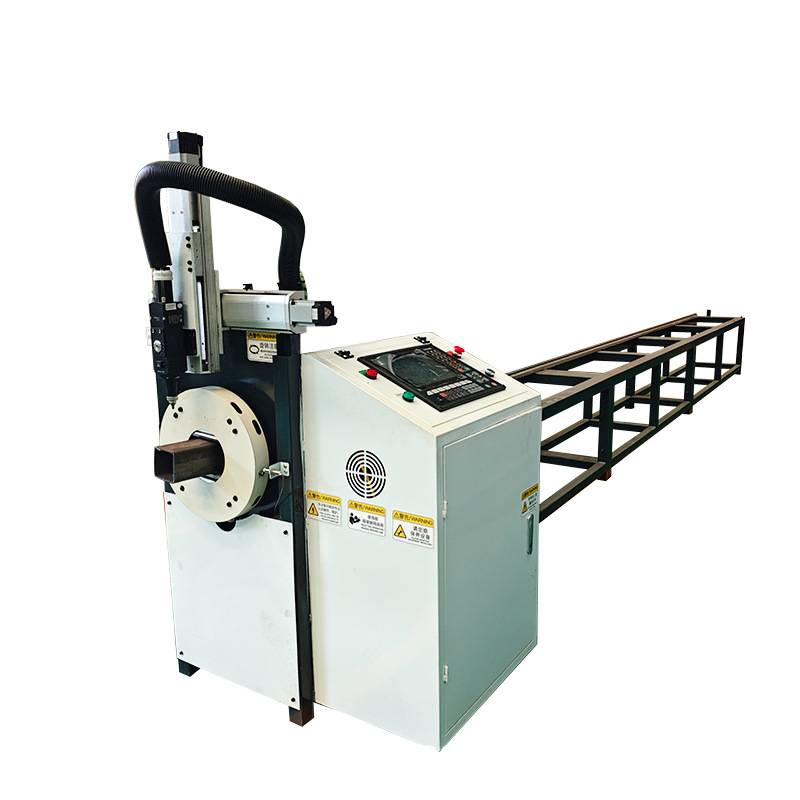
Unlike flat sheet cutting, tube laser cutting involves complex rotational dynamics. The 1.5kW machine must coordinate the movement of the cutting head (X and Z axes) with the rotation of the chuck (A and B axes). This is particularly important for aluminum tubes, which are often used in frames and structures requiring tight tolerances for interlocking joints (saddle cuts, miters, and notches).
The 1.5kW power level is ideal for processing round, square, and rectangular aluminum profiles. Because aluminum is a relatively soft metal, the clamping system of the tube laser must be calibrated to avoid deforming the tube walls, especially when dealing with thin-walled extrusions. Advanced machines utilize pneumatic chucks with adjustable pressure to ensure the tube remains centered without crushing the material.
Operational Best Practices for Guadalajara’s Climate
Guadalajara’s climate, characterized by moderate temperatures but high humidity during the rainy season, can impact the performance of high-precision laser cutting equipment. For a 1.5kW fiber laser, maintaining a stable environment for the chiller and the power source is vital. Aluminum dust is also highly conductive and potentially explosive; therefore, a robust dust extraction and filtration system is mandatory in any Guadalajara-based facility.
Operators should perform daily checks on the protective windows (cover glass) of the laser head. Due to the reflective nature of aluminum, any speck of dust on the lens can absorb reflected energy, leading to thermal cracking of the optics. In the industrial zones of El Salto or Zapopan, where ambient dust levels can be high, maintaining a pressurized, clean-room environment for the laser source and implementing strict maintenance protocols is the difference between 95% uptime and frequent costly repairs.
Economic Impact and Market Applications in Jalisco
The adoption of 1.5kW tube laser cutting technology provides a significant competitive advantage for Guadalajara’s local manufacturers. The automotive supply chain, which feeds into the larger hubs in Central Mexico, relies on lightweight aluminum components for fuel efficiency. By using a dedicated tube laser, shops can replace manual sawing, drilling, and milling with a single automated process. This not only increases accuracy to within ±0.05mm but also reduces the “time-to-market” for prototypes and production runs.
Furthermore, the furniture industry in Jalisco, known for its high-end designs, utilizes aluminum tubing for modern outdoor and office structures. The ability of a 1.5kW laser to execute intricate decorative patterns and precise joinery allows designers to push the boundaries of what is possible with aluminum, moving away from standard 90-degree joints to more complex, organic geometries.
Software Integration and Nesting Optimization
To maximize the ROI of a 1.5kW tube laser, the use of specialized CAD/CAM software is non-negotiable. Software packages like Lantek or TubesT allow engineers to “nest” parts along the length of an aluminum tube, minimizing scrap. Given that aluminum is significantly more expensive per kilogram than mild steel, reducing waste by even 5% can result in thousands of dollars in annual savings.
In the context of laser cutting, the software also handles “lead-ins” and “lead-outs.” For aluminum, a circular lead-in is often preferred to allow the 1.5kW beam to stabilize before beginning the actual part geometry. This prevents the “pierce point” from blowing a hole larger than the kerf width, which is a common issue with reflective alloys if the piercing parameters are not finely tuned.
Conclusion: The Future of Fabrication in Guadalajara
The 1.5kW tube laser cutter represents a pivotal technology for the modernization of Guadalajara’s manufacturing sector. By mastering the nuances of aluminum alloy processing—from managing reflectivity to optimizing Nitrogen assist gas—local fabricators can meet the stringent quality standards of international partners. As the region continues to attract investment in aerospace, green energy, and advanced electronics, the precision and efficiency of fiber laser cutting will remain the cornerstone of industrial growth.
Investing in a 1.5kW system is not merely an equipment upgrade; it is a strategic move toward high-value manufacturing. For engineers and business owners in Guadalajara, the focus must remain on technical training, rigorous maintenance, and the intelligent application of laser parameters to unlock the full potential of aluminum fabrication. With the right approach, the 1.5kW tube laser becomes more than a tool—it becomes a catalyst for innovation in the heart of Mexico’s industrial landscape.
















