
Engineering Precision: The Role of 1.5kW Fiber Lasers in Mexico City’s Aerospace Sector
The aerospace manufacturing landscape in Mexico, particularly within the industrial corridors surrounding Mexico City and the nearby Bajío region, has undergone a radical transformation. As global OEMs shift toward nearshoring, the demand for high-precision components—specifically those fabricated from stainless steel—has reached an all-time high. For factory owners and lead engineers in the CDMX metropolitan area, the selection of a laser cutting system is no longer merely a procurement decision; it is a strategic engineering requirement.
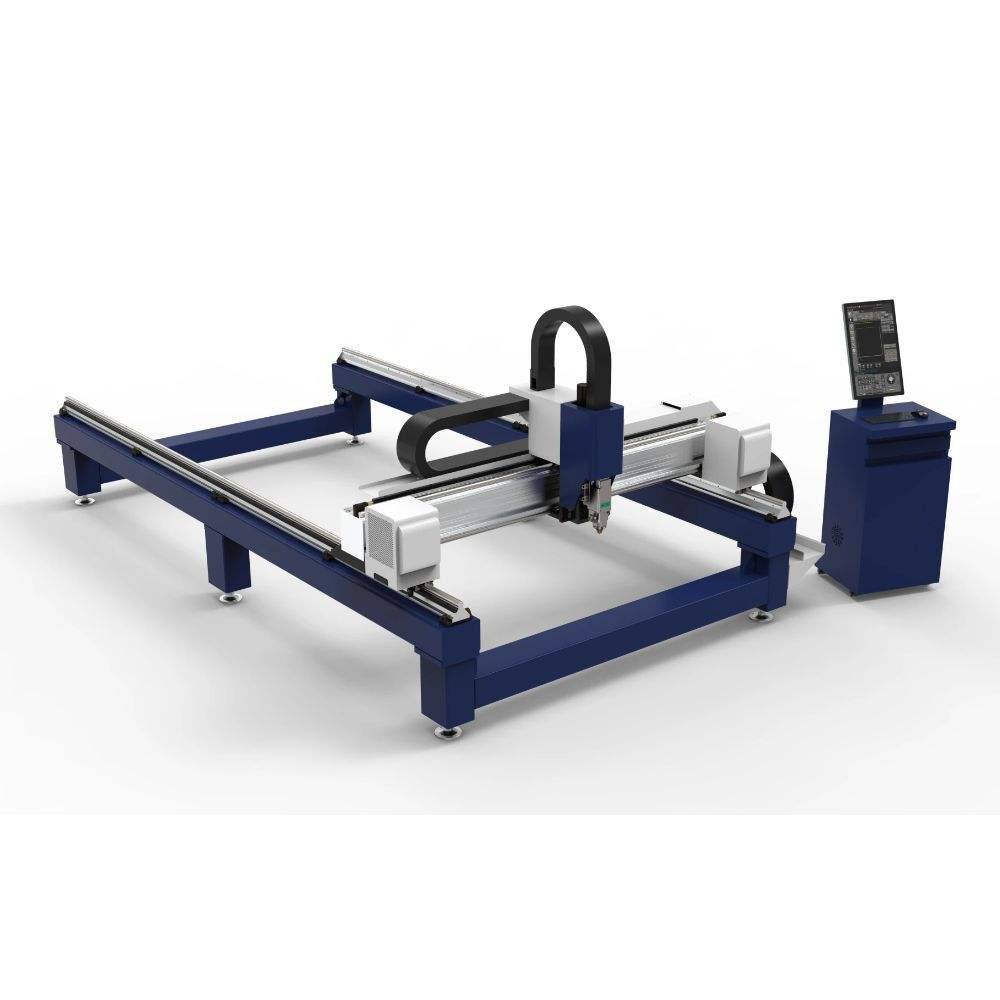
The 1.5kW Sheet Metal Fiber Laser, characterized by its plate-welded heavy-duty bed, represents the technical “sweet spot” for aerospace sheet metal applications. This guide examines the engineering advantages of this specific configuration, focusing on structural dynamics, beam physics, and the localized operational requirements of the Mexican market.
Structural Integrity: The Plate-Welded Heavy-Duty Bed
In high-precision laser cutting, the machine bed is the foundation of all dimensional accuracy. While lighter, tube-welded frames are common in entry-level machinery, the aerospace sector demands the vibration damping and thermal stability provided only by a plate-welded heavy-duty bed.
The engineering of a heavy-duty bed involves the use of high-tensile steel plates, often ranging from 12mm to 20mm in thickness, which are joined through high-penetration welding. The primary technical advantage here is the mass-to-rigidity ratio. In Mexico City, where industrial facilities may be subject to subtle seismic vibrations or the harmonics of neighboring heavy machinery, a high-mass bed acts as a mechanical low-pass filter.
Furthermore, these beds undergo a rigorous stress-relief process. After welding, the structure is subjected to electric furnace annealing at temperatures exceeding 600°C. This process reorganizes the molecular structure of the steel, eliminating internal stresses that would otherwise cause the frame to warp over years of operation. For an aerospace engineer, this translates to a machine that maintains a positioning accuracy of ±0.03mm over a ten-year lifecycle, ensuring that components for exhaust systems, brackets, or fuel manifolds remain within strict AS9100 tolerances.
1.5kW Fiber Source: Optimized for Stainless Steel Metallurgy
While higher wattage machines (6kW to 20kW) are marketed for thick plate processing, the 1.5kW fiber laser is the precision instrument for sheet metal (typically 0.5mm to 4.0mm). In aerospace applications, stainless steel grades such as AISI 304, 316L, and 17-4 PH are prevalent.
The 1.5kW source provides a high power density with a beam quality (M²) of nearly 1.0. This allows the laser to be focused into a spot size of approximately 25 to 50 microns. When cutting stainless steel, the physics of the 1070nm wavelength ensures high absorption rates, minimizing the Heat Affected Zone (HAZ). A smaller HAZ is critical in aerospace engineering because it prevents the degradation of the material’s mechanical properties and maintains the corrosion resistance of the stainless steel edge.
Data-driven performance metrics for 1.5kW on Stainless Steel:
– 1.0mm Stainless Steel: Cutting speeds up to 35 m/min.
– 2.0mm Stainless Steel: Cutting speeds up to 12 m/min.
– 3.0mm Stainless Steel: Cutting speeds up to 5 m/min.
These speeds are achieved using Nitrogen as an assist gas. Nitrogen cutting is essential for aerospace components as it prevents oxidation of the cut edge, resulting in a bright, weld-ready finish that requires no secondary grinding or chemical cleaning.
High-Precision Motion Control and Gantry Dynamics
The plate-welded bed supports a lightweight, high-strength aviation aluminum gantry. In the Mexico City market, where production efficiency is a key competitive differentiator, the gantry’s ability to accelerate at 1.0G to 1.2G is vital.
The motion control system typically utilizes AC servo motors coupled with high-precision rack and pinion systems. For the 1.5kW specialized model, the integration of a “closed-loop” feedback system ensures that the CNC controller (such as CypCut or similar industrial standards) compensates for any mechanical backlash in real-time. This is particularly important when cutting complex geometries common in aerospace, such as honeycomb patterns or intricate cooling vents, where the pathing requires thousands of micro-adjustments per second.
Environmental and Operational Considerations in Mexico City
Operating high-precision machinery in Mexico City presents unique engineering challenges that must be addressed at the installation phase.
1. Altitude and Atmospheric Pressure: At 2,240 meters above sea level, the air density in Mexico City is significantly lower than at sea level. This affects the cooling efficiency of the laser’s water chiller. Engineers must specify chillers with oversized compressors or enhanced airflow to ensure the laser source remains at a stable 22°C (±1°C). Fluctuations in temperature can cause “mode hopping” in the fiber source, leading to inconsistent cut quality.
2. Power Grid Stability: The industrial electrical supply in areas like Tlalnepantla or Vallejo can experience voltage sags or surges. A 1.5kW laser system must be paired with a high-precision industrial voltage stabilizer (±1.5% regulation). This protects the sensitive laser diodes and the CNC control boards from premature failure.
3. Gas Supply Logistics: Given the high consumption of Nitrogen for stainless steel cutting, local engineers should consider a liquid nitrogen tank (micro-bulk) rather than individual cylinders. This ensures consistent gas pressure at the nozzle (typically 15-20 bar for stainless), which is critical for dross-free cutting.
Aerospace Compliance: Accuracy and Traceability
For factories working with Tier 1 and Tier 2 aerospace suppliers, every part must be traceable and accurate. The 1.5kW specialized laser supports this through advanced software integration. Features such as “Automatic Edge Seeking” allow the machine to use its capacitive sensors to detect the exact position of the stainless steel sheet on the bed, adjusting the cutting program to match the material’s orientation. This reduces material waste—a critical factor when working with expensive aerospace-grade alloys.
Furthermore, the precision of the plate-welded bed allows for “Micro-jointing” techniques. This enables the cutting of small, high-precision parts that remain attached to the skeleton by a tiny tab of metal, preventing them from falling through the slats and becoming damaged or lost.
Technical Specifications Table
| Parameter | Specification |
| :— | :— |
| Laser Power | 1500W (1.5kW) Fiber |
| Bed Construction | Plate-welded Heavy Duty (Annealed) |
| Max. Cutting Thickness (Stainless) | 6mm (Production: 4mm) |
| Positioning Accuracy | ±0.03 mm |
| Repositioning Accuracy | ±0.02 mm |
| Max. Acceleration | 1.2G |
| Assist Gas Requirements | Nitrogen (Oxygen for Carbon Steel) |
| Cooling System | Dual-temperature Water Chiller |
ROI and Strategic Implementation for CDMX Factories
From an economic perspective, the 1.5kW fiber laser offers a significantly lower “Cost Per Part” compared to traditional CO2 lasers or waterjet cutting. The electrical efficiency of a fiber laser is approximately 30-35%, compared to the 8-10% of CO2 systems. In the context of Mexico’s industrial electricity rates, this leads to a reduction in operational overhead by up to 50%.
For aerospace engineers, the primary ROI is found in the elimination of secondary processes. The edge quality produced by a 1.5kW laser on a heavy-duty bed is often “final-part” quality. This removes the need for deburring, polishing, or corrective machining, allowing parts to move directly from the laser bed to the assembly line or the welding station.
Conclusion
For aerospace manufacturers in Mexico City, the 1.5kW Sheet Metal Laser is more than a cutting tool; it is a precision instrument designed for the rigors of modern aviation standards. By prioritizing a plate-welded heavy-duty bed, engineers ensure the structural stability necessary to leverage the full potential of fiber laser technology. As the Mexican aerospace sector continues its upward trajectory, the adoption of such high-precision, data-driven manufacturing solutions will be the deciding factor in maintaining global competitiveness and technical excellence.
















