Optimization and Implementation of 1.5kW Fiber laser cutting for Carbon Steel in Mexico City
The industrial landscape of Mexico City (CDMX) and its surrounding metropolitan areas, such as Naucalpan and Tlalnepantla, represents one of the most concentrated manufacturing hubs in Latin America. For small to medium enterprises (SMEs) specializing in metal fabrication, the 1.5kW fiber laser has emerged as the industry standard for precision, efficiency, and cost-effectiveness. When processing carbon steel—the backbone of the construction and automotive sectors—understanding the intersection of machine physics, material science, and the unique environmental conditions of the Valley of Mexico is paramount for operational excellence.
Laser cutting technology has transitioned from a high-capital luxury to a fundamental necessity. A 1.5kW system offers a specific balance of power that allows for high-speed processing of thin-gauge materials while maintaining the capability to pierce and cut plate steel up to 14mm or 16mm. However, achieving consistent edge quality and tight tolerances requires more than just high-end hardware; it demands a rigorous engineering approach to parameter tuning and environmental adaptation.
Technical Specifications of the 1.5kW Fiber Source
The 1.5kW fiber laser utilizes an active optical fiber doped with rare-earth elements, typically ytterbium, to amplify light. This wavelength (approximately 1.064 microns) is highly absorbed by carbon steel, making it significantly more efficient than legacy CO2 systems. In a 1.5kW configuration, the energy density at the focal point is sufficient to instantaneously melt and vaporize carbon steel, which is then evacuated by a high-pressure assist gas.
For carbon steel applications, the 1.5kW power class is optimized for the 1mm to 10mm range. Within this window, the laser cutting process achieves a “sweet spot” where the balance of heat input and travel speed minimizes the Heat Affected Zone (HAZ). Beyond 12mm, while cutting is possible, the process becomes slower and more sensitive to material impurities and gas pressure fluctuations.
Environmental Considerations: The Mexico City Factor
Operating a laser cutting system in Mexico City introduces variables that are often overlooked in standard manuals written for sea-level environments. At an elevation of approximately 2,240 meters, the atmospheric pressure is roughly 25% lower than at sea level. This altitude impacts the laser cutting process in three critical areas: gas dynamics, cooling efficiency, and air quality.
1. Assist Gas Dynamics: The lower atmospheric pressure affects the behavior of the supersonic gas jet exiting the nozzle. When using oxygen as an assist gas for carbon steel, the exothermic reaction is highly dependent on the density of the gas. Operators in CDMX may find that they need to slightly increase their delivery pressures compared to manufacturers’ standard charts to compensate for the lower ambient density and ensure efficient dross removal.
2. Cooling and Thermal Management: The boiling point of water in Mexico City is approximately 93°C. While laser chillers operate far below this temperature, the reduced air density lowers the heat exchange efficiency of air-cooled chillers. It is essential to ensure that the chiller units are oversized or placed in well-ventilated areas to prevent thermal instability in the laser source and the cutting head optics.
3. Air Purity and Optics: Mexico City’s industrial corridors often face challenges with particulate matter and humidity fluctuations. Fiber lasers require ultra-clean environments for their external optics (collimator and focus lenses). Any microscopic contamination can lead to “thermal lensing,” where the lens absorbs laser energy, deforms, and shifts the focal point, resulting in poor cut quality on carbon steel plates.
Material Science: Processing Carbon Steel (A36 and 1018)
Carbon steel is the most common material processed via laser cutting in the Mexican market. Most local suppliers provide A36 hot-rolled steel or 1018 cold-rolled steel. Each requires a distinct approach to laser parameters.
Hot-Rolled Steel (A36): This material often features a layer of mill scale (iron oxide). For 1.5kW systems, mill scale can be problematic as it absorbs heat differently than the base metal. If the scale is thick or uneven, it can cause “popping” during the piercing process. Using a “pre-pierce” or “step-pierce” cycle with lower power and higher frequency can mitigate this, ensuring a clean start before the high-speed cut begins.
Cold-Rolled Steel: Generally cleaner and more uniform, cold-rolled steel allows for the highest possible speeds with a 1.5kW laser. The surface finish is ideal for parts that require subsequent powder coating or plating, common in the local appliance and electronics enclosure industries.
Assist Gas Strategy: Oxygen vs. Nitrogen vs. Compressed Air
The choice of assist gas is the primary driver of both cut quality and operational cost in laser cutting.
- Oxygen (O2): For carbon steel thicker than 3mm, oxygen is the standard. It reacts exothermically with the iron, adding thermal energy to the process. This allows a 1.5kW laser to cut thicker plates than it could through melting alone. However, it leaves an oxide layer on the edge that must be removed if the part is to be painted.
- Nitrogen (N2): Nitrogen is used as a cooling and flushing agent. It prevents oxidation, leaving a bright, clean edge. While a 1.5kW laser is limited to thinner gauges (typically up to 4mm) when using nitrogen due to the lack of exothermic assist, the speed on 1mm-2mm carbon steel can be exceptional.
- Clean Compressed Air: An increasingly popular option in Mexico City shops to reduce costs. With proper filtration and high-pressure compressors (20-30 bar), compressed air can cut thin carbon steel effectively, though the edge quality sits between that of oxygen and nitrogen.
Advanced Parameter Optimization for 1.5kW Systems
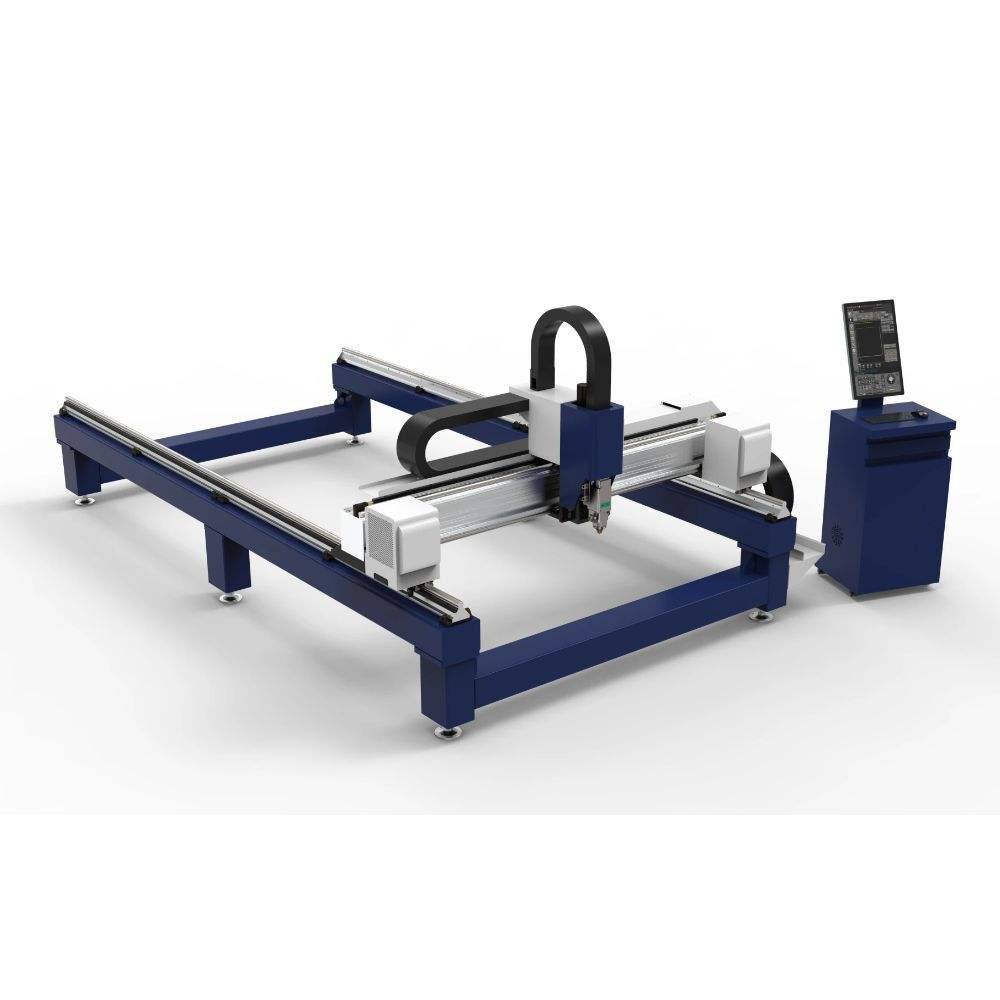
To maximize the throughput of a 1.5kW laser cutting machine, engineers must master the relationship between focal position, nozzle diameter, and feed rate. For carbon steel, the focus is generally set at or slightly below the surface of the material (negative focus) when using oxygen to ensure the kerf is wide enough for the molten slag to be blown out.
Nozzle Selection: A double nozzle is typically preferred for carbon steel when using oxygen. The inner geometry of the double nozzle stabilizes the gas flow, reducing turbulence and preventing dross (burrs) from adhering to the bottom of the cut. In the 1.5kW range, nozzle diameters between 1.2mm and 2.5mm are standard depending on the plate thickness.
Piercing Technology: Piercing is often the bottleneck in carbon steel processing. Using a 1.5kW source, “Flash Piercing” can be used for thin materials, while “Multi-stage Piercing” is necessary for plates above 6mm. By gradually increasing the duty cycle and decreasing the frequency during the pierce, the operator prevents “cratering,” which protects the protective window of the laser head from back-splash.
Maintenance and Longevity in High-Altitude Industrial Zones
The longevity of a laser cutting system in an environment like Mexico City depends on a rigorous preventative maintenance schedule. The combination of altitude and potential air pollutants necessitates specific checks:
1. Optical Path Integrity
The protective window (cover glass) is a consumable, but its lifespan can be extended. In CDMX, ensure the cutting head’s positive air pressure system is functioning perfectly. This prevents ambient dust from entering the head during nozzle changes. A contaminated lens in a 1.5kW system will quickly lead to beam divergence and catastrophic failure of the optical assembly.
2. Gas Purity and Regulation
Using high-purity gases (99.95% or higher for Oxygen) is non-negotiable. Inexpensive gas with moisture or hydrocarbon contamination will ruin the focus lens and result in inconsistent cutting. Given the logistical challenges in some parts of the Valley of Mexico, installing a high-quality gas filtration system at the manifold is a wise investment.
3. Electrical Stability
The power grid in industrial zones can sometimes experience voltage fluctuations. Fiber lasers are sensitive electronic instruments. A 1.5kW machine should always be paired with a high-precision voltage stabilizer and a dedicated grounding rod to prevent “noise” from affecting the CNC controller or damaging the laser diodes.
Conclusion: The Future of Fabrication in CDMX
The 1.5kW fiber laser represents a transformative tool for the Mexican metalworking industry. By understanding the specific requirements of carbon steel and adapting to the atmospheric conditions of Mexico City, fabricators can achieve world-class precision. As the “Nearshoring” trend continues to bring more manufacturing from North America to Mexico, the ability to provide high-quality laser cutting services will be a significant competitive advantage. Success lies in the details: the purity of the gas, the stability of the chiller, and the precision of the parameters tuned for the high-altitude environment.
Investing in a 1.5kW system is not merely about purchasing hardware; it is about implementing a precise engineering process. With the right training and environmental adaptations, these machines will continue to drive the productivity of Mexico’s industrial heartland for years to come.