
Engineering Precision: The 1.5kW Fiber Laser Solution for Queretaro’s Elevator Industry
The industrial landscape of Queretaro has evolved into one of Mexico’s most sophisticated manufacturing hubs. Within this ecosystem, the elevator and architectural metal sectors demand a level of precision that transcends standard fabrication. For factory owners and lead engineers, the transition to high-performance fiber laser technology is no longer optional—it is a requirement for maintaining competitiveness. Specifically, the 1.5kW Sheet Metal Laser, optimized for brass and non-ferrous alloys, represents the pinnacle of efficiency for decorative and functional elevator components.
This guide analyzes the technical architecture of the 1.5kW system, focusing on the structural integrity of the plate-welded heavy-duty bed and the specific physics involved in high-precision brass cutting.
The Structural Foundation: Plate-Welded Heavy Duty Bed Engineering
In laser cutting, the quality of the output is dictated by the stability of the machine’s foundation. For elevator manufacturers producing large-scale door panels and intricate cabin trims, any vibration during the cutting process results in “chatter” marks and dimensional inaccuracies.
The 1.5kW system utilizes a high-tensile, plate-welded heavy-duty bed. Unlike lighter aluminum frames or traditional cast iron beds that can be brittle, the plate-welded structure is engineered through a rigorous multi-stage process:
1. Material Selection: The bed is constructed from 12mm to 16mm thick carbon steel plates. These plates offer superior vibration damping characteristics compared to hollow-tube frames.
2. Stress Relief Annealing: After welding, the entire bed undergoes a thermal stress-relief process in a high-temperature tempering furnace (typically reaching 600°C). This ensures that the internal stresses generated during welding are neutralized, preventing the frame from warping or deforming over a decade of use.
3. Precision Milling: The guide rail and rack mounting surfaces are processed by large-scale CNC gantry milling machines in a single setup. This guarantees a parallelism and straightness tolerance of less than 0.02mm across the entire working area.
For an elevator factory in Queretaro, where ambient temperatures can fluctuate and production cycles are intense, this heavy-duty bed ensures that the laser head maintains a constant focal distance, even during high-speed acceleration and deceleration.
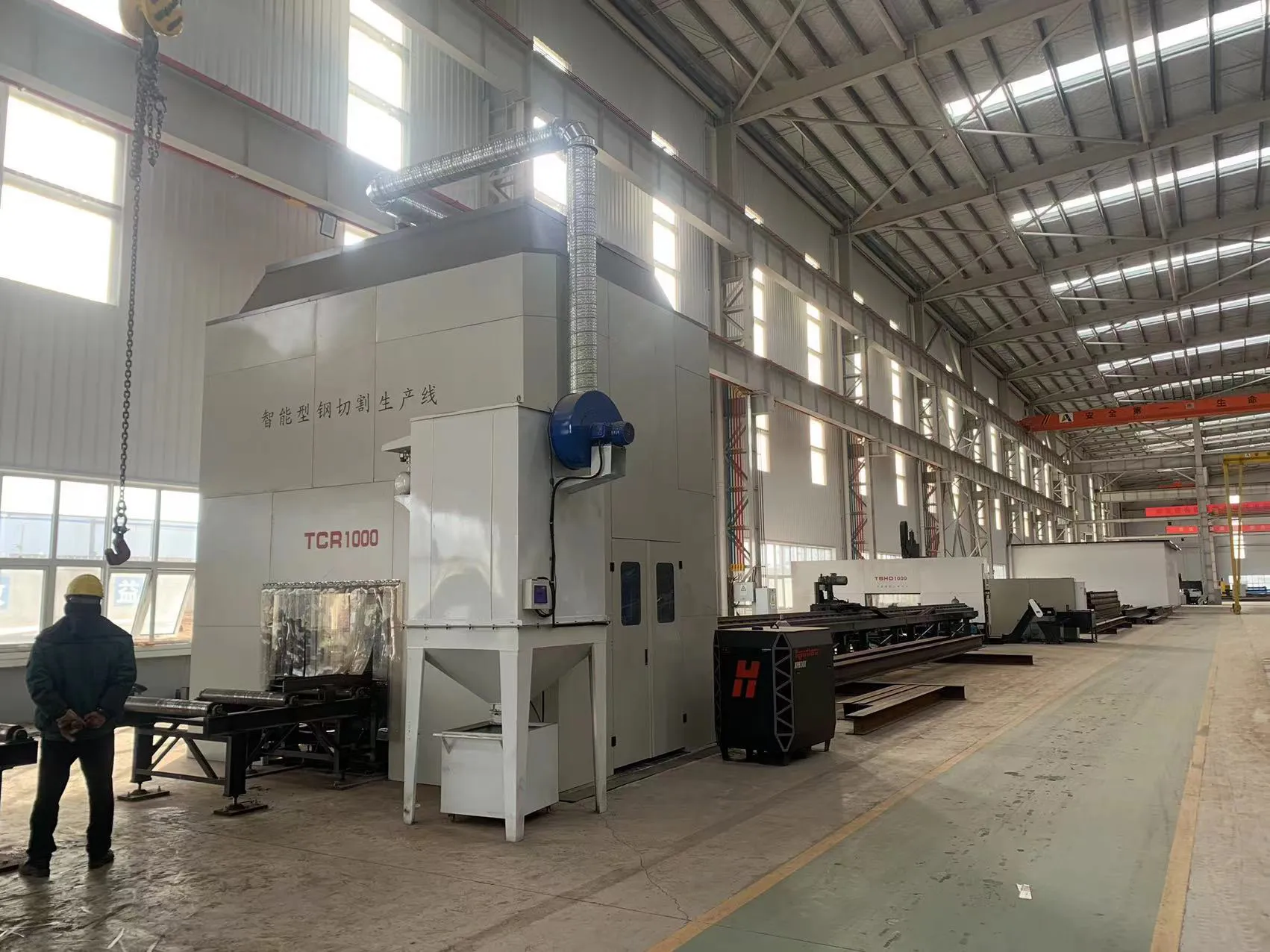
Optimizing 1.5kW Power for Brass Fabrication
Brass is a staple material in the elevator industry, used for luxury cabin interiors, handrails, and braille signage. However, brass is a highly reflective and thermally conductive material, which historically made it difficult to process with CO2 lasers. The 1.5kW fiber laser operates at a wavelength of approximately 1.06µm, which is absorbed much more efficiently by yellow metals.
The 1.5kW power rating is the “sweet spot” for elevator manufacturers for several data-driven reasons:
– Thickness Efficiency: A 1.5kW source can comfortably cut brass up to 5mm with high edge quality. Most elevator decorative plates range from 1.0mm to 3.0mm, allowing the machine to operate at its peak velocity.
– Beam Quality (BPP): The 1.5kW fiber source provides a high-quality beam with a low Beam Parameter Product. This results in a smaller focal spot, which increases the energy density. For brass, high energy density is required to instantly melt the surface before the material’s high thermal conductivity can dissipate the heat.
– Back-Reflection Protection: Modern 1.5kW systems are equipped with optical isolators. When cutting reflective brass, some laser energy can reflect back into the delivery fiber. The integrated protection systems monitor these reflections and adjust the pulse frequency or shut down the source to prevent hardware damage, a critical feature for high-value brass projects.
Precision Metrics and Motion Control
In elevator engineering, tolerances for interlocking panels and button plates are exceptionally tight. The 1.5kW laser system utilizes high-precision motion components to translate the stability of the bed into cutting accuracy.
– Positioning Accuracy: ±0.03mm/m.
– Repeatability: ±0.02mm.
– Maximum Acceleration: 1.0G to 1.2G.
These metrics are achieved through the integration of Japanese or European servo motors and high-precision helical gear racks. In the context of Queretaro’s manufacturing standards, these specifications allow for the production of “ready-to-assemble” components that require zero secondary grinding or filing. For an elevator engineer, this means that the male and female joints of a brass cabin frame will fit perfectly every time, reducing assembly labor by up to 30%.

Technical Advantages for the Queretaro Market
Queretaro’s industrial sector is characterized by its adherence to international quality standards (ISO 9001, AS9100). Implementing a 1.5kW sheet metal laser provides specific regional advantages:
1. Energy Efficiency: Compared to 3kW or higher systems, the 1.5kW laser has a significantly lower power draw. In regions where industrial electricity tariffs are tiered, the 1.5kW system offers the lowest “cost-per-part” for materials under 5mm.
2. Gas Consumption Optimization: By utilizing high-pressure nitrogen as an assist gas, the 1.5kW laser produces an oxide-free cut on brass. This is essential for elevator components that will receive a clear coat or PVD finish, as it eliminates the need for acid pickling.
3. Space Utilization: The compact footprint of the 1.5kW models allows Queretaro-based factories to maximize their floor space, integrating the laser cutting cell directly into the production flow rather than outsourcing to distant service centers.
The Role of Assist Gases in Brass Cutting
For engineers, the choice of assist gas is as critical as the laser power. When processing brass for high-end elevator interiors, the following parameters are recommended:
– Nitrogen (N2): Used for high-speed cutting of thin brass (1-3mm). It prevents oxidation, leaving a bright, golden edge that is aesthetically pleasing for visible joints.
– Oxygen (O2): While rarely used for decorative brass due to the darkening of the edge, it can be used for thicker functional components where speed is prioritized over edge color.
– Compressed Air: A cost-effective alternative for internal structural components where edge discoloration is not a factor.
The 1.5kW system features automated gas pressure control, allowing the software to switch between gases based on the material library, ensuring that the operator error is minimized during the transition from stainless steel to brass.
Maintenance and Long-Term Reliability
The combination of a plate-welded bed and a 1.5kW fiber source results in a machine with a MTBF (Mean Time Between Failures) significantly higher than traditional mechanical punch presses or CO2 lasers.
– Fiber Source Lifespan: Rated for up to 100,000 hours.
– Bed Stability: The heavy-duty plate construction ensures that the machine does not require frequent re-leveling, even in facilities with heavy nearby traffic or other vibrating machinery common in Queretaro’s industrial zones.
– Minimal Moving Parts: Without the mirrors and bellows of a CO2 system, the maintenance schedule is focused primarily on cleaning the protective window of the laser head and lubricating the guide rails.
Conclusion: Strategic Investment for Elevator Manufacturers
For the elevator industry in Queretaro, the 1.5kW Sheet Metal Laser is more than a cutting tool; it is a strategic asset. The plate-welded heavy-duty bed provides the mechanical “truth” required for high-precision engineering, while the 1.5kW fiber source masters the complexities of brass fabrication.
By investing in this technology, factory owners can achieve a higher throughput of decorative components, reduce material waste through advanced nesting software, and meet the stringent aesthetic demands of modern architectural projects. As Queretaro continues to grow as a center of manufacturing excellence, the adoption of specialized fiber laser technology remains the most effective path toward operational efficiency and product quality.
















