
The Evolution of Precision Manufacturing: 1.5kW Laser Systems in Tijuana
Tijuana has long been recognized as a cornerstone of the North American manufacturing corridor. As the “Maquiladora” industry evolves from simple assembly to high-complexity fabrication, the demand for advanced machinery has surged. Among the most critical technologies driving this transformation is the 1.5kW precision fiber laser system. This power range has emerged as the industrial standard for high-speed, high-accuracy processing of stainless steel, a material ubiquitous in the medical device, aerospace, and food processing sectors that dominate the Baja California region.
The transition to fiber laser technology represents a significant leap over traditional CO2 systems and mechanical punching. For engineers and facility managers in Tijuana, the 1.5kW system offers an optimal balance between capital investment and operational throughput. By focusing on the specific metallurgical properties of stainless steel, these systems provide a level of edge quality and dimensional tolerance that was previously unattainable without extensive secondary finishing processes.
Technical Specifications of the 1.5kW Fiber Laser
A 1.5kW laser system is engineered to deliver high-density energy via an optical fiber. Unlike CO2 lasers, which require complex mirror alignments, the fiber laser is solid-state, meaning the beam is generated and delivered through a flexible medium. This results in a beam with superior focusability and a much smaller spot size, typically in the range of 10 to 100 microns. For laser cutting applications, this concentration of energy allows for a narrower kerf width and a significantly reduced heat-affected zone (HAZ).
In the context of stainless steel, the 1.5kW output is particularly effective for gauges ranging from 0.5mm to 6mm. While higher power systems exist, the 1.5kW variant excels in thin-to-medium plate processing where precision is more critical than raw thickness capacity. The wall-plug efficiency of these systems often exceeds 30%, which is nearly three times that of older technologies, leading to lower utility costs—a vital consideration for high-volume production facilities in the Tijuana industrial zones.
 laser cutting machine” style=”width: 100%; max-width: 800px; height: auto; margin: 20px 0;”>
Material Dynamics: Processing Stainless Steel
Stainless steel presents unique challenges in thermal processing due to its alloying elements, such as chromium and nickel. These elements affect the material’s thermal conductivity and reflectivity. When performing laser cutting on stainless steel, the 1.5kW system must be finely tuned to manage the melt pool effectively. Because stainless steel has a lower thermal conductivity than carbon steel, heat tends to stay localized at the cut site, which can lead to warping if the parameters are not optimized.
The choice of assist gas is paramount when working with stainless steel in a precision environment. Most high-end shops in Tijuana utilize high-pressure Nitrogen (N2). Nitrogen acts as a shielding gas, displacing oxygen from the cutting zone to prevent oxidation. This results in a “bright” or silver edge that is free of dross and ready for immediate welding or painting. In contrast, using Oxygen as an assist gas would result in a blackened, oxidized edge, which is generally unacceptable for medical-grade or aesthetic stainless steel components.
Optimizing Throughput in the Tijuana Industrial Corridor
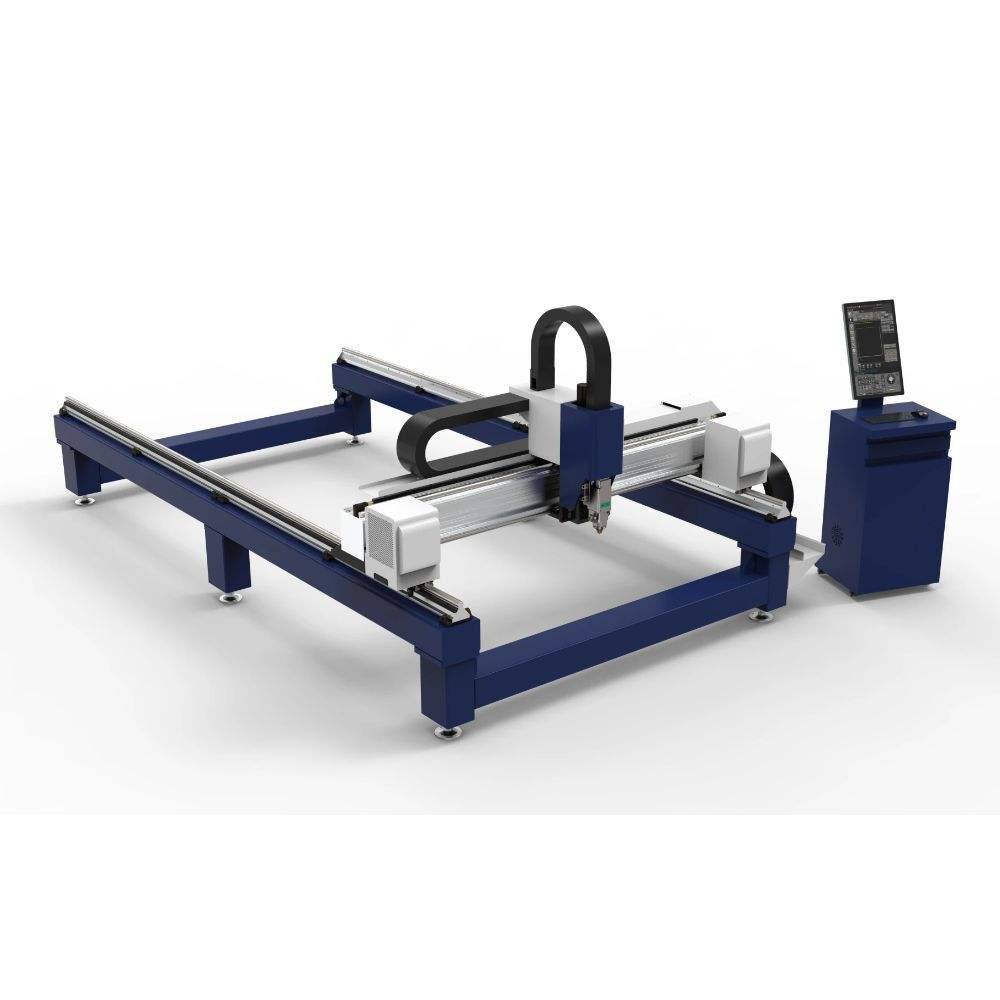
Tijuana’s proximity to the United States border necessitates a manufacturing philosophy centered on “Just-In-Time” (JIT) delivery. Local fabricators must maintain high uptime and rapid cycle times to remain competitive with international suppliers. The 1.5kW precision laser system supports this through high acceleration rates and rapid traverse speeds. Modern gantry designs, often utilizing aerospace-grade aluminum extrusions, allow the cutting head to move with high agility without sacrificing accuracy.
Furthermore, the integration of advanced CNC controllers allows for real-time adjustments. In a typical Tijuana facility, a 1.5kW system might be tasked with cutting complex geometries for 304-grade stainless steel enclosures in the morning and precision 316L medical components in the afternoon. The ability to switch between material profiles and gas pressures via software ensures that the machine remains a versatile asset rather than a bottleneck.
Precision Engineering and Motion Control
The “precision” aspect of the 1.5kW system is largely a function of its motion control architecture. To achieve tolerances within +/- 0.05mm, the machine must utilize high-resolution encoders and precision ball screws or linear motors. In the dusty or humid environments sometimes found in coastal manufacturing hubs, the protection of these components is critical. Enclosed bellows and pressurized optical paths prevent contaminants from interfering with the laser beam or the mechanical drive components.
For stainless steel applications, the focal position of the lens must be maintained with extreme consistency. Most modern 1.5kW laser cutting heads feature “auto-focus” capabilities. This technology uses capacitive sensors to maintain a constant distance between the nozzle and the workpiece, compensating for any slight undulations in the stainless steel sheet. This ensures that the energy density remains uniform throughout the entire nest, preventing failures or burrs at the end of a long production run.
Software Integration and CAD/CAM Workflows
The hardware of a 1.5kW system is only as capable as the software driving it. In the Tijuana manufacturing sector, interoperability with standard CAD formats (such as .DXF, .DWG, and .STEP) is essential. Advanced nesting software is used to maximize material utilization, which is particularly important given the fluctuating price of stainless steel. By optimizing the layout of parts on a sheet, manufacturers can reduce scrap rates by up to 20%, directly impacting the bottom line.
Modern laser cutting software also includes “Lead-in” and “Lead-out” optimization, which prevents piercing scars from affecting the final dimensions of the part. For precision stainless steel components, common in the electronics industry of Baja California, these micro-adjustments are the difference between a part that meets QC standards and one that is rejected. Additionally, “common-line cutting” techniques can be employed, where two parts share a single cut path, further increasing speed and reducing gas consumption.
Maintenance and Local Support in Tijuana
One of the primary advantages of adopting 1.5kW fiber technology in Tijuana is the reduced maintenance requirement compared to older CO2 units. Fiber lasers do not require internal mirrors, gases for the resonator, or frequent recalibration of the beam path. However, a rigorous preventative maintenance schedule is still necessary to ensure longevity. This includes cleaning the protective windows, checking the chiller’s conductivity, and ensuring the dust extraction system is operating at peak efficiency.
Local technical support is a critical factor for Tijuana-based companies. The ability to source consumables—such as copper nozzles, ceramic rings, and protective lenses—within the region prevents costly downtime. As the ecosystem for laser cutting grows in Northern Mexico, the availability of specialized technicians has also increased, allowing for rapid response times and onsite training for machine operators.
The Future of Stainless Steel Fabrication
As we look toward the future of manufacturing in Tijuana, the role of 1.5kW precision systems will only expand. The trend toward miniaturization in electronics and the increasing stringency of medical regulations require cutting systems that can deliver microscopic levels of detail. Innovations in beam shaping and “wobble” cutting technology are further enhancing the capabilities of the 1.5kW source, allowing it to perform tasks that previously required much higher power levels.
In conclusion, the 1.5kW precision laser system is more than just a tool; it is a strategic investment for any Tijuana-based manufacturer looking to excel in stainless steel fabrication. By combining the inherent efficiency of fiber laser technology with the logistical advantages of the region, companies can achieve a level of precision and productivity that sets them apart in the global marketplace. Whether producing complex automotive components or high-purity medical instruments, the 1.5kW laser cutting system remains the benchmark for quality and reliability in modern engineering.
















