
Introduction to 1.5kW Precision Laser Systems in Monterrey’s Industrial Sector
Monterrey, often referred to as the industrial capital of Mexico, has become a global hub for manufacturing excellence. Within this competitive landscape, the adoption of advanced laser cutting technology is no longer a luxury but a fundamental necessity for shops aiming to meet international quality standards. The 1.5kW precision laser system represents a strategic investment for small to medium-sized enterprises (SMEs) and specialized fabrication shops in the region. This power level strikes an optimal balance between capital expenditure and operational throughput, particularly when processing stainless steel, which is ubiquitous in Monterrey’s automotive, aerospace, and food-processing industries.
The transition from traditional mechanical shearing or plasma cutting to fiber laser cutting offers a paradigm shift in precision. A 1.5kW system utilizes a solid-state fiber source to generate a beam with a wavelength of approximately 1.06 microns. This specific wavelength is highly absorbed by metallic surfaces, allowing for a concentrated energy density that can melt and vaporize stainless steel with surgical accuracy. For engineers in Monterrey, understanding the nuances of this technology is the key to unlocking higher profit margins and superior component quality.
Technical Specifications and Beam Dynamics
At the heart of the 1.5kW system is the fiber laser oscillator. Unlike CO2 lasers, which require complex gas mixtures and internal mirrors, the fiber laser delivers the beam through a flexible fiber optic cable directly to the cutting head. This design eliminates the need for beam path alignment and significantly reduces maintenance requirements. The “precision” aspect of these systems is defined by the Beam Parameter Product (BPP). A lower BPP indicates a beam that can be focused into a smaller spot size, resulting in a narrower kerf and a smaller Heat-Affected Zone (HAZ).
When processing stainless steel, the 1.5kW output is capable of handling thicknesses ranging from 0.5mm to 6mm with high efficiency. While higher-wattage machines (such as 6kW or 12kW) exist, the 1.5kW unit excels in the “sweet spot” of thin-to-medium gauge materials. It provides the high-speed processing required for intricate geometries without the excessive energy consumption or infrastructure costs associated with ultra-high-power systems.
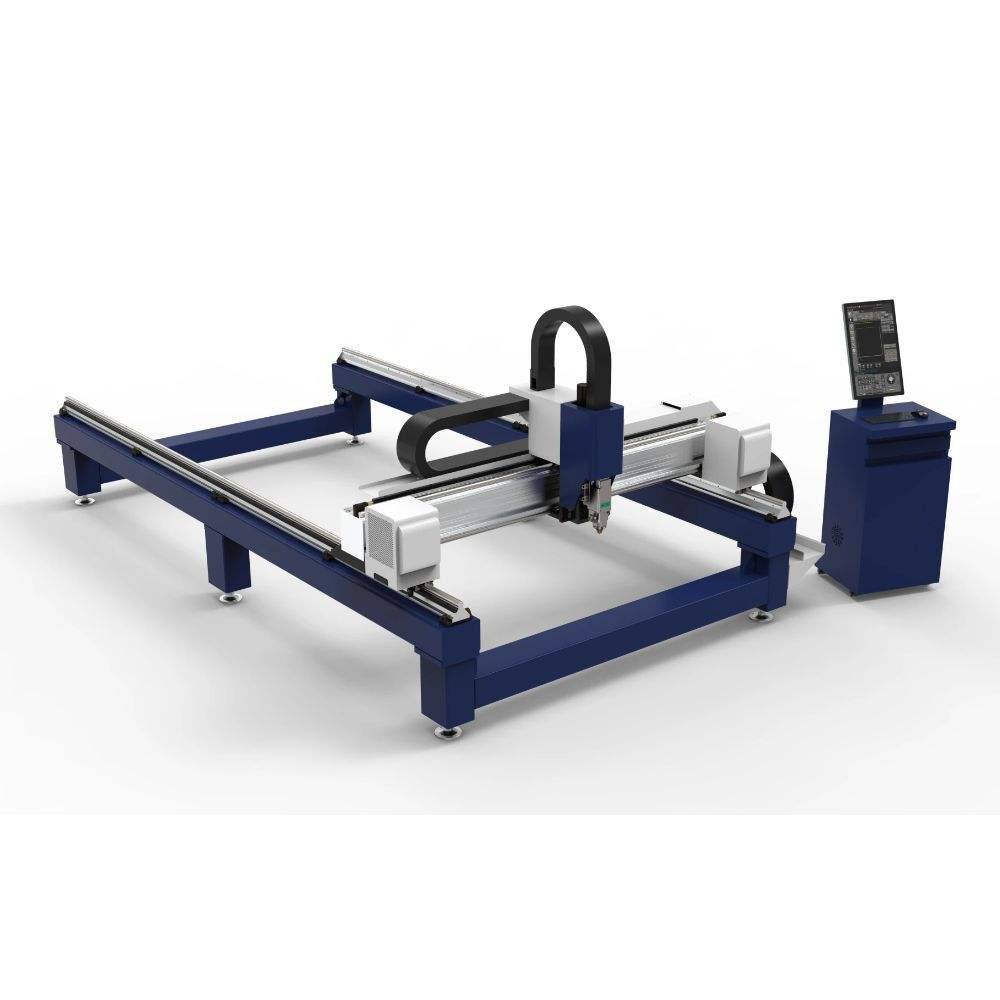 laser cutting machine“>
Stainless Steel Metallurgy and Laser Interaction
Stainless steel, particularly the 300 and 400 series commonly used in Monterrey’s appliance and medical industries, presents unique challenges for thermal cutting. The high chromium and nickel content increases the material’s reflectivity and thermal conductivity compared to carbon steel. However, the fiber laser’s 1.06-micron wavelength is specifically effective at overcoming the initial reflectivity of stainless steel.
One of the primary advantages of laser cutting stainless steel with a 1.5kW system is the ability to maintain the material’s corrosion resistance. If the cutting process introduces excessive heat, “sensitization” can occur, where chromium carbides precipitate at the grain boundaries, making the steel susceptible to intergranular corrosion. The precision optics of a 1.5kW system ensure that the energy is localized, minimizing the time the material spends at critical temperatures and preserving the integrity of the alloy.
Operational Excellence: Nitrogen vs. Oxygen Assist Gases
In the Monterrey industrial corridor, the choice of assist gas is a critical operational decision. For stainless steel, Nitrogen is the gold standard. When laser cutting with Nitrogen at high pressures (typically 10 to 20 bar), the gas acts as a mechanical force to eject the molten metal from the kerf while simultaneously preventing oxidation. This results in a “bright” or “silver” edge that requires no secondary finishing before welding or painting.
Oxygen can be used for thicker sections of stainless steel to increase cutting speeds through an exothermic reaction. However, this creates a black oxide layer on the cut edge. For industries in Monterrey serving the medical or food-grade sectors, this oxide layer is unacceptable as it can harbor bacteria or lead to premature rust. Therefore, 1.5kW systems are usually paired with high-performance Nitrogen generation systems or bulk liquid Nitrogen tanks to ensure continuous, high-quality production.
Optimizing Feed Rates and Focal Position
Precision in laser cutting is heavily dependent on the synchronization between the CNC controller and the motion system. For a 1.5kW system, the feed rate for 1mm stainless steel can exceed 20 meters per minute. As the thickness increases to 5mm or 6mm, the feed rate drops significantly to ensure the beam has sufficient time to penetrate the material. Engineers must also calibrate the “focal position”—the point where the beam’s diameter is at its smallest. For stainless steel, the focus is typically set slightly below the surface of the material to facilitate better melt ejection and a smoother surface finish on the lower half of the cut.

Environmental Considerations in Monterrey
Monterrey’s climate presents specific challenges for high-precision machinery. The region experiences high ambient temperatures and varying humidity levels, which can affect the stability of the laser source and the electronics. A 1.5kW precision laser system must be equipped with a dual-circuit industrial chiller. One circuit cools the laser source, while the other cools the external optics and the cutting head. Maintaining a constant temperature prevents thermal expansion of the optical components, which could otherwise lead to “focus shift”—a phenomenon where the focal point moves during a long production run, resulting in inconsistent cut quality.
Furthermore, the dust and particulate matter common in industrial zones like Santa Catarina or Apodaca necessitate robust filtration systems. The 1.5kW system’s bellows and linear guides must be kept clean to ensure the micron-level positioning accuracy required for precision laser cutting. Regular maintenance of the air dryers and filters for the assist gas line is also vital, as any moisture or oil contamination can damage the protective windows of the laser head.
Software Integration and Nesting Efficiency
The hardware is only as effective as the software driving it. Modern 1.5kW systems utilize sophisticated CAD/CAM suites that allow for “nesting”—the process of arranging parts on a sheet of stainless steel to minimize waste. In a high-cost material environment like Monterrey, improving material utilization by even 5% can result in thousands of dollars in annual savings. These software packages also include features like “Common Line Cutting,” where two parts share a single cut path, further reducing the laser cutting time and gas consumption.
Economic Impact and Return on Investment (ROI)
For a fabrication shop in Monterrey, the ROI on a 1.5kW precision laser is typically realized within 12 to 24 months, depending on shift patterns. The primary drivers of this ROI are the elimination of secondary processes and the reduction in labor costs. Unlike traditional punching or manual plasma cutting, laser cutting produces parts that are “ready to ship.” The precision is so high that holes for fasteners often do not require reaming or tapping preparation.
Energy efficiency is another factor. Fiber lasers are approximately 3 to 4 times more energy-efficient than CO2 lasers. In the context of Mexico’s industrial electricity tariffs, the lower power draw of a 1.5kW fiber system significantly reduces the “cost per part.” When combined with the high reliability of solid-state technology (often boasting a Mean Time Between Failures of over 100,000 hours for the laser diodes), the long-term economic outlook is highly favorable.
Safety Standards and Compliance
Operating a 1.5kW laser requires strict adherence to safety protocols. Fiber lasers operate in the infrared spectrum, and even a reflected beam can cause permanent eye damage. Precision systems are typically fully enclosed (Class 1 Laser Product) with specialized viewing windows that filter out the specific wavelength of the laser. In Monterrey, compliance with international standards like ISO 11553 for laser safety is becoming a prerequisite for companies looking to join the supply chains of multinational corporations (MNCs).
Conclusion: The Future of Fabrication in Monterrey
The integration of 1.5kW precision laser systems is a testament to the technological evolution of Monterrey’s manufacturing base. By mastering the variables of laser cutting—from gas selection and focal dynamics to environmental management—local fabricators can compete on a global scale. As the demand for high-quality stainless steel components continues to grow in the electric vehicle (EV) and renewable energy sectors, the 1.5kW laser stands as the cornerstone of modern, efficient, and precise production. For the engineers and business owners of Nuevo León, this technology is not just a tool; it is the engine of future industrial growth.
















