
Introduction to 1.5kW Fiber Laser Technology in Guadalajara
Guadalajara, often referred to as the “Silicon Valley of Mexico,” has emerged as a critical hub for high-tech manufacturing, aerospace components, and specialized medical device production. In this competitive industrial landscape, the adoption of the 1.5kW precision laser system represents a significant leap forward for local workshops and large-scale factories alike. This specific power rating—1.5 kilowatts—offers a unique balance between energy efficiency, capital investment, and high-speed processing capabilities, particularly when working with stainless steel alloys.
The transition from traditional CO2 systems to fiber laser cutting technology has redefined the standards for edge quality and dimensional accuracy. For engineers in Jalisco, the 1.5kW system provides the necessary flux density to vaporize stainless steel with minimal thermal distortion, ensuring that the structural integrity and aesthetic requirements of the material are maintained throughout the fabrication process.
Why 1.5kW is the Optimal Power for Stainless Steel
Stainless steel is prized for its corrosion resistance and mechanical strength, but these same properties make it a challenging material to machine. The 1.5kW fiber laser operates at a wavelength of approximately 1.06 microns, which is more readily absorbed by metallic surfaces compared to the 10.6 microns of a CO2 laser. This high absorption rate allows for a smaller focal spot and higher energy concentration.
Material Thickness and Cutting Speeds
For a 1.5kW precision system, the “sweet spot” for stainless steel typically ranges from 0.5mm to 4.0mm. Within this range, the machine can achieve exceptional travel speeds, often exceeding 15 meters per minute on thinner gauges (1.0mm – 1.5mm). While the system is capable of severing up to 6mm or even 8mm stainless steel, the 1.5kW configuration is most economically efficient when focused on precision components where speed and edge smoothness are paramount.

Edge Quality and Heat-Affected Zones (HAZ)
One of the primary advantages of the 1.5kW system is its ability to produce a narrow kerf width. In stainless steel processing, minimizing the Heat-Affected Zone (HAZ) is crucial to prevent the depletion of chromium at the grain boundaries, a phenomenon known as sensitization. By utilizing a high-precision 1.5kW beam, operators can maintain the material’s anti-corrosive properties right up to the cut edge, eliminating the need for secondary grinding or chemical cleaning.
Technical Specifications of the Precision System
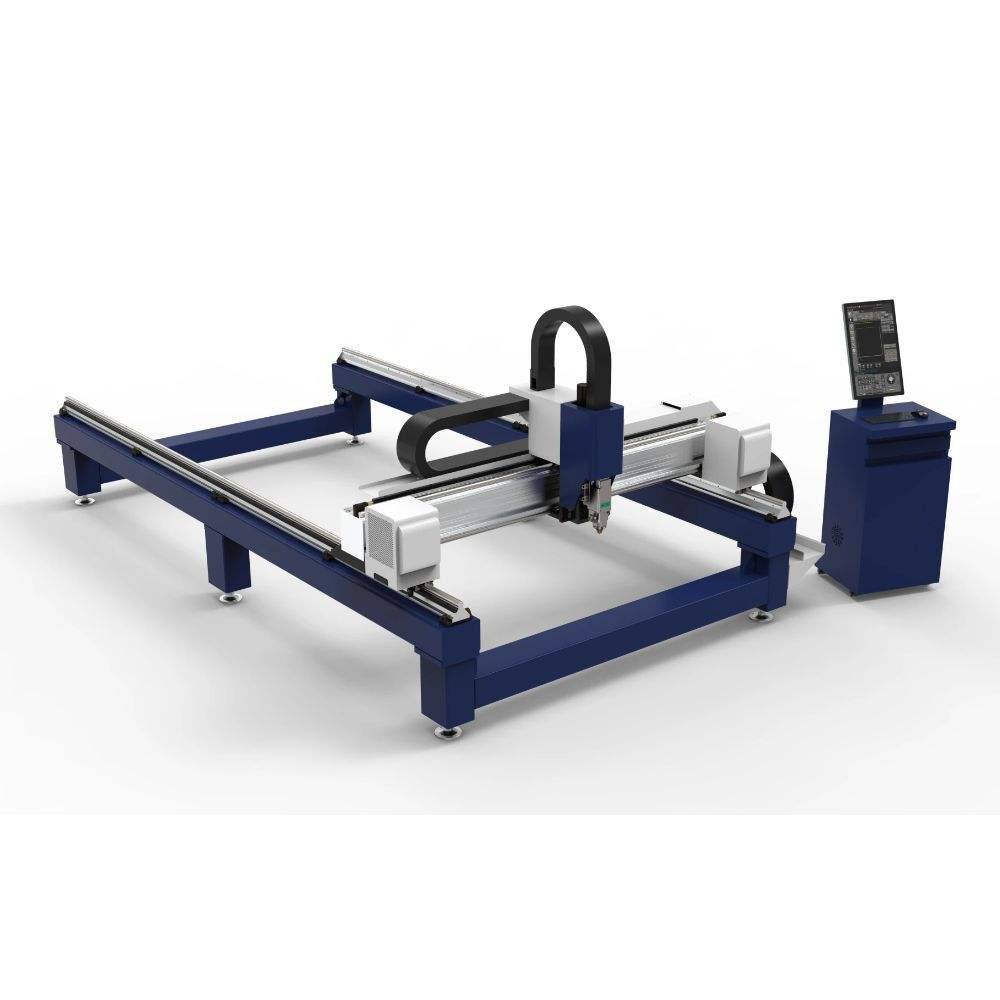
A 1.5kW precision laser cutting system is more than just its power source. To achieve the tolerances required by Guadalajara’s aerospace and electronics sectors, the machine integration must include high-end motion control components. This includes AC servo motors with high-resolution encoders, precision-ground ball screws or helical racks, and a rigid gantry design that can withstand high acceleration forces without vibration.
The optical path is another critical area. Modern 1.5kW systems utilize autofocus cutting heads that can adjust the focal point in real-time based on the material’s topography. This is particularly important for stainless steel sheets that may have slight internal stresses or surface irregularities. The ability to maintain a consistent standoff distance and focal depth ensures that every part produced is identical to the CAD model.
Optimizing Laser Cutting for Guadalajara’s Industrial Climate
Operating high-precision machinery in Guadalajara requires consideration of local environmental factors. The city’s altitude (approximately 1,566 meters above sea level) results in lower atmospheric pressure compared to coastal regions. This can influence the dynamics of the assist gases used during the laser cutting process.
Managing Atmospheric Pressure and Gas Flow
In stainless steel fabrication, Nitrogen is the preferred assist gas to prevent oxidation. At higher altitudes, the flow characteristics through the nozzle can change. Engineers must calibrate the gas pressure settings to ensure that the molten metal is efficiently ejected from the kerf. A 1.5kW system integrated with high-pressure piping (up to 25 bar) ensures that even in Guadalajara’s thinner air, the cut remains clean and free of dross.
Humidity and Optical Protection
Guadalajara experiences a distinct rainy season with high humidity levels. Fiber lasers are sensitive to moisture, which can contaminate the optical protective windows or the internal laser source. Precision 1.5kW systems should be equipped with refrigerated air dryers and dust extraction units to maintain a stable operating environment. Ensuring the “clean room” integrity of the laser head is vital for preventing beam scattering and maintaining the 1.5kW power density.
Advanced Techniques for Stainless Steel Processing
To maximize the ROI of a 1.5kW system, operators must master the nuances of different stainless steel grades, such as 304, 316, and 430. Each grade reacts differently to the laser beam due to variations in thermal conductivity and alloying elements.
Gas Selection: Nitrogen vs. Oxygen vs. Air
While Nitrogen is the standard for a “bright” finish, some applications in Guadalajara’s heavy industrial sectors may utilize Oxygen for thicker stainless steel plates. Oxygen facilitates an exothermic reaction, adding thermal energy to the cut, which allows the 1.5kW laser to penetrate thicker sections. However, this results in an oxidized (black) edge. For many precision applications, Clean Air cutting is becoming a popular middle-ground, utilizing high-pressure compressed air to reduce costs while maintaining acceptable speeds for thin-gauge 304 stainless steel.
Nozzle Calibration and Piercing Strategies
Precision laser cutting starts with the pierce. For stainless steel, a multi-stage piercing strategy is often employed. The 1.5kW system can be programmed to use a “soft pierce” with lower power and higher frequency to prevent splashing molten metal back onto the nozzle. Once the material is breached, the system transitions to the high-speed cutting parameters. Selecting the correct nozzle diameter (typically 1.0mm to 1.5mm for 1.5kW systems) is essential for focusing the assist gas stream exactly where it is needed.
Maintenance and Longevity in a Production Environment
The longevity of a 1.5kW fiber laser system in a high-output environment like Guadalajara depends on a rigorous preventative maintenance schedule. Unlike CO2 lasers, fiber lasers have no moving parts or mirrors in the beam generation source, which significantly reduces maintenance overhead. However, the external delivery optics and the mechanical drive system require constant attention.
Daily checks should include the inspection of the protective lens for “burn spots” or dust. Even a microscopic particle can absorb enough 1.5kW energy to shatter the lens. Weekly maintenance should focus on the lubrication of the linear guides and the cleaning of the slat bed. In Guadalajara’s industrial zones, where airborne particulates can be high, ensuring the bellows and covers are intact is critical for protecting the precision components of the laser cutting machine.
Integration into the Local Supply Chain
Guadalajara’s manufacturing ecosystem relies on Just-In-Time (JIT) delivery. A 1.5kW precision laser system allows local shops to bring fabrication in-house, reducing lead times from weeks to days. By integrating the laser with modern Nesting Software, manufacturers can optimize material usage, which is a significant cost-saving measure given the fluctuating price of stainless steel. The ability to rapidly prototype and then move to full-scale production on the same 1.5kW platform provides a competitive edge in the Jalisco market.
Economic Analysis: ROI for Guadalajara Workshops
Investing in a 1.5kW system is often more economically viable for small to medium enterprises (SMEs) in Mexico than jumping to 6kW or 12kW systems. The lower power consumption reduces monthly utility costs, and the infrastructure requirements (such as electrical transformers and chillers) are less demanding. For a workshop primarily processing stainless steel for the food service, pharmaceutical, or architectural industries, the 1.5kW system offers the fastest path to profitability through its combination of high precision and low operating cost per hour.
Conclusion: Elevating Jalisco’s Manufacturing Standards
The 1.5kW precision laser system is a transformative tool for the Guadalajara industrial sector. By focusing on the specific requirements of stainless steel—precision, edge quality, and thermal control—manufacturers can meet the rigorous standards of international clients. As laser cutting technology continues to evolve, the 1.5kW fiber laser remains the cornerstone of efficient, high-quality metal fabrication in the region, bridging the gap between traditional craftsmanship and the future of Industry 4.0.
















