The Industrial Evolution of Monterrey: Precision Laser Systems
Monterrey, Nuevo León, has long been recognized as the industrial heart of Mexico. As a global hub for automotive manufacturing, aerospace components, and heavy construction, the demand for high-precision fabrication has never been greater. Among the various technologies driving this industrial revolution, the 1.5kW precision laser system stands out as a critical tool for local manufacturers. This specific power rating offers a unique balance of speed, accuracy, and operational cost, making it the ideal solution for processing galvanized steel—a material ubiquitous in the region’s construction and automotive supply chains.
The transition from traditional mechanical shearing or plasma cutting to advanced laser cutting has allowed Monterrey-based shops to meet the rigorous standards of international OEMs. A 1.5kW fiber laser provides the necessary energy density to vaporize metal with minimal heat-affected zones (HAZ), ensuring that the structural integrity and corrosion resistance of galvanized coatings are maintained as much as possible during the fabrication process.
 laser cutting machine” style=”width: 100%; max-width: 800px; height: auto; margin: 20px 0;”>
Technical Specifications of the 1.5kW Fiber Laser System
A 1.5kW laser system is categorized as a medium-power fiber laser. In the context of laser cutting, the “fiber” refers to the gain medium—an optical fiber doped with rare-earth elements. This technology is significantly more efficient than older CO2 lasers, offering wall-plug efficiencies of up to 30-40%. For a precision shop in Monterrey, this translates to lower electricity bills and reduced cooling requirements, which is vital given the region’s high ambient temperatures.
Beam Quality and Focus
The precision of a 1.5kW system is defined by its Beam Parameter Product (BPP). A lower BPP allows the laser to be focused into a smaller spot size, increasing the power density at the point of contact. When working with galvanized steel, a small, concentrated spot is essential to pierce the zinc coating quickly and initiate the cut in the base steel without excessive boiling of the zinc, which can lead to turbulence in the melt pool and a “burred” edge.
CNC Integration and Motion Control
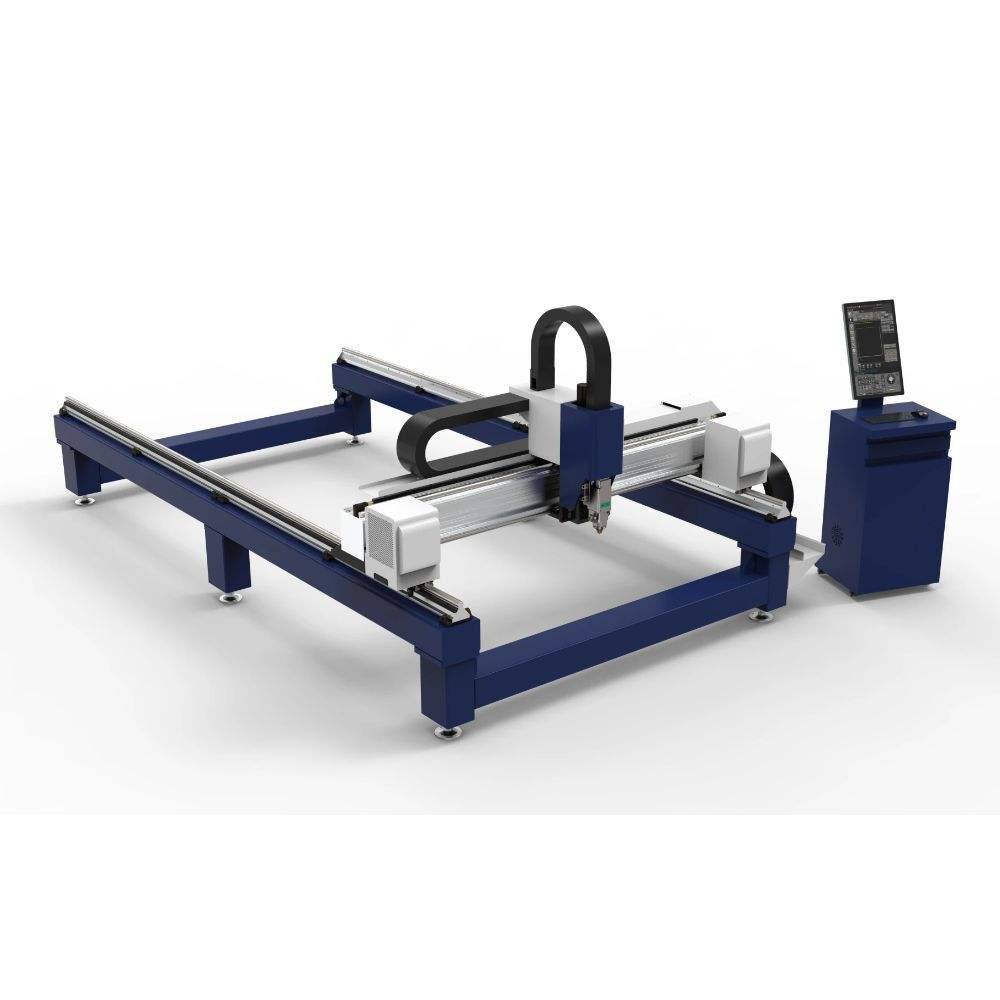
The mechanical framework of the system typically involves a high-rigidity gantry and precision linear motors or rack-and-pinion drives. In Monterrey’s high-output environments, the ability of the CNC controller to synchronize laser power with acceleration and deceleration is paramount. This ensures that corners are cut with the same precision as long straightaways, preventing “over-burn” at the points where the machine must slow down to change direction.
Challenges of Processing Galvanized Steel
Galvanized steel presents a unique set of challenges for laser cutting. The material consists of a carbon steel core coated with a layer of zinc to prevent corrosion. Zinc has a significantly lower melting point (approx. 419°C) and boiling point (approx. 907°C) compared to steel (approx. 1500°C). This discrepancy is the primary hurdle in precision fabrication.
Zinc Vaporization and Dross
As the laser heats the material, the zinc coating vaporizes before the steel melts. This vapor can interfere with the laser beam and create high-pressure gas pockets that eject molten steel from the kerf in an uncontrolled manner. This often results in “dross”—hardened droplets of metal stuck to the underside of the cut. To mitigate this, a 1.5kW system must be finely tuned with specific nozzle geometries and assist gas pressures to “flush” the vaporized zinc away from the cutting zone effectively.
The Importance of Assist Gases
In Monterrey’s industrial sector, the choice between Oxygen (O2) and Nitrogen (N2) as an assist gas is a critical operational decision. Oxygen acts as an exothermic energy source, accelerating the cutting process and allowing for thicker cuts. However, it leaves an oxidized edge that may require post-processing if the part is to be painted or welded. Nitrogen, on the other hand, uses high pressure to blow away molten metal without reacting with it, resulting in a clean, oxide-free edge. For galvanized steel, Nitrogen is often preferred to maintain the integrity of the zinc layer near the cut edge, though it requires higher pressures and more power from the 1.5kW source.

Optimizing Operations for Monterrey’s Climate
Monterrey is known for its extreme climate, characterized by intense heat in the summer and varying humidity levels. These environmental factors can impact the performance of a 1.5kW laser cutting system if not properly managed. Precision electronics and the laser source itself are sensitive to temperature fluctuations.
Chiller Systems and Thermal Stability
A robust dual-circuit cooling system is mandatory. One circuit cools the laser source, while the other cools the cutting head and optics. In Monterrey, where ambient temperatures can exceed 40°C, the chiller must be oversized to ensure the laser operates within its optimal thermal window. If the laser source gets too hot, its wavelength can shift slightly, or its power output can become unstable, leading to inconsistent cut quality on galvanized sheets.
Dust and Humidity Management
The industrial dust prevalent in Monterrey’s atmosphere can be detrimental to the sensitive optics of a laser cutting machine. Any particulate matter that settles on the protective window or the focusing lens can absorb laser energy, heat up, and eventually crack the optic. Implementing a pressurized, filtered air system for the beam path and maintaining a clean-room environment for lens changes is essential for maximizing the lifespan of the equipment.
Economic Impact and ROI for Local Fabricators
For a medium-sized fabrication shop in Monterrey, investing in a 1.5kW precision system is an exercise in ROI (Return on Investment). While the initial capital expenditure is higher than traditional methods, the throughput and reduction in secondary operations provide a rapid payback period.
Reduction in Secondary Operations
Because the 1.5kW fiber laser produces such high-quality edges, the need for grinding, deburring, or edge cleaning is significantly reduced. In the competitive Monterrey market, where labor costs are rising and lead times are shrinking, the ability to move a part directly from the laser cutting table to the assembly line or welding station is a massive competitive advantage.
Material Utilization and Nesting
Advanced nesting software integrated with the 1.5kW system allows manufacturers to maximize the use of galvanized steel sheets. Because the kerf (the width of the cut) is so narrow—often less than 0.1mm—parts can be placed extremely close together. This reduces scrap rates, which is particularly important given the fluctuating prices of raw materials in the global steel market.
Safety and Environmental Considerations
Operating a laser cutting system in an urban industrial center like Monterrey requires adherence to strict safety and environmental regulations. The vaporization of zinc during the cutting of galvanized steel produces zinc oxide fumes, which are hazardous if inhaled (potentially causing “metal fume fever”).
Fume Extraction Systems
A high-performance dust collector and fume extraction system are non-negotiable. These systems use HEPA filters and carbon stages to capture fine particulates and neutralize odors before the air is exhausted. For Monterrey shops located near residential areas or in high-density industrial parks, maintaining low emissions is crucial for regulatory compliance and worker safety.
Laser Safety Standards
The 1.5kW fiber laser operates at a wavelength (typically 1064nm) that is invisible to the human eye but highly dangerous. Even a reflected beam can cause permanent blindness. Professional installations in Monterrey must include a fully enclosed Class 1 laser housing with safety-interlocked doors and laser-rated observation windows. Training operators to respect these safety protocols is a cornerstone of a successful precision fabrication business.
Conclusion: The Future of Fabrication in Nuevo León
The 1.5kW precision laser system represents the “sweet spot” of technology for the Monterrey industrial sector. It provides sufficient power to handle the most common gauges of galvanized steel used in the region while maintaining the precision required for modern engineering applications. As Monterrey continues to attract international investment and evolve into a “smart manufacturing” hub, the adoption of advanced laser cutting technology will be the dividing line between shops that thrive and those that are left behind.
By understanding the technical nuances of the 1.5kW system—from beam quality and assist gas selection to the challenges of zinc vaporization—local engineers and business owners can optimize their production lines for maximum efficiency. In the heart of Mexico’s industrial landscape, precision is not just a goal; it is the standard required to compete on the world stage.