Engineering Analysis: The Role of 1.5kW Fiber Laser Systems in Tijuana’s Aerospace Cluster
The manufacturing landscape in Tijuana, Baja California, has evolved into one of the most sophisticated aerospace hubs in North America. As Tier 2 and Tier 3 suppliers to the “Cali-Baja” mega-region increasingly handle complex alloys and coated materials, the demand for high-precision, high-reliability thermal cutting systems has surged. Specifically, the 1.5kW Fiber Laser System has emerged as the industry standard for processing galvanized steel—a material ubiquitous in aerospace ducting, electronic enclosures, and structural brackets.
This guide provides a technical deep dive into the engineering advantages of 1.5kW systems, focusing on the structural integrity of the plate-welded heavy-duty bed and the specific nuances of high-speed galvanized steel processing. For engineering leads and factory owners, understanding these variables is critical to maintaining AS9100 compliance and operational efficiency.
Structural Integrity: The Engineering of the Plate-welded Heavy Duty Bed
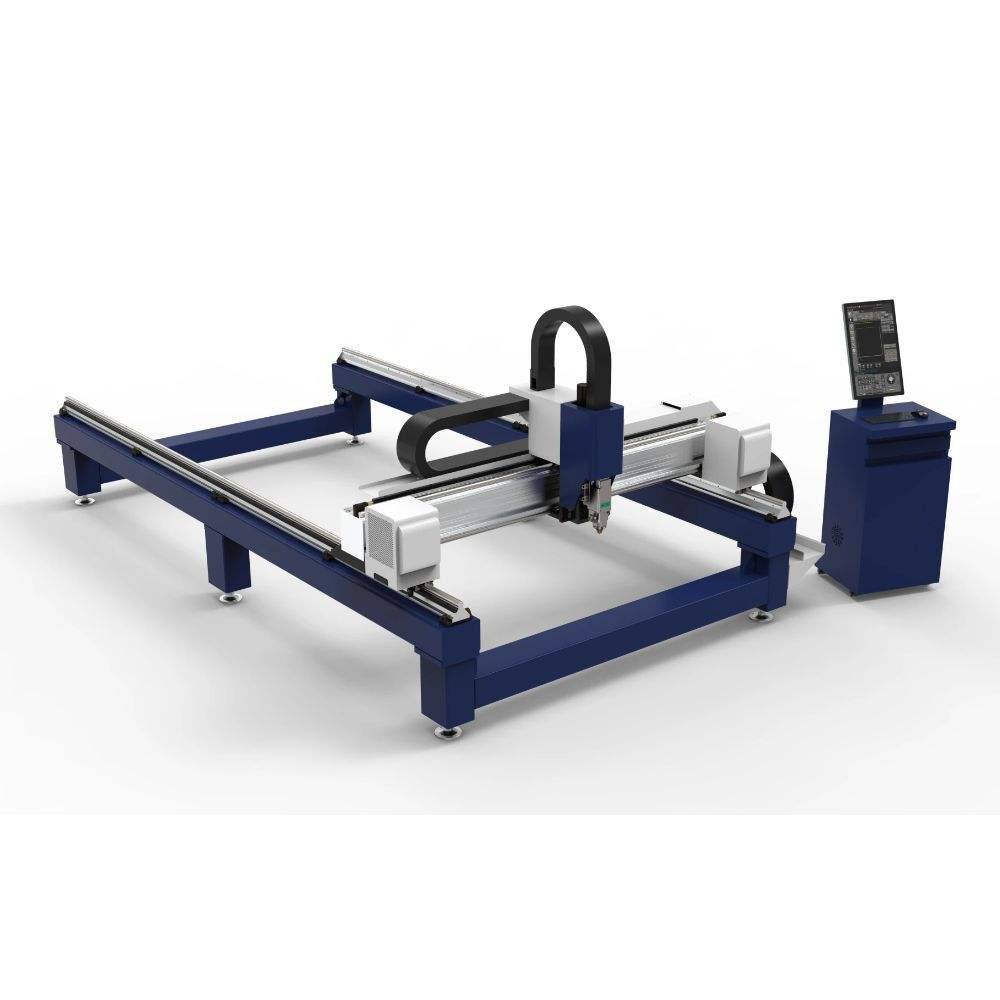
In high-precision laser cutting, the machine bed is the foundation of all accuracy. While lower-tier machines often utilize tube-welded frames, the 1.5kW precision systems designed for the aerospace sector utilize a Plate-welded Heavy Duty Bed. This distinction is not merely aesthetic; it is a matter of vibrational physics and long-term thermal stability.
The plate-welded bed is constructed from high-tensile carbon steel plates, often exceeding 12mm to 20mm in thickness. These plates are joined using a honeycomb-style internal reinforcement structure. From an engineering perspective, this design offers several key advantages:
1. Stress Relief and Annealing: Following the welding process, the entire bed undergoes a high-temperature annealing process (typically at 600°C) in an electric furnace. This relieves the internal stresses generated during welding. For a factory in Tijuana, where ambient temperatures can fluctuate, an annealed bed ensures that the machine frame does not warp or “creep” over a ten-year lifecycle, maintaining a positioning accuracy of ±0.03mm.
2. Vibration Damping: The sheer mass of a plate-welded bed (often weighing 30% to 50% more than tube-welded alternatives) provides superior damping. When the laser head accelerates at 1.0G to 1.2G, the inertia can cause micro-vibrations in lighter frames. These vibrations manifest as “chatter marks” on the cut edge of galvanized steel. The heavy-duty bed absorbs these forces, ensuring a mirror-like finish.
3. Thermal Rigidity: Laser cutting generates localized heat. The high thermal mass of the plate-welded structure acts as a heat sink, preventing localized expansion that could throw the X and Y axes out of alignment.
Optimizing 1.5kW Power for Galvanized Steel Processing
Galvanized steel presents a unique challenge for laser systems due to the zinc coating. Zinc has a significantly lower melting point (approx. 419°C) than the underlying steel (approx. 1500°C). In lower-quality systems, the zinc vaporizes violently, causing “pops” that result in dross (slag) adhesion and a compromised edge.
The 1.5kW power rating is the “sweet spot” for aerospace-grade galvanized sheets ranging from 0.5mm to 4.0mm. At this power level, the energy density is sufficient to achieve high-speed sublimation without over-heating the surrounding zinc layer.
Technical Parameters for High-Precision Cutting:
– Auxiliary Gas Selection: For aerospace components, Nitrogen (N2) is the preferred assist gas. At pressures of 12-15 bar, Nitrogen “flushes” the molten material out of the kerf before the zinc can oxidize. This results in a silver, burr-free edge that requires no secondary finishing.
– Frequency and Duty Cycle: Modern 1.5kW fiber sources allow for sophisticated pulse shaping. By modulating the frequency, engineers can control the Heat Affected Zone (HAZ), ensuring the protective properties of the zinc coating remain intact as close to the cut edge as possible.
– Nozzle Geometry: Utilizing a double-layer chrome-plated nozzle prevents zinc vapor from adhering to the nozzle tip, which would otherwise distort the beam profile and reduce precision.

Precision Metrics and Aerospace Standards
In the Tijuana aerospace sector, “close enough” is never an option. The integration of high-end motion control components with the 1.5kW source is what defines a “Precision System.”
Key Performance Indicators (KPIs):
– Positioning Accuracy: ±0.03mm/m.
– Repetition Accuracy: ±0.02mm.
– Max Acceleration: 1.2G.
To achieve these metrics, the system employs aerospace-grade components. This includes Japanese Yaskawa or Shimpo servo motors and high-precision rack and pinion systems (such as YYC or Atlanta). For the engineer, this means that the first part cut in a 500-unit run is dimensionally identical to the last. This level of repeatability is essential for components that will eventually be integrated into flight-critical assemblies where tolerances are measured in microns.
Furthermore, the software integration (typically CypCut or similar professional CNC suites) allows for real-time “Power Ramping.” As the laser head approaches a sharp corner, the software automatically reduces power and speed to prevent over-burning, a critical feature when working with the sensitive coatings of galvanized steel.
Economic Impact for Tijuana Maquiladoras
For factory owners in the Tijuana region, the 1.5kW system offers a compelling Return on Investment (ROI) compared to higher-wattage systems (6kW+) or traditional mechanical punching.
1. Reduced Operating Costs: A 1.5kW fiber laser consumes significantly less electricity than CO2 lasers or high-power fiber units. Given the industrial electricity rates in Mexico, the lower KVA requirement translates to thousands of dollars in annual savings.
2. Maintenance and Uptime: Fiber laser technology is solid-state. With no mirrors to align and a BPP (Beam Parameter Product) that remains constant over thousands of hours, the maintenance interval is significantly extended. In the fast-paced “Just-in-Time” environment of Tijuana’s manufacturing zones, machine uptime is the primary driver of profitability.
3. Material Versatility: While specialized for galvanized steel, the 1.5kW system is a “workhorse” capable of switching to aluminum or stainless steel with simple parameter adjustments. This versatility allows aerospace shops to bid on a wider variety of contracts without needing multiple dedicated machines.
Technical Specifications Table
For the data-driven engineer, the following specifications represent the baseline for a professional-grade 1.5kW system:
– Laser Source: Fiber Laser (IPG or Raycus)
– Bed Construction: Plate-welded, 600°C Heat Treated
– Working Area: 3000mm x 1500mm (Standard)
– Max Cutting Thickness (Galvanized): 5mm
– Optimal Cutting Thickness (Galvanized): 1mm – 3mm
– Assist Gas Control: Automatic Proportioning Valve (SMC)
– Cooling System: Dual-temperature Industrial Chiller
– Transmission: Dual-drive Rack and Pinion
Environmental and Safety Considerations
Operating a laser system in the Tijuana market also requires adherence to environmental regulations (PROFEPA/SEMARNAT) and workplace safety standards. High-precision 1.5kW systems are equipped with integrated dust extraction and filtration units. When cutting galvanized steel, the vaporization of zinc produces hazardous fumes (zinc oxide). A professional engineering setup must include a high-volume centrifugal fan and a HEPA filtration system to ensure air quality within the facility meets international health standards.
Furthermore, the system should be fully enclosed (Class 1 Laser Safety) to protect operators from reflected radiation, which is particularly prevalent when cutting reflective materials like galvanized sheets or aluminum.
Conclusion: Strategic Investment in Precision
For aerospace engineers and factory owners in Tijuana, the transition to a 1.5kW Precision Laser System with a Plate-welded Heavy Duty Bed is a strategic move toward higher tier-level manufacturing. The combination of structural stability, optimized power for galvanized materials, and low operational overhead provides a competitive edge in a demanding global market.
By focusing on the technical synergy between the machine’s foundation (the bed) and its output (the laser beam), manufacturers can ensure that they are not just cutting metal, but engineering components that meet the highest standards of the aerospace industry. In the landscape of modern manufacturing, precision is the only path to long-term growth.