
Optimizing Carbon Steel Production: A Guide to 1.5kW Precision Laser Systems in Guadalajara
The industrial landscape of Guadalajara, often referred to as Mexico’s Silicon Valley, is undergoing a significant transformation. While the region is renowned for its electronics and technology sectors, the underlying metalworking and fabrication industry provides the essential infrastructure for these high-tech exports. Central to this evolution is the adoption of fiber laser cutting technology. Specifically, the 1.5kW precision laser system has emerged as the “sweet spot” for small to medium-sized enterprises (SMEs) specializing in carbon steel components. This guide explores the technical parameters, local environmental considerations, and operational strategies for maximizing the efficiency of these systems in the Jalisco region.
The Technical Superiority of 1.5kW Fiber Technology
A 1.5kW fiber laser system represents a sophisticated balance between capital investment and processing capability. Unlike CO2 lasers of the past, fiber lasers utilize a solid-state gain medium, which allows for a much smaller beam diameter and higher energy density. For carbon steel, which is the backbone of the automotive and appliance industries in Guadalajara, this power level provides exceptional precision on thicknesses ranging from 0.5mm to 12mm.
The 1.5kW source is particularly effective because of its wavelength—typically around 1.06 microns. This wavelength is more readily absorbed by carbon steel compared to the 10.6 microns of CO2 lasers. The result is a faster piercing process and a cleaner cut with a significantly reduced heat-affected zone (HAZ). In a precision-driven market, minimizing the HAZ is critical to ensuring that subsequent welding or assembly processes do not suffer from material embrittlement or distortion.
 laser cutting machine“>
Material Dynamics: Processing Carbon Steel
Carbon steel is an alloy of iron and carbon, and its reaction to laser cutting is highly predictable, making it an ideal candidate for high-precision automation. However, achieving a “mirror finish” on the cut edge requires a deep understanding of assist gas dynamics. In Guadalajara’s fabrication shops, oxygen (O2) is the primary assist gas used for carbon steel. The oxygen reacts exothermically with the iron, adding thermal energy to the cutting process, which allows the 1.5kW beam to slice through thicker plates than would be possible with nitrogen alone.
When processing 1.5mm to 4mm carbon steel, the 1.5kW system can achieve remarkable feed rates. At these thicknesses, the kerf width—the amount of material removed by the laser—is kept to a minimum, often less than 0.1mm. This allows for incredibly tight nesting of parts, reducing material waste and improving the bottom line for local manufacturers facing rising raw material costs.
Guadalajara’s Environmental Impact on Laser Performance
Operating high-precision machinery in Guadalajara presents unique environmental challenges that engineers must account for. The city sits at an elevation of approximately 1,566 meters (5,138 feet) above sea level. This altitude results in lower atmospheric pressure and lower air density compared to coastal manufacturing hubs. For laser cutting, this affects the cooling efficiency of the chiller units and the flow dynamics of assist gases.
A 1.5kW system requires a robust dual-circuit cooling system—one for the laser source and one for the cutting head. At higher altitudes, the air-cooled condensers in these chillers must work harder to dissipate heat. It is recommended that Guadalajara-based facilities ensure their shops are well-ventilated or climate-controlled to prevent thermal expansion of the machine’s gantry, which can compromise the “precision” aspect of the system. Furthermore, the purity of the assist gas is paramount; any moisture in the lines, exacerbated by local humidity during the rainy season, can lead to beam scattering or lens damage.
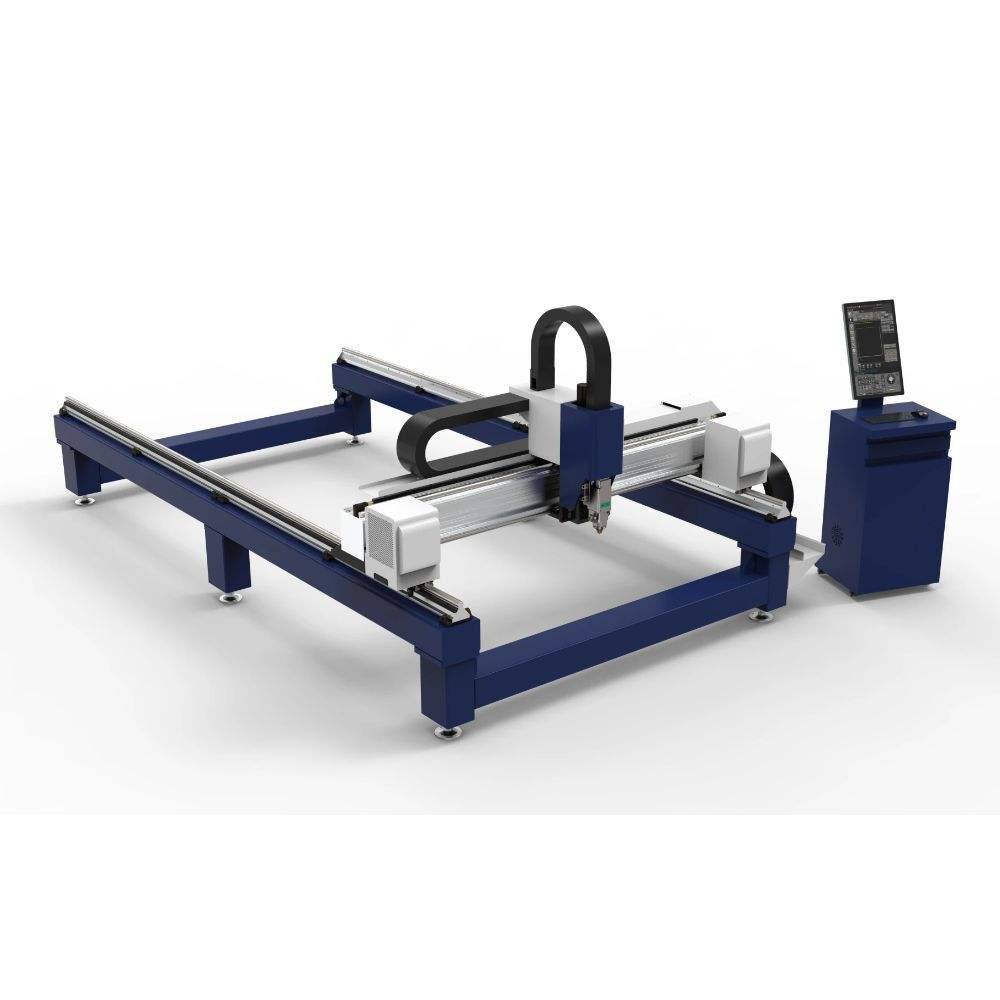
Precision Components and CNC Integration
The effectiveness of a 1.5kW laser is only as good as the motion control system carrying it. Precision laser cutting demands high-speed synchronization between the CNC controller and the laser power output. In modern systems, this is achieved through EtherCAT communication protocols that allow for microsecond adjustments in power as the machine decelerates into a corner and accelerates out of it. This “power ramping” prevents over-burning at the corners of carbon steel parts, a common issue in lower-tier machinery.
The mechanical frame also plays a vital role. For the Guadalajara market, where many shops operate multi-shift schedules to meet the demands of the automotive supply chain, a heavy-duty, heat-treated bed is essential. This prevents the frame from warping over time due to the repeated thermal cycles of the cutting process. High-precision rack-and-pinion systems, paired with Japanese or European servo motors, ensure that the 1.5kW beam is positioned with a repeatability of ±0.02mm.
Optimizing Assist Gas and Piercing Parameters
To master laser cutting on carbon steel, operators must fine-tune their piercing strategies. For a 1.5kW system, “stage piercing” is often utilized for thicker plates (8mm and above). This involves a three-step process: a high-altitude blast to create a pilot hole, followed by a mid-range stabilization, and finally the cut-through. By modulating the frequency and duty cycle of the laser during the pierce, the system prevents “volcanoing”—the buildup of molten slag on the surface of the plate that can crash the cutting head.
The choice of nozzle is equally important. A double-layer nozzle is typically used for oxygen cutting of carbon steel. It helps to stabilize the gas flow and protect the internal optics from back-splatter. In the competitive industrial sectors of Tlaquepaque and Zapopan, the ability to produce dross-free cuts consistently means reducing secondary grinding operations, which are labor-intensive and drive up per-part costs.
Maintenance Protocols for Longevity
A 1.5kW precision laser is a significant investment, and its longevity in a dusty industrial environment depends on rigorous maintenance. The optical path must remain pristine. Even a microscopic dust particle on the protective window can absorb laser energy, heat up, and shatter the lens. Daily inspections of the cutting head’s protective glass and weekly cleaning of the machine’s guide rails are mandatory.
In Guadalajara, the electrical grid can sometimes experience fluctuations. Integrating a high-precision voltage stabilizer and a dedicated grounding line is highly recommended to protect the sensitive fiber source and CNC electronics. Furthermore, the chiller fluid should be changed every three to six months, using deionized water and specialized additives to prevent algae growth and corrosion within the laser source’s internal cooling channels.
Economic Impact and ROI in the Jalisco Region
The transition to a 1.5kW laser cutting system offers a compelling Return on Investment (ROI) for Guadalajara’s metal fabricators. Compared to traditional plasma cutting or mechanical shearing, the fiber laser offers higher speed, better material utilization, and the ability to take on complex geometries that were previously impossible. As the regional aerospace and medical device sectors grow, the demand for precision carbon steel components with tight tolerances will only increase.
Furthermore, the energy efficiency of a 1.5kW fiber laser is significantly higher than that of a CO2 equivalent. Fiber lasers convert roughly 30-35% of electrical energy into laser light, whereas CO2 lasers hover around 8-10%. For a local factory, this translates to lower monthly utility bills and a smaller carbon footprint, aligning with global trends toward “Green Manufacturing.”
Conclusion: The Future of Fabrication in Guadalajara
The 1.5kW precision laser system is more than just a tool; it is a catalyst for industrial maturity in Guadalajara. By mastering the nuances of carbon steel processing—from altitude-adjusted cooling to advanced oxygen-assisted piercing—local manufacturers can elevate their production standards to a global level. As laser cutting continues to become more accessible and technologically advanced, the fabricators who invest in precision, maintenance, and operator training will be the ones to lead Mexico’s industrial heartland into the next decade of manufacturing excellence.
















