
Optimizing 1.5kW Precision Laser System Performance for Brass Fabrication in Queretaro
The industrial landscape of Queretaro, Mexico, has undergone a radical transformation over the last decade, evolving into one of North America’s premier hubs for aerospace, automotive, and high-tech manufacturing. Central to this growth is the adoption of advanced fabrication technologies, specifically the 1.5kW precision laser system. While fiber laser technology has become a standard in steel processing, the machining of non-ferrous alloys—particularly brass—presents a unique set of engineering challenges and opportunities. This guide explores the technical nuances of utilizing a 1.5kW laser for brass applications within the context of Queretaro’s demanding industrial standards.
The Technical Advantage of 1.5kW Fiber Lasers
The 1.5kW power rating represents a “sweet spot” for precision engineering. Unlike high-kilowatt systems designed for heavy plate destruction, a 1.5kW system offers a refined beam quality (M²) that allows for a smaller focal spot size. This results in a higher energy density, which is critical when initiating the laser cutting process on reflective materials like brass. In Queretaro’s competitive manufacturing environment, where tolerances are often measured in microns, the stability and beam consistency of a 1.5kW source provide the necessary control for intricate components used in electronics and fluid power systems.
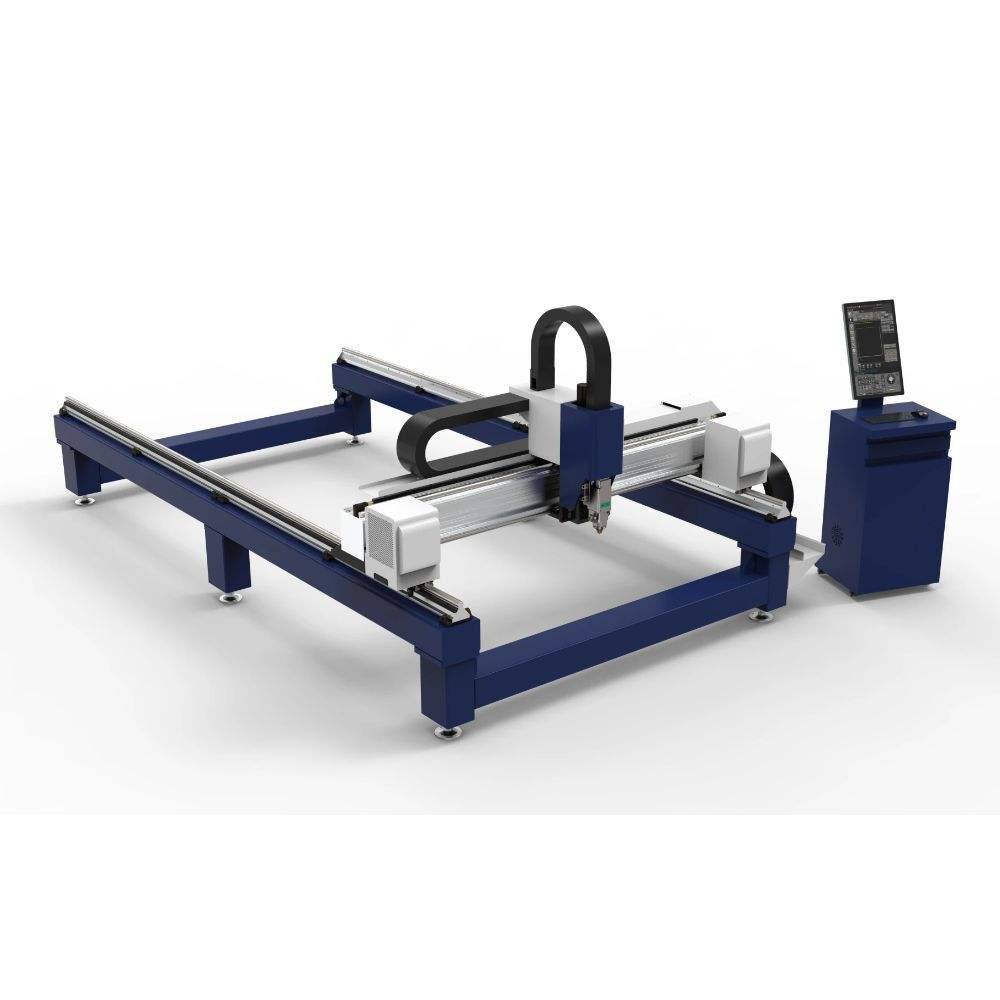 laser cutting machine for Precision Work”>
Material Science: The Challenge of Brass
Brass, an alloy primarily composed of copper and zinc, is notoriously difficult to process with traditional CO2 lasers due to its high thermal conductivity and optical reflectivity. At room temperature, brass can reflect over 90% of infrared radiation. However, the 1.07-micron wavelength of a fiber laser is much more readily absorbed by yellow metals. Even with this advantage, a 1.5kW system must be configured correctly to prevent “back-reflection.” Back-reflection occurs when the laser beam bounces off the material surface and travels back through the delivery fiber, potentially damaging the laser diode modules. Modern precision systems used in Queretaro’s industrial parks are equipped with optical isolators and back-reflection sensing to mitigate this risk, allowing for continuous production of brass components without hardware failure.
Queretaro’s Industrial Context: Aerospace and Automotive
Queretaro is home to the Aerocluster and numerous Tier 1 automotive suppliers. In these sectors, brass is frequently used for bushings, electrical connectors, and specialized valves. The transition to laser cutting from traditional stamping or CNC milling offers significant advantages in terms of lead time and material utilization. For a 1.5kW system, the optimal thickness for brass typically ranges from 0.5mm to 4mm. Within this range, the laser provides a kerf width so narrow that complex geometries—which would be impossible to achieve with mechanical tooling—become routine. This capability is vital for Queretaro-based engineers who are tasked with prototyping and small-batch production for global supply chains.
Optimizing Assist Gas Dynamics
The choice of assist gas is a critical variable in the laser cutting of brass. While oxygen can be used to increase cutting speeds through an exothermic reaction, it often results in an oxidized edge that requires secondary cleaning. For the precision-grade finishes required in Queretaro’s high-tech sectors, high-pressure nitrogen is the preferred assist gas. Nitrogen acts as a shielding agent, blowing the molten brass out of the kerf before it can react with atmospheric oxygen. This results in a clean, bright edge that is weld-ready and aesthetically superior. When operating a 1.5kW system, the nozzle design and gas pressure must be meticulously calibrated to ensure that the laminar flow of nitrogen remains consistent across the cutting path.

Precision Parameters for 1.5kW Systems
Achieving a high-quality cut in brass requires more than just raw power; it requires the synchronization of frequency, duty cycle, and feed rate. For a 1.5kW system, the following parameters are typically optimized:
- Focal Position: Unlike steel, where the focus may be buried within the material, brass often requires a focus position slightly above or at the surface to maintain high power density for the initial melt.
- Pulse Frequency: High-frequency pulsing can help manage the heat-affected zone (HAZ), preventing the material from warping, which is especially important for thin-gauge brass shim stock.
- Piercing Strategy: Multi-stage piercing or “zoom” piercing techniques are employed to prevent splatter from accumulating on the nozzle, which could disrupt the gas flow and beam path.
Maintenance and Optics Care in the Bajío Climate
The environmental conditions in Queretaro—characterized by moderate humidity and industrial dust—necessitate a rigorous maintenance schedule for laser cutting equipment. For a 1.5kW precision system, the cutting head optics are the most vulnerable component. When cutting brass, fine metallic vapors can be generated. If the extraction system is not optimized, these particles can settle on the protective window. Engineers must ensure that the “air knife” or purge air system is functioning at peak efficiency to create a positive pressure barrier. Weekly inspections of the focal lens and daily cleaning of the protective glass are mandatory to prevent thermal shift, which can degrade cut quality over long production runs.
Software Integration and Nesting Efficiency
In the Queretaro manufacturing landscape, efficiency is driven by software. Modern 1.5kW systems are integrated with CAD/CAM suites that feature advanced nesting algorithms. Because brass is a high-value raw material, reducing scrap is a primary economic driver. Precision laser cutting allows for “common line cutting,” where two parts share a single cut path, reducing both processing time and material waste. Furthermore, the ability to import complex vector files directly from aerospace design software ensures that the physical part matches the digital twin with absolute fidelity, a requirement for AS9100 certified facilities in the region.
Economic Impact of Fiber Laser Adoption
The investment in a 1.5kW precision laser system by Queretaro-based shops offers a rapid Return on Investment (ROI). Compared to traditional methods like waterjet cutting, which involves expensive abrasives and slower speeds, or EDM (Electrical Discharge Machining), which is exceptionally slow, the fiber laser provides a throughput that can handle high-volume orders. The lower power consumption of a 1.5kW source also aligns with the growing trend of “Green Manufacturing” in Mexico, reducing the carbon footprint of the fabrication process while maintaining competitive pricing for international export.
Safety Protocols for Reflective Metal Processing
Safety is paramount when operating a 1.5kW laser, particularly with reflective materials. The laser light used in laser cutting is invisible to the human eye but can cause permanent retinal damage instantly. Precision systems in Queretaro must be housed in Class 1 enclosures with laser-safe viewing windows specifically rated for the 1070nm wavelength. Operators must be trained in the specific risks of “specular reflection,” where the beam may deflect at an angle during the piercing phase. Ensuring that all interlocks are functional and that the workspace is free of reflective surfaces (other than the workpiece) is a standard operating procedure for any professional engineering firm.
Future Outlook: Brass and Fiber Lasers in Queretaro
As Queretaro continues to solidify its position as a global manufacturing powerhouse, the demand for precision brass components will only increase. Emerging trends in electric vehicle (EV) production—specifically in busbars and charging infrastructure—rely heavily on brass and copper alloys. The 1.5kW precision laser system is uniquely positioned to meet this demand. Future advancements in “beam shaping” technology, which allows the laser to adjust its energy distribution in real-time, will further enhance the ability of these systems to cut even thicker brass with the same level of precision currently seen in thin-gauge materials.
Conclusion
The 1.5kW precision laser system represents a critical tool for the modern fabricator in Queretaro. By understanding the unique metallurgical properties of brass and the physics of fiber laser cutting, local manufacturers can achieve world-class results. The combination of high power density, advanced assist gas management, and rigorous maintenance ensures that these systems deliver the accuracy and reliability required by the aerospace and automotive industries. As technology continues to evolve, the synergy between Queretaro’s skilled workforce and advanced laser systems will remain a cornerstone of the region’s industrial success.
















