Technical Specifications of the 1.5kW Fiber Laser Source
Core Power Dynamics and Beam Quality
The 1.5kW precision laser system is engineered around a continuous wave (CW) fiber laser source, specifically optimized for high-reflectivity non-ferrous metals. For brass processing, the beam quality factor (M²) is maintained below 1.1, ensuring a tightly focused spot size that maximizes power density. At 1.5kW, the system delivers a power density exceeding 10^7 W/cm² at the focal point, which is critical for overcoming the initial reflectivity of brass alloys (typically C26000 or C28000) used in elevator cabin aesthetics.
Wavelength and Absorption Rates
Operating at a central wavelength of 1064nm to 1080nm, the fiber laser provides an absorption advantage over CO2 counterparts. While brass reflects over 90% of 10.6μm radiation, its absorption rate increases significantly at the 1μm range. This efficiency allows for stable laser cutting of brass sheets ranging from 0.5mm to 5mm in thickness, which covers the standard gauge requirements for elevator interior cladding and signal fixture plates.

Metallurgical Considerations for Brass Processing
Managing High Thermal Conductivity
Brass possesses a thermal conductivity of approximately 110-120 W/(m·K). During the laser cutting process, heat dissipates rapidly from the kerf zone into the surrounding material. The 1.5kW system compensates for this through high-speed modulation and precise pulse shaping. To prevent dross accumulation on the underside of elevator panels, the pulse frequency is typically tuned between 5kHz and 20kHz, balancing the energy input to maintain a molten state only within the intended cut width.
Alloy Composition and Vaporization
Elevator components often utilize “Cartridge Brass” (70% Copper, 30% Zinc). The vapor temperature of Zinc (907°C) is significantly lower than the melting point of Copper (1085°C). This discrepancy can lead to “Zinc burnout” at the edges if the feed rate is too slow. The 1.5kW system utilizes a high-pressure coaxial gas delivery system to eject the molten material before excessive Zinc vaporization occurs, ensuring the golden-yellow finish required for Puebla’s high-end architectural projects remains untarnished.
Optimization for Elevator Component Fabrication in Puebla
Atmospheric Pressure Adjustments for High Altitude
Puebla, Mexico, is situated at an elevation of approximately 2,135 meters above sea level. The lower atmospheric pressure (approx. 78 kPa compared to 101 kPa at sea level) impacts the dynamics of the auxiliary gas. For precision laser cutting in this region, the 1.5kW system must be calibrated with a 15-20% increase in auxiliary gas pressure to maintain the same kinetic energy for melt expulsion. This is particularly vital for the intricate fretwork found in decorative elevator ceilings and ventilation grilles.
Architectural Precision for Cabin Interiors
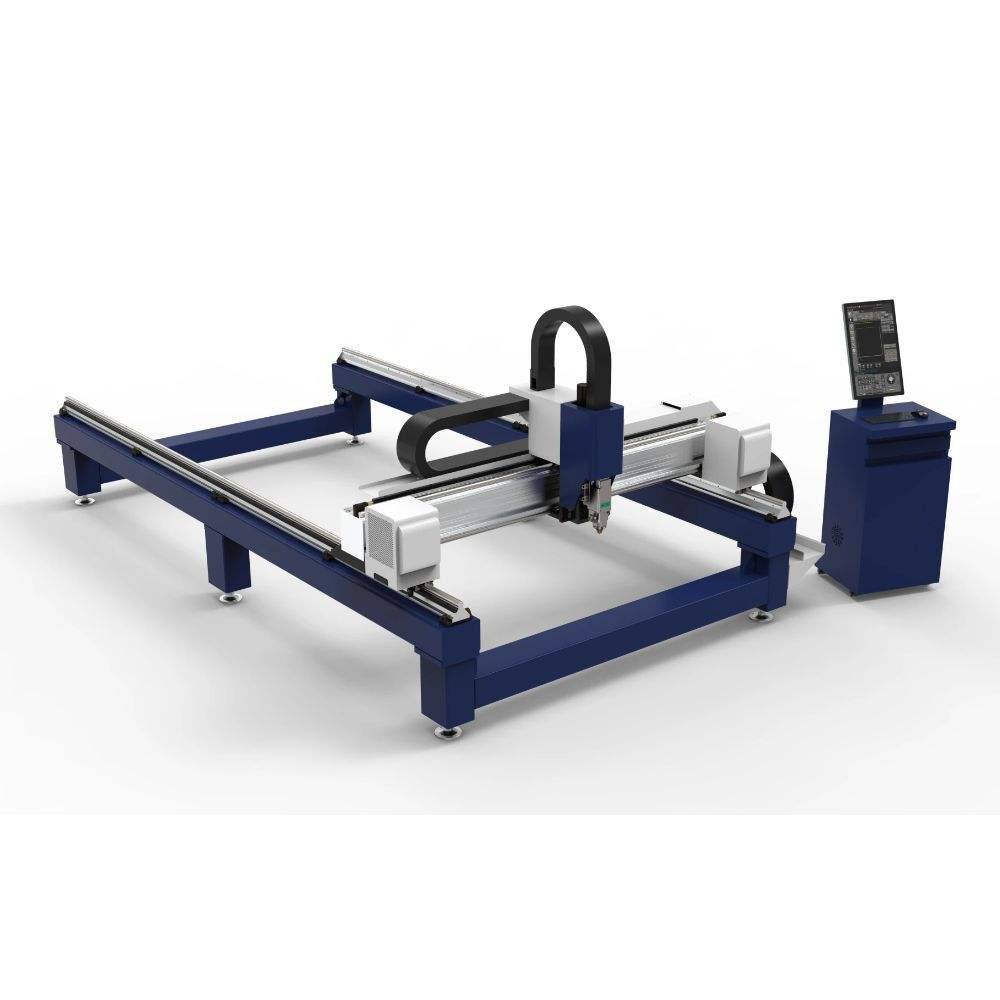
Elevator manufacturing requires tight tolerances, often within ±0.05mm for interlocking panels. The 1.5kW system employs a dual-drive gantry with high-resolution encoders. When processing brass for signal fixtures or handrail brackets, the system’s jerk control algorithms minimize vibrations during high-speed direction changes, ensuring that the polished brass surfaces do not exhibit “stepping” marks that would be visible under the harsh LED lighting common in modern elevator cabins.
Operational Parameters and Gas Dynamics
Auxiliary Gas Selection: Nitrogen vs. Oxygen
For the processing of brass in elevator applications, Nitrogen is the preferred auxiliary gas.
Nitrogen (N2) Parameters:
- Pressure: 16-20 Bar
- Purity: 99.99%
- Function: Provides a high-pressure mechanical force to blow out the melt without oxidation. This results in a clean, weld-ready edge that preserves the natural color of the brass.
Oxygen (O2) Parameters:
- Pressure: 0.5-2.0 Bar
- Function: Used primarily for thicker sections (above 4mm) where an exothermic reaction assists the cut. However, this may cause darkening of the edge, requiring post-process polishing for decorative elevator trims.
Feed Rates for 1.5kW Brass Cutting
The following table outlines the optimized feed rates for a 1.5kW system using Nitrogen at Puebla’s atmospheric conditions:
| Material Thickness (mm) | Feed Rate (m/min) | Gas Pressure (Bar) | Nozzle Diameter (mm) |
|---|---|---|---|
| 1.0mm | 18 – 22 | 16 | 1.5 Double |
| 2.0mm | 8 – 10 | 18 | 2.0 Double |
| 3.0mm | 3.5 – 5.0 | 19 | 2.5 Double |
| 5.0mm | 0.8 – 1.2 | 20 | 3.0 Double |
Optical Protection and Maintenance Protocols
Back-Reflection Protection Mechanisms
Processing brass poses a significant risk of back-reflection, where the laser beam reflects off the material surface and travels back into the fiber delivery system, potentially damaging the laser diodes. The 1.5kW precision system is equipped with an optical isolator and a real-time back-reflection sensor. If reflected energy exceeds a 5% threshold, the system triggers a microsecond-level shutdown. For elevator manufacturers in Puebla, using a 5-degree tilt on the cutting head when piercing is a recommended operational procedure to deflect initial reflections away from the optical axis.
Focus Calibration and Nozzle Centering
The focal position for brass is typically set deeper into the material compared to carbon steel. For a 2mm brass sheet, a focus of -1.5mm to -2.0mm (below the surface) is standard to ensure a wider kerf bottom, facilitating easier melt removal. Nozzle centering must be verified every 4 hours of continuous operation using thermal sensitive paper. Any misalignment in the coaxial gas flow will lead to asymmetrical dross on elevator panel edges, increasing secondary finishing costs.
Consumable Management in High-Dust Environments
The industrial environment in Puebla can introduce particulates that compromise optical clarity. The 1.5kW system utilizes a positive pressure cutting head design to prevent dust ingress. Protective windows (silica) must be inspected daily. Any “pitting” caused by brass spatter will immediately degrade beam quality, leading to a wider Heat Affected Zone (HAZ) and potential warping of thin-gauge elevator skins.
Structural Integrity and Post-Process Analysis
Kerf Width and Heat Affected Zone (HAZ)
In the production of structural elevator brackets made from brass, the HAZ must be minimized to maintain the work-hardened properties of the alloy. The 1.5kW laser maintains a kerf width between 0.15mm and 0.25mm. Microstructural analysis of the cut edge shows a minimal grain growth region, typically extending less than 50μm from the cut face. This ensures that the mechanical fastening points for elevator guide rail clips maintain their specified shear strength.
Edge Roughness (Rz) and Surface Finish
For visible elevator components, such as floor indicator plates and button surrounds, the edge roughness (Rz) is a critical KPI. The 1.5kW precision system achieves an Rz value of 15-25μm on 2mm brass. This level of precision often eliminates the need for edge grinding, allowing the parts to move directly from the laser cutting table to the PVD (Physical Vapor Deposition) coating or clear-coat lacquering line, significantly optimizing the production workflow for Puebla’s elevator suppliers.