
Introduction to 1.5kW Precision Laser Systems
In the rapidly evolving industrial landscape of Guadalajara, Jalisco, the adoption of high-precision fiber laser technology has become a cornerstone for competitive manufacturing. The 1.5kW precision laser system represents a strategic balance between power efficiency and high-speed processing capabilities, particularly when dealing with non-ferrous metals. As Mexico’s “Silicon Valley,” Guadalajara hosts a dense concentration of electronics, automotive, and aerospace firms that demand exacting tolerances and superior edge quality. The 1.5kW fiber laser serves these sectors by providing a versatile platform capable of handling intricate geometries in aluminum alloys with a level of repeatability that traditional mechanical methods cannot match.
The core advantage of the 1.5kW system lies in its wavelength—typically around 1.07 microns. This wavelength is more readily absorbed by metallic surfaces compared to the 10.6 microns of CO2 lasers. For manufacturers in the Guadalajara region, this translates to lower operational costs and higher throughput. When integrated with advanced CNC controllers and high-precision motion systems, the 1.5kW laser becomes an indispensable tool for thin to medium-gauge metal fabrication.
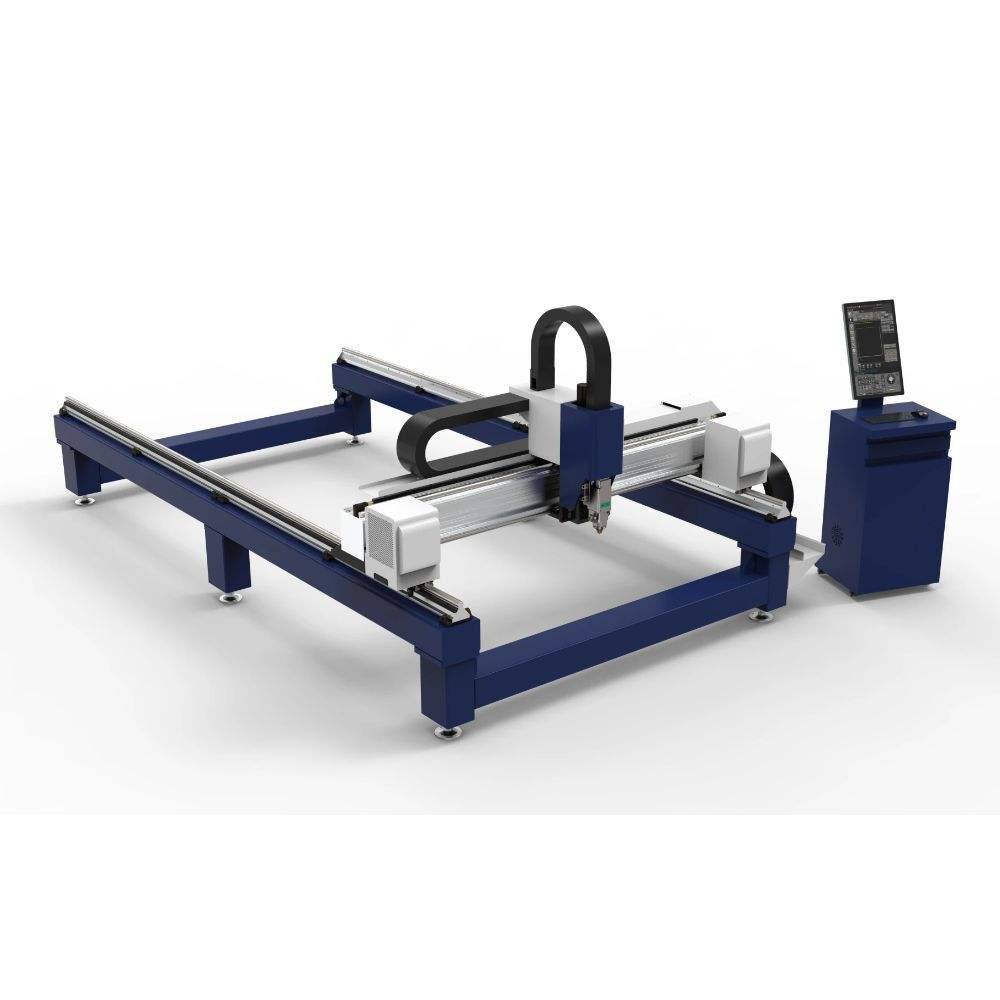
The Material Science of Aluminum Alloys in Laser Processing
Aluminum alloys, such as the 5052, 6061, and 7075 series, are ubiquitous in modern engineering due to their high strength-to-weight ratio and excellent corrosion resistance. However, from a laser cutting perspective, aluminum presents unique challenges. It is highly reflective and possesses high thermal conductivity. In the early days of laser technology, these properties often led to back-reflections that could damage the laser source and inconsistent melt pools that resulted in significant dross.
Overcoming Reflectivity
Modern 1.5kW precision systems are equipped with back-reflection isolation technology. This is critical when processing 6061-T6 aluminum, a staple in Guadalajara’s aerospace supply chain. The 1.5kW beam provides sufficient power density to overcome the initial reflectivity of the material, quickly establishing a stable keyhole or melt front. By maintaining a tight focus and utilizing high-peak pulse capabilities, the system ensures that the energy is absorbed into the material rather than reflected back into the optics.
Managing Thermal Conductivity
Because aluminum dissipates heat rapidly, the laser cutting process must be fast enough to stay ahead of the thermal spread. If the cutting speed is too slow, the heat-affected zone (HAZ) expands, leading to potential warping and loss of structural integrity in tempered alloys. A 1.5kW system is optimized for materials ranging from 1mm to 5mm, where it can maintain the high feed rates necessary to produce a narrow kerf and a localized heat profile.
Optimizing Laser Cutting Parameters for 1.5kW Systems
Achieving a “mirror-like” finish on an aluminum edge requires precise orchestration of several variables: power, speed, frequency, and assist gas pressure. For a 1.5kW system, the sweet spot for 3mm aluminum often involves a nitrogen assist gas at pressures exceeding 12 bar. Nitrogen acts as a mechanical force to eject the molten aluminum from the kerf while preventing oxidation, ensuring the edge remains weld-ready without secondary cleaning.
Assist Gas Selection
While oxygen can be used to increase cutting speeds in carbon steel, it is rarely used for precision aluminum work due to the heavy oxide layer it creates. In Guadalajara’s industrial parks, nitrogen is the standard. High-purity nitrogen (99.99%) is essential. The 1.5kW laser’s nozzle design is also a factor; a double-layer nozzle is often preferred to stabilize the gas flow and protect the protective window from spatters during the piercing phase.
Focus Position and Nozzle Calibration
For aluminum, the focus position is typically set slightly below the surface of the material. This encourages a wider melt at the bottom of the kerf, facilitating easier dross ejection. Precise nozzle calibration, often handled by automated height-sensing systems, ensures that the standoff distance remains constant even if the aluminum sheet has slight deviations in flatness. This is particularly important for the large-format sheets often processed in high-volume production environments.

Industrial Applications in the Guadalajara Region
The industrial diversity of Guadalajara provides a wide array of applications for 1.5kW precision lasers. From the production of heatsinks for the electronics industry to the fabrication of lightweight structural components for the automotive sector, the 1.5kW system is a workhorse.
Electronics and Telecommunications
Guadalajara is home to major contract manufacturers who produce enclosures, chassis, and shielding for telecommunications equipment. These components are often made from 1.5mm to 2mm aluminum alloys. The 1.5kW laser cutting process allows for the creation of complex vent patterns and connector cutouts with tolerances as tight as +/- 0.05mm. This eliminates the need for expensive stamping dies, making it ideal for the rapid prototyping and short-run production cycles common in the tech industry.
Automotive and Transportation
As the automotive industry shifts toward electric vehicles (EVs), the demand for lightweight aluminum components has surged. 1.5kW lasers are used to cut battery housings, internal brackets, and decorative trim. The ability to switch between plate cutting and tube cutting—using specialized rotary attachments—allows Guadalajara-based suppliers to offer comprehensive fabrication services to Tier 1 and Tier 2 automotive plants located in the Bajío region and beyond.
Maintenance and Operational Excellence
To maintain the “precision” in a 1.5kW precision laser system, a rigorous maintenance schedule is mandatory. The environment in Guadalajara, which can experience high humidity during the rainy season and significant dust during the dry months, necessitates specific environmental controls for the laser room.
Cooling Systems and Chiller Maintenance
A 1.5kW fiber laser requires a dual-circuit chiller to regulate the temperature of both the laser source and the cutting head. In the Jalisco climate, ensuring the chiller is descaled and the coolant is at the correct conductivity level is vital. Fluctuations in temperature can cause the laser wavelength to drift slightly or lead to thermal expansion in the optics, both of which degrade cutting precision.
Optical Integrity
The protective windows and focusing lenses must be inspected daily. Even a microscopic speck of dust can absorb laser energy, leading to “thermal lensing” where the beam focus shifts during the cut. In a professional engineering environment, technicians use high-purity isopropyl alcohol and lint-free swabs to maintain these components, ensuring the 1.5kW beam remains concentrated and effective.
Software Integration and Industry 4.0
Modern 1.5kW systems are no longer standalone machines; they are nodes in a digital manufacturing ecosystem. Advanced nesting software allows Guadalajara manufacturers to maximize material utilization, which is critical given the fluctuating costs of aluminum alloys. By integrating the CNC controller with ERP systems, shops can track gas consumption, power usage, and “beam-on” time in real-time.
Precision Nesting and Path Optimization
Software algorithms optimize the laser cutting path to minimize non-productive head travel and prevent the laser from crossing over previously cut paths where “tip-ups” might occur. For aluminum, which can be prone to slight warping during the cut, “common-line cutting” and “bridge-linking” techniques are utilized to maintain sheet stability and improve overall part accuracy.
Safety Protocols for High-Power Fiber Lasers
Safety is paramount when operating a Class 4 laser system. The 1.07-micron wavelength of a fiber laser is invisible to the human eye but can cause permanent retinal damage instantaneously. All 1.5kW systems used in Guadalajara must be housed in light-tight enclosures with certified laser-safe viewing windows. Operators must be trained in the use of personal protective equipment (PPE) and understand the specific fire risks associated with aluminum dust and fines, which are highly flammable and require specialized filtration and extraction systems.
Conclusion: The Future of Fabrication in Jalisco
The 1.5kW precision laser system is more than just a tool; it is a catalyst for industrial growth in Guadalajara. By providing the ability to process aluminum alloys with extreme accuracy and efficiency, it enables local manufacturers to compete on a global scale. As the demand for precision, speed, and sustainability increases, the role of laser cutting technology will only continue to expand. For engineering firms in Jalisco looking to modernize their production lines, the 1.5kW fiber laser offers a proven, reliable, and highly profitable path forward, ensuring that the region remains at the forefront of the international manufacturing stage.
















