
Introduction to 1.5kW Fiber laser cutting Technology
The manufacturing landscape in Mexico, particularly in the industrial corridor of Puebla, has undergone a significant transformation with the integration of fiber laser technology. Among the various power configurations available, the 1.5kW fiber laser cutting machine has emerged as a versatile workhorse, striking an optimal balance between capital investment and operational capability. This guide explores the technical intricacies of utilizing a 1.5kW system specifically for stainless steel fabrication, a material that demands precision and thermal control.
Laser cutting technology utilizes a high-intensity beam of light, generated through an optical fiber doped with rare-earth elements. In a 1.5kW system, this beam is focused onto the workpiece, melting or vaporizing the material with extreme localized heat. For stainless steel, this process requires a sophisticated understanding of metallurgy and thermodynamics to ensure that the material’s corrosion resistance and structural integrity remain uncompromised during the fabrication process.
The Strategic Importance of Laser Cutting in Puebla
Puebla serves as one of Mexico’s primary industrial hubs, anchored by a massive automotive sector and a growing aerospace presence. The demand for high-quality stainless steel components in this region is driven by the need for durable, corrosion-resistant parts that meet international standards. From exhaust systems and decorative trim to specialized medical equipment and food processing machinery, the 1.5kW laser cutting machine provides the precision required by Puebla’s Tier 1 and Tier 2 suppliers.
In the context of the local economy, adopting fiber laser technology allows small to medium-sized enterprises (SMEs) in Puebla to compete with larger international manufacturers. The 1.5kW power rating is particularly effective for the gauges of stainless steel commonly used in automotive and kitchenware industries, typically ranging from 0.5mm to 6mm. By implementing these systems, local shops can reduce lead times and minimize material waste, which is crucial in a competitive global market.
Technical Specifications and Material Capabilities
Stainless Steel Grades and Laser Interaction
When performing laser cutting on stainless steel, the two most common grades encountered are 304 and 316. Grade 304 is widely used for its excellent formability and corrosion resistance, while 316 is preferred in marine or chemical environments due to its molybdenum content. A 1.5kW fiber laser is exceptionally efficient at processing these alloys. The fiber laser’s wavelength—typically around 1.06 microns—is absorbed more readily by metals compared to the 10.6 microns of traditional CO2 lasers. This higher absorption rate results in faster cutting speeds and a narrower heat-affected zone (HAZ).
For a 1.5kW system, the maximum thickness for a “clean cut” on stainless steel is generally around 4mm to 5mm, though it can push to 6mm with slower feed rates and optimized parameters. The precision of the cut is measured by its kerf width, which in a well-calibrated fiber system can be as thin as 0.1mm, allowing for intricate geometries that were previously impossible with mechanical shearing or plasma cutting.
The Role of Assist Gases: Nitrogen vs. Oxygen
In the realm of stainless steel laser cutting, the choice of assist gas is paramount. For high-quality finishes, Nitrogen is the industry standard. Nitrogen acts as a shielding gas; it expels the molten metal from the kerf without allowing it to react with atmospheric oxygen. This results in a “bright” or “silver” edge that is free of oxidation, making it ready for welding or painting without secondary cleaning processes. This is particularly vital for the food-grade equipment manufacturers in Puebla who must adhere to strict sanitary standards.
While Oxygen can be used to cut thicker sections of stainless steel by utilizing an exothermic reaction to add heat, it results in a blackened, oxidized edge. For most high-end applications in Puebla’s automotive and architectural sectors, the Nitrogen-assisted 1.5kW cut is preferred for its aesthetic and metallurgical superiority.
Operational Advantages of 1.5kW Systems
Energy Efficiency and Low Maintenance
One of the primary reasons engineering firms in Puebla are transitioning to 1.5kW fiber lasers is the wall-plug efficiency. Fiber lasers are roughly 3 to 4 times more energy-efficient than CO2 lasers. In a region where energy costs can significantly impact the bottom line, this efficiency translates directly into higher profit margins. Furthermore, the solid-state nature of the fiber source means there are no internal mirrors to align or discharge tubes to replace, drastically reducing the scheduled maintenance intervals.
High-Speed Processing for Thin Gauges
In the 1mm to 3mm thickness range, a 1.5kW laser cutting machine operates at remarkable speeds. This high throughput is essential for high-volume production runs characteristic of the automotive supply chain. The rapid acceleration of modern CNC gantries, combined with the concentrated power of the fiber beam, ensures that even complex patterns with numerous start-stop points are executed with minimal cycle times.

Precision Engineering and Motion Control
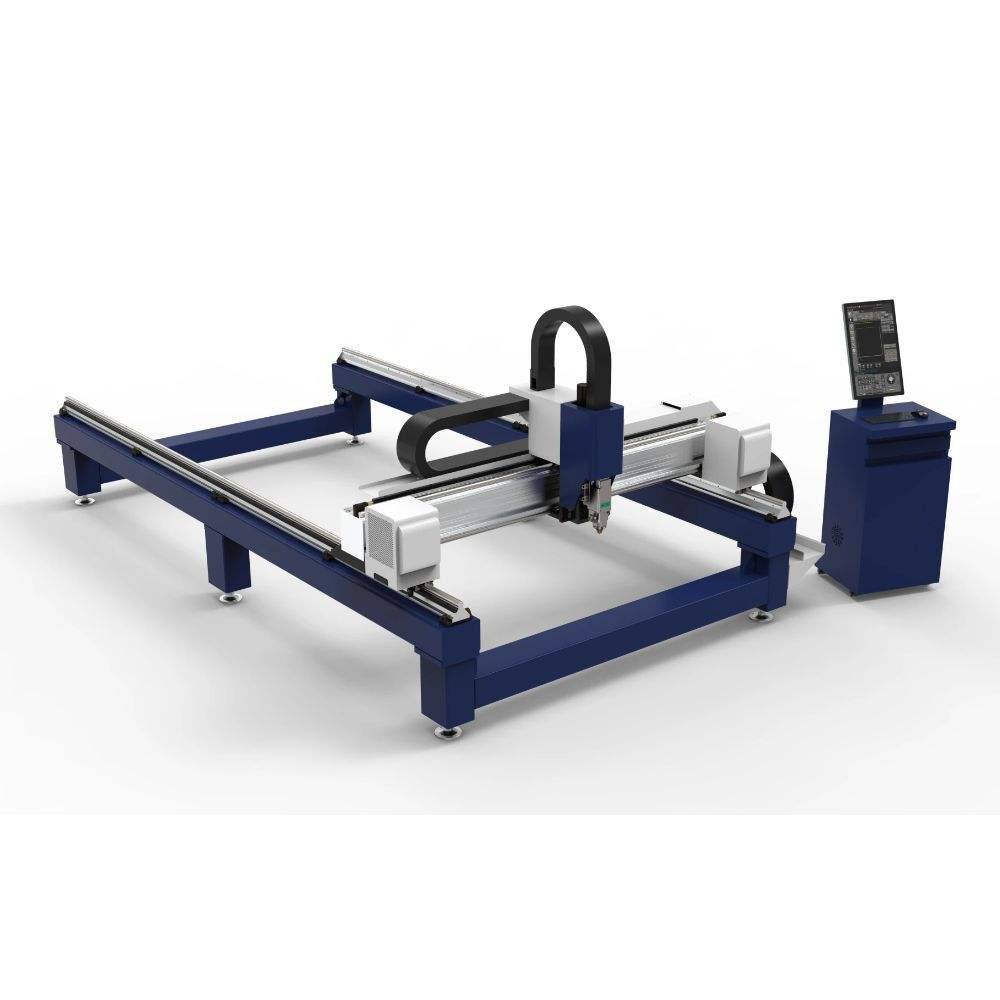
The efficacy of a 1.5kW laser cutting system is not solely dependent on the laser source; the motion control system plays an equally critical role. High-precision servomotors and linear guides are necessary to translate the laser’s potential into accurate parts. In Puebla’s manufacturing plants, where tolerances are often measured in microns, the stability of the machine frame is vital. Heavy-duty, heat-treated frames prevent vibration and thermal expansion from affecting the cut quality over long production shifts.
Advanced CNC software allows engineers to optimize nesting—the arrangement of parts on a sheet of stainless steel. By minimizing the skeletons (leftover material), shops can significantly reduce their material costs. Modern controllers also feature “fly-cutting” capabilities, where the laser head moves in a continuous path, turning the beam on and off without stopping, which further enhances the efficiency of the laser cutting process.
Maintenance Protocols for Industrial Environments
Optical Path and Cutting Head Care
To maintain the performance of a 1.5kW laser cutting machine in an industrial setting like Puebla, a rigorous maintenance schedule is required. The most sensitive component is the cutting head, specifically the protective window and the focusing lens. Even a microscopic speck of dust can absorb laser energy, heat up, and shatter the optic. Operators must be trained in clean-room techniques for inspecting and cleaning these components daily.
Cooling and Filtration Systems
The laser source and the cutting head generate heat that must be dissipated to ensure wavelength stability and component longevity. A dual-circuit water chiller is standard, maintaining precise temperature control. Additionally, because laser cutting stainless steel generates fine metallic dust and fumes, a high-capacity dust extraction and filtration system is mandatory. This not only protects the machine’s mechanical components from abrasive dust but also ensures a safe working environment for the personnel in the facility.
Implementation Challenges and Solutions in Puebla
While the benefits are clear, implementing laser cutting technology in Puebla involves challenges such as power grid stability and the availability of high-purity gases. Many facilities invest in voltage regulators to protect the sensitive electronics of the fiber laser from surges. Furthermore, establishing a reliable supply chain for high-pressure Nitrogen is essential for continuous operation. Many large-scale fabricators are now opting for Nitrogen generators, which extract the gas from the air on-site, providing a cost-effective and autonomous solution to gas supply issues.
Training is another critical factor. The shift from traditional machining to CNC laser cutting requires a workforce skilled in CAD/CAM software and laser parameters. Fortunately, the presence of technical universities in Puebla has created a pipeline of engineering talent capable of mastering these high-tech systems, ensuring that the local industry remains at the cutting edge of global manufacturing trends.
Conclusion: The Future of Metal Fabrication in Mexico
The 1.5kW fiber laser cutting machine represents a pivotal technology for the stainless steel industry in Puebla. By offering a combination of speed, precision, and cost-effectiveness, it empowers local manufacturers to meet the stringent demands of the automotive, aerospace, and commercial sectors. As fiber laser technology continues to evolve, with improvements in beam shaping and automation, the role of these machines will only grow. For any fabrication business in Puebla looking to modernize, the 1.5kW fiber laser is not just a purchase; it is a strategic investment in the future of high-precision engineering.
In summary, the synergy between the robust industrial base of Puebla and the advanced capabilities of laser cutting creates a fertile ground for innovation. By understanding the technical nuances of the 1.5kW system—from assist gas selection to motion control—engineers can unlock new levels of productivity and quality, ensuring that “Made in Mexico” remains synonymous with excellence in the global stainless steel market.
















