
Introduction to 1.5kW Fiber laser cutting in Mexico City
The industrial landscape of Mexico City (CDMX) and its surrounding metropolitan areas, such as Naucalpan, Tlalnepantla, and the Vallejo industrial zone, has seen a significant shift toward advanced manufacturing technologies. Among these, the 1.5kW fiber laser cutting machine has emerged as a cornerstone for small to medium-sized enterprises (SMEs) specializing in stainless steel fabrication. This power range offers an optimal balance between capital investment and operational capability, particularly for the precision requirements of the aerospace, food processing, and architectural sectors prevalent in Central Mexico.
As global supply chains localize, Mexican manufacturers are under increasing pressure to deliver high-precision components with minimal lead times. The transition from traditional CO2 lasers or plasma cutting to fiber laser technology represents a leap in efficiency. A 1.5kW system, specifically, is engineered to handle the unique reflective properties of stainless steel while maintaining a narrow kerf and a minimal heat-affected zone (HAZ).
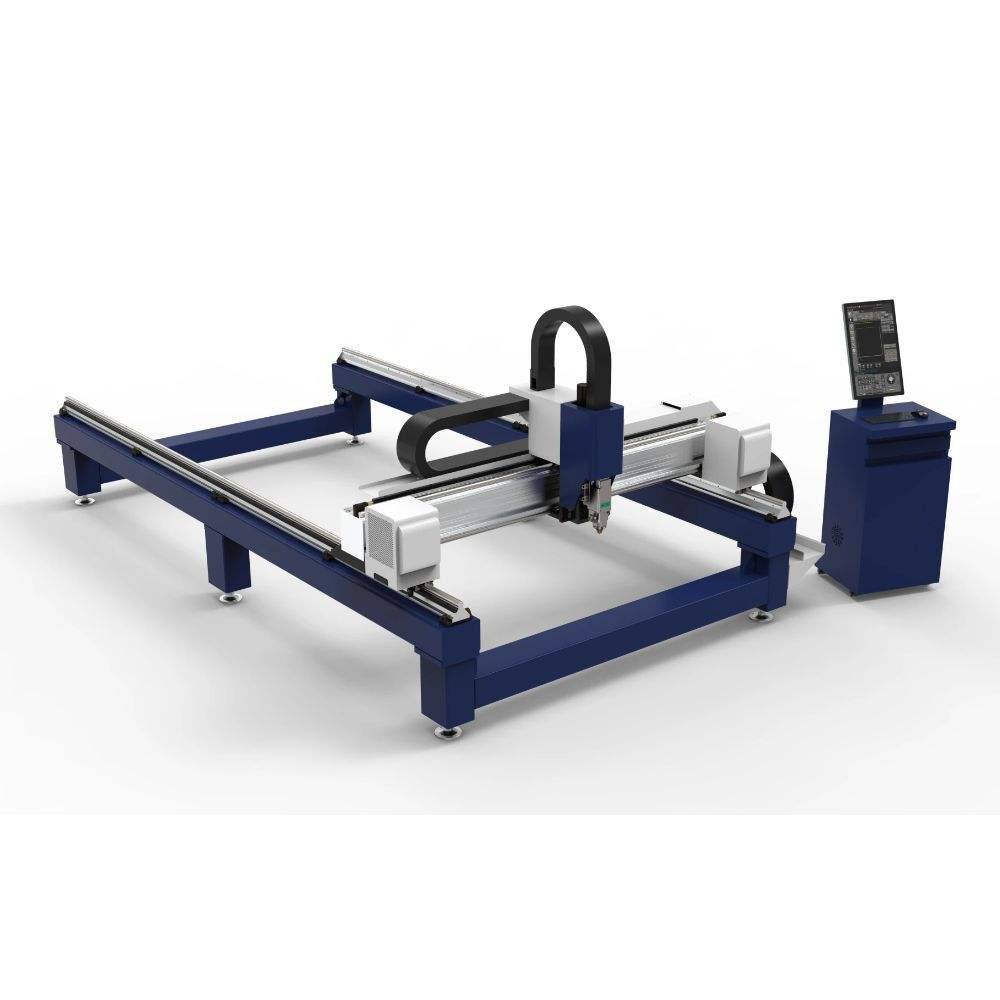
The Technical Advantage of 1.5kW Fiber Power
In the realm of laser cutting, power density is more critical than raw wattage. A 1.5kW fiber laser utilizes an ytterbium-doped optical fiber as the active gain medium. This configuration allows for a beam quality (M²) that is significantly superior to CO2 alternatives. For a fabricator in Mexico City, this translates to a smaller focal spot, which increases the energy density at the point of contact with the stainless steel surface.
For stainless steel, the 1.5kW threshold is considered the “sweet spot” for material thicknesses ranging from 0.5mm to 6.0mm. While higher wattage machines exist, the 1.5kW variant provides the most cost-effective solution for precision sheet metal work where edge quality and dimensional accuracy are paramount. The wavelength of a fiber laser (approximately 1.06 microns) is absorbed much more efficiently by stainless steel than the 10.6 microns of a CO2 laser, leading to faster processing speeds on thinner gauges.
Stainless Steel Processing: Material Challenges and Solutions
Stainless steel, particularly grades 304 and 316, is widely used in Mexico City’s medical and food-grade equipment manufacturing. However, cutting this material requires a deep understanding of thermodynamics and fluid dynamics. Because stainless steel has a high melting point and relatively low thermal conductivity compared to carbon steel, the laser cutting process must be meticulously controlled to prevent slag accumulation and dross formation.
Nitrogen vs. Oxygen as Assist Gases
When operating a 1.5kW fiber laser cutting machine on stainless steel, the choice of assist gas is the most critical variable. In the high-altitude environment of Mexico City, gas purity and pressure regulation become even more vital.
- Nitrogen (High Pressure): This is the standard for stainless steel. Nitrogen acts as a mechanical force to blow the molten metal out of the kerf without causing oxidation. This results in a “bright” or “clean” edge that requires no post-processing before welding or painting.
- Oxygen: While rarely used for thin stainless steel due to the heavy oxidation layer it leaves, it can be utilized for thicker plates to assist the melting process through an exothermic reaction. However, for the precision work typical of a 1.5kW machine, nitrogen is the preferred medium.
Managing Reflectivity and Thermal Lensing
Stainless steel is naturally reflective. In the early days of laser cutting, back-reflections could damage the laser source. Modern 1.5kW fiber lasers are equipped with isolators and back-reflection protection, allowing operators in CDMX to cut polished or mirrored stainless steel without risking the integrity of the ytterbium modules. Furthermore, high-quality cutting heads incorporate cooled optics to mitigate “thermal lensing,” a phenomenon where the lens expands slightly due to heat, shifting the focal point and degrading cut quality over long production runs.

Operational Considerations for Mexico City’s Environment
Operating high-precision machinery in Mexico City presents unique environmental challenges that engineers must account for during installation and daily operation.
Altitude and Air Density
At an elevation of approximately 2,240 meters, the atmospheric pressure in Mexico City is lower than at sea level. This affects the cooling efficiency of air-cooled chillers and the behavior of the assist gas as it exits the nozzle. Engineers must calibrate the gas flow rates to compensate for the lower air density, ensuring that the kinetic energy of the nitrogen stream is sufficient to clear the melt pool. Additionally, the cooling system for the 1.5kW resonator must be robust enough to handle the reduced heat exchange efficiency of the thinner mountain air.
Electrical Stability and Grounding
The industrial power grid in certain sectors of the Mexico City metropolitan area can experience voltage fluctuations. A 1.5kW fiber laser cutting machine requires a stable power supply to protect its sensitive CNC electronics and the laser source itself. It is standard engineering practice in the region to install a high-capacity voltage stabilizer and an isolation transformer. Proper grounding is also non-negotiable; electromagnetic interference (EMI) can cause jitter in the servo motors, leading to micro-serrations on the stainless steel edge.
Key Components of a Professional 1.5kW System
To achieve repeatable results in a professional setting, the machine’s architecture must be rigid and precise. A 1.5kW laser cutting system is only as good as its weakest component.
The CNC Control System
Most modern machines utilize systems like CypCut or specialized Fanuc controllers. These systems allow for real-time adjustments of laser power, frequency, and duty cycle. For stainless steel, “fly cutting” and “frog-hop” movements are essential to reduce cycle times. The software must also support sophisticated nesting algorithms to maximize material yield, which is crucial given the high cost of stainless steel alloys in the Mexican market.
The Cutting Head and Autofocus
A 1.5kW machine should ideally be equipped with an autofocus cutting head. Stainless steel sheets are rarely perfectly flat. An autofocus system uses a capacitive sensor to maintain a constant distance between the nozzle and the workpiece, adjusting the focal position within milliseconds. This ensures that the beam remains perfectly focused, preventing “pierce failure” or inconsistent kerf widths across the entire 1500mm x 3000mm working area.
Motion System: Rack, Pinion, and Servos
Precision in laser cutting is a function of motion control. High-acceleration servo motors (often sourced from Yaskawa or Delta) combined with precision-ground rack and pinion systems allow the machine to maintain tolerances of ±0.03mm. In the context of 1.5kW cutting, the machine must be able to move at high speeds (up to 80-100m/min) to take advantage of the fiber laser’s efficiency on thin-gauge stainless steel.
Maintenance Protocols for Longevity
In the dusty or high-humidity environments sometimes found in Mexican workshops, maintenance is the difference between a 10-year lifespan and a 2-year failure. For a 1.5kW fiber laser cutting machine, the following protocols are essential:
- Optical Path Protection: The protective window (cover glass) must be inspected daily. Even a microscopic speck of dust can absorb laser energy, heat up, and shatter the lens.
- Chiller Water Quality: Using deionized water with specific conductivity levels is required to prevent scale buildup inside the laser source and the cutting head. In Mexico City, where water hardness varies, a dedicated water treatment system for the chiller is highly recommended.
- Lubrication: The linear guides and rack systems must be cleaned and lubricated to prevent the abrasive volcanic dust of the Valley of Mexico from causing premature wear.
Economic Impact and ROI for Mexican Fabricators
Investing in a 1.5kW fiber laser cutting machine offers a compelling Return on Investment (ROI) for workshops in Mexico City. Compared to traditional methods, the fiber laser reduces electricity consumption by up to 70% and eliminates the need for expensive mirror alignments required by CO2 systems.
Furthermore, the ability to produce “finished” parts directly from the machine—meaning parts that require no grinding or edge cleaning—allows local shops to compete with international suppliers. As the “Nearshoring” trend continues to bring automotive and appliance manufacturing to Central Mexico, having the in-house capability to process stainless steel with a 1.5kW laser cutting system positions a company as a tier-one or tier-two supplier capable of meeting stringent global standards.
Conclusion
The 1.5kW fiber laser cutting machine represents the pinnacle of mid-range industrial fabrication for stainless steel. For manufacturers in Mexico City, mastering this technology requires a blend of mechanical engineering knowledge, environmental adaptation, and precise operational discipline. By understanding the interplay between laser physics, assist gas dynamics, and local environmental factors, CDMX-based enterprises can achieve world-class production quality, driving the region’s industrial evolution forward into a new era of precision and efficiency.
















