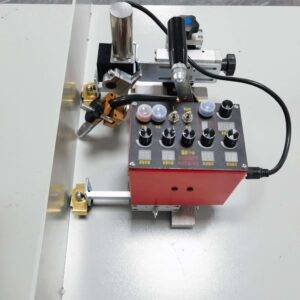
Introduction to 1.5kW Fiber laser cutting Technology
The industrial landscape of Toluca, State of Mexico, has undergone a significant transformation over the last decade. As one of Mexico’s primary manufacturing hubs, the demand for precision, speed, and cost-efficiency in metal fabrication has never been higher. At the center of this technological evolution is the 1.5kW fiber laser cutting machine. This specific power rating represents a “sweet spot” for many small to medium-sized enterprises (SMEs) and specialized automotive suppliers in the region, offering a balance between capital investment and high-performance output.
Fiber laser technology utilizes an optical fiber doped with rare-earth elements as the gain medium. Unlike traditional CO2 lasers, fiber lasers deliver the beam via a flexible cable, resulting in superior beam quality, higher energy conversion efficiency, and significantly lower maintenance requirements. For businesses in Toluca focusing on galvanized steel components, the 1.5kW fiber laser provides the necessary intensity to penetrate coatings and deliver clean, dross-free edges that meet stringent international quality standards.

The Technical Superiority of 1.5kW Fiber Lasers
When analyzing the technical specifications of a 1.5kW system, engineers must look at the wavelength and the power density. Fiber lasers typically operate at a wavelength of approximately 1.064 microns. This wavelength is highly absorbed by metallic materials compared to the 10.6 microns of a CO2 laser. This high absorption rate is what allows a 1.5kW fiber laser to outperform much higher-wattage CO2 systems when processing thin to medium-gauge galvanized steel.
Beam Quality and Precision
In the context of laser cutting, beam quality is often measured by the M2 factor. A lower M2 factor indicates a beam that can be focused into a smaller spot size. For a 1.5kW machine, the focus diameter is incredibly fine, allowing for a narrow kerf width. This precision is vital for the intricate geometries often required in Toluca’s electronics and automotive sectors. The ability to maintain a stable beam even during high-speed movements ensures that every part produced is a perfect replica of the CAD design.
Energy Efficiency and Operational Costs
From an engineering and management perspective, the wall-plug efficiency of a fiber laser is a game-changer. Fiber systems convert about 30% to 35% of electrical energy into laser power, whereas CO2 systems struggle to reach 10%. In an industrial city like Toluca, where energy costs are a significant factor in the total cost of ownership (TCO), the 1.5kW fiber laser offers a sustainable path to lowering overhead while increasing throughput.
Processing Galvanized Steel: Challenges and Solutions
Galvanized steel is a staple in the Toluca industrial corridor, used extensively in HVAC ducting, automotive structural components, and outdoor enclosures. However, laser cutting galvanized steel presents unique challenges due to the zinc coating. Zinc has a much lower melting point (around 419°C) than the underlying steel (around 1370°C). During the laser cutting process, the zinc coating vaporizes before the steel melts, which can lead to instability in the cutting zone.
Managing Zinc Vaporization
The vaporization of zinc can create a “blow-back” effect, where the gas interferes with the laser beam or causes molten metal to spatter onto the laser nozzle. To combat this, 1.5kW machines are equipped with high-pressure assist gas systems. In Toluca’s fabrication shops, nitrogen is the preferred assist gas for galvanized steel. Nitrogen acts as a shielding agent, blowing away the vaporized zinc and molten steel before they can oxidize, resulting in a bright, clean edge that requires no post-processing before welding or painting.
Optimizing Cutting Parameters
Successful laser cutting of galvanized steel with a 1.5kW source requires precise parameter tuning. This includes adjusting the focal position slightly below the surface of the material and maintaining a high gas pressure (often between 12 and 18 bar). The feed rate must be fast enough to prevent excessive heat buildup—which would cause the zinc to peel—but slow enough to ensure a complete through-cut. Modern CNC controllers used in these machines allow operators to store “material libraries,” ensuring consistency across different batches of galvanized sheets.

The Strategic Importance of Laser Cutting in Toluca
Toluca is home to some of the largest automotive assembly plants and Tier 1 suppliers in North America. The demand for “Just-in-Time” (JIT) manufacturing means that local machine shops must be agile. A 1.5kW fiber laser cutting machine provides this agility. Unlike traditional stamping dies, which take weeks to manufacture and are expensive to modify, laser cutting allows for immediate design changes with zero tooling costs.
Supporting the Automotive Supply Chain
For the production of brackets, heat shields, and reinforced plates made from galvanized steel, the 1.5kW laser provides the ideal thickness range. Most of these components fall within the 0.5mm to 4.0mm range, where the 1.5kW fiber laser operates at peak efficiency. By localizing these high-precision services in Toluca, suppliers can reduce lead times and logistics costs, making the regional supply chain more resilient.
Expansion into HVAC and Construction
Beyond automotive, the construction boom in the State of Mexico has increased the demand for galvanized ducting and structural connectors. Laser cutting allows for the rapid nesting of complex shapes, maximizing sheet utilization and reducing scrap. In a competitive market, the ability to save 5% to 10% on material costs through optimized nesting on a fiber laser can be the difference between winning and losing a contract.
Operational Best Practices for Fiber Laser Longevity
To maintain the high performance of a 1.5kW fiber laser in an industrial environment like Toluca, a rigorous maintenance schedule is essential. While fiber lasers have fewer moving parts than CO2 lasers, the optical path must remain pristine.
Nozzle and Optics Care
When cutting galvanized steel, the nozzle is prone to accumulating zinc dust. Operators should inspect the nozzle every few hours of operation and use automated nozzle cleaning stations if the machine is so equipped. Furthermore, the protective window (the final optical element) must be checked for “pitting” or contamination. A dirty protective window can absorb laser energy, leading to thermal distortion and poor cut quality.
Chiller and Environment Control
Toluca’s altitude and climate can affect machine cooling. The laser source and the cutting head require a stable temperature, usually provided by a dual-circuit water chiller. It is critical to use deionized water and specialized additives to prevent algae growth and corrosion within the cooling lines. Ensuring the chiller is rated for the local ambient temperature peaks is vital for preventing “over-temp” alarms that can halt production during a busy shift.
Safety Considerations in Fiber Laser Operations
Safety is paramount when dealing with Class 4 lasers. The 1.064-micron wavelength of a fiber laser is particularly dangerous because it can pass through the cornea and focus directly on the retina, causing permanent blindness before the blink reflex can react.
Enclosure and Shielding
Most modern 1.5kW laser cutting machines come with a fully light-tight enclosure. In Toluca’s industrial parks, safety regulations (compliant with NOM standards) often mandate these enclosures. The viewing windows must be made of specific laser-rated acrylic that blocks the fiber laser wavelength. Operators must never bypass safety interlocks, as reflected laser light from galvanized steel—which is highly reflective—can be just as dangerous as the primary beam.
Fume Extraction
Cutting galvanized steel produces zinc oxide fumes, which can cause “metal fume fever” if inhaled. A high-capacity dust collector and fume extraction system are non-negotiable. The filters must be regularly cleaned or replaced to ensure that the air quality in the Toluca facility remains within health and safety guidelines. Integrating the extraction system directly with the CNC’s “cutting start” command ensures that no fumes escape into the workshop environment.
Conclusion: The Future of Metal Fabrication in Toluca
The adoption of 1.5kW fiber laser cutting technology is a clear indicator of the technological maturity of the Toluca manufacturing sector. By mastering the nuances of cutting galvanized steel, local businesses are positioning themselves as world-class partners for global industries. The combination of high-speed processing, extreme precision, and low operational costs makes the 1.5kW fiber laser an indispensable tool for the modern Mexican engineer.
As the industry moves toward further automation and Industry 4.0 integration, these machines will continue to serve as the backbone of metal fabrication. For any workshop in Toluca looking to upgrade from manual processes or outdated plasma systems, the transition to fiber laser cutting is not just an upgrade—it is a strategic necessity for long-term survival and growth in an increasingly competitive global market.