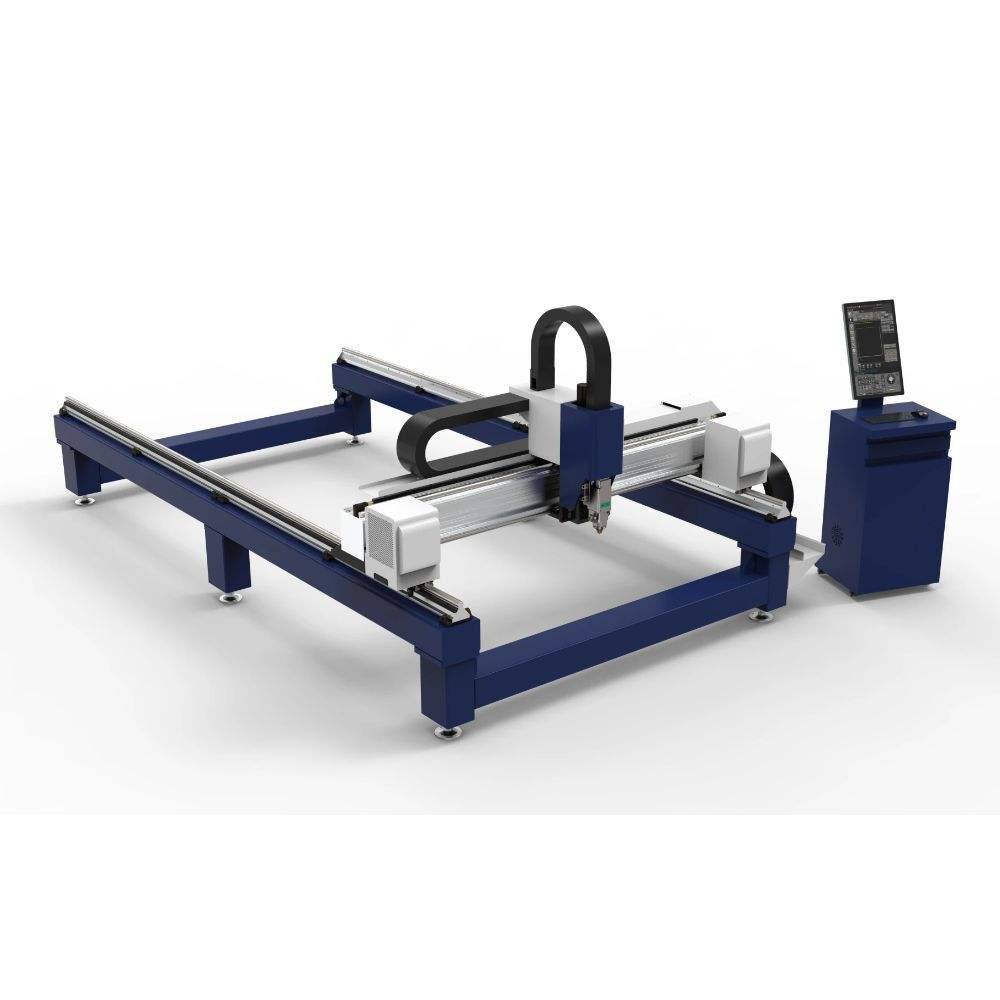
Introduction to 1.5kW Fiber laser cutting in the Mexican Industrial Landscape
The industrial sector in Mexico City (CDMX) and its surrounding metropolitan areas, such as Naucalpan and Tlalnepantla, has seen a significant shift toward high-precision fabrication. As global supply chains transition toward “nearshoring,” the demand for efficient, high-speed metal processing has surged. Central to this technological evolution is the 1.5kW fiber laser cutting machine. This specific power rating represents the “sweet spot” for many small-to-medium enterprises (SMEs) specializing in HVAC, automotive components, and construction hardware.
Fiber laser technology utilizes an optical fiber doped with rare-earth elements as the gain medium. Unlike CO2 lasers, fiber lasers operate at a wavelength of approximately 1.06 microns, which is more readily absorbed by metals. For a 1.5kW system, this efficiency translates into rapid processing speeds and lower operational costs, particularly when dealing with reflective materials or coated alloys like galvanized steel.
Technical Specifications and Performance of 1.5kW Systems
A 1.5kW fiber laser cutting system is engineered for precision and endurance. At this power level, the machine is optimized for thin to medium-gauge sheets. Typically, a 1.5kW source can comfortably process carbon steel up to 12mm-14mm and stainless steel up to 5mm-6mm. However, its performance on galvanized steel is where it truly shines for the Mexico City market, where galvanized materials are ubiquitous in urban infrastructure.
The beam quality, often measured by the Beam Parameter Product (BPP), is exceptionally high in 1.5kW fiber sources. This allows for a smaller focal spot and higher power density at the point of contact. In an engineering context, this means a narrower kerf width and a minimized Heat Affected Zone (HAZ), which is critical for maintaining the structural integrity of the workpiece.

Processing Galvanized Steel: The Zinc Challenge
Galvanized steel presents a unique set of challenges for laser cutting. The material consists of a steel core coated with a layer of zinc to prevent corrosion. Zinc has a significantly lower melting point (approx. 419°C) and boiling point (approx. 907°C) than the underlying steel (approx. 1500°C). During the laser cutting process, the zinc coating vaporizes before the steel melts.
This vaporization can lead to several issues:
- Plasma Formation: The vaporized zinc can interfere with the laser beam, potentially defocusing it or creating a plasma cloud that absorbs the energy.
- Dross Attachment: Molten zinc can mix with the steel slag, causing “burrs” or dross to adhere to the bottom of the cut, requiring secondary finishing.
- Optical Contamination: Zinc fumes are highly volatile. Without proper high-pressure assist gas and extraction, they can migrate toward the cutting head, threatening the protective window (lens).
To overcome these, a 1.5kW machine must be calibrated with specific feed rates and gas pressures to ensure the zinc is blown away from the cut path before it can interfere with the beam delivery.
Environmental Factors: Operating in Mexico City
Mexico City’s unique geography introduces variables that engineers must account for when installing and operating a laser cutting system. Situated at an altitude of approximately 2,240 meters (7,350 feet) above sea level, the atmospheric pressure is significantly lower than at sea level. This has two primary effects on laser cutting operations.
Altitude and Air Density Impacts
First, lower air density affects the cooling efficiency of the machine’s chiller unit. Fiber lasers are sensitive to temperature fluctuations; the 1.5kW resonance and the cutting head must be kept within a strict temperature range (usually 20°C to 25°C). In the thinner air of CDMX, heat exchange is less efficient. Operators should ensure that chillers are rated for high-altitude performance or increase the cooling capacity to prevent thermal lensing or diode degradation.
Second, the dynamics of the assist gas are altered. Whether using Nitrogen or Oxygen, the flow characteristics through the nozzle change at high altitudes. Engineers often need to increase the gas pressure by 10-15% compared to sea-level specifications to achieve the same kinetic energy required to clear the molten pool, especially when processing the oily or waxy surfaces often found on galvanized sheets.
Power Grid Stability in Central Mexico
The electrical infrastructure in some industrial zones of Mexico City can experience voltage fluctuations. A 1.5kW fiber laser requires a stable power supply to maintain beam consistency. It is highly recommended to install a high-precision voltage stabilizer and an industrial-grade grounding system. Inconsistent power can lead to “striations” on the cut surface of galvanized steel, as the laser’s pulse frequency or power output flickers during the traverse.
Optimizing Assist Gas for Galvanized Materials
The choice of assist gas is the most critical factor in achieving a “burr-free” finish on galvanized steel. For a 1.5kW system, three main options exist: Oxygen, Nitrogen, and Compressed Air.
Nitrogen (N2) Cutting
Nitrogen is the preferred choice for high-quality aesthetics. It acts as an inert shield, preventing oxidation during the melt process. When cutting galvanized steel with Nitrogen, the zinc layer at the edge is vaporized cleanly, leaving a bright, weld-ready edge. However, Nitrogen requires high pressures (up to 20 bar) and higher flow rates, which increases the cost per part. For 1.5kW machines, Nitrogen is typically used for galvanized sheets up to 3mm thick.
Oxygen (O2) Cutting
Oxygen reacts exothermically with the steel, providing additional heat to the cutting process. This allows the 1.5kW laser to cut thicker galvanized plates at lower pressures. The downside is the formation of an oxide layer on the cut edge, which may need to be removed if the part is to be painted or powder-coated later. Furthermore, Oxygen can cause more “spatter” of the zinc coating, which may require more frequent cleaning of the nozzle.
High-Pressure Compressed Air
With the advancement of high-pressure compressors and filtration systems, air cutting has become a popular middle ground in the Mexican market. It is significantly cheaper than bottled Nitrogen. While the cut quality is slightly lower than pure Nitrogen, for many structural components used in CDMX construction projects, the edge quality provided by a 1.5kW laser using air is more than sufficient.
Maintenance Protocols for High-Altitude Operation
To ensure the longevity of a 1.5kW fiber laser cutting machine in an environment like Mexico City, a rigorous maintenance schedule is mandatory. The combination of industrial dust and the specific fumes from galvanized steel can be abrasive.
Optical Path Protection
The protective window is the most vulnerable component. When cutting galvanized steel, the “back-spatter” of zinc can pit the glass. Operators should inspect the protective window every 4-8 hours of operation. In CDMX’s often dusty environment, the use of a positive-pressure cabinet for the laser source and electronics is advisable to prevent particulate ingress.
Fume Extraction and Filtration
Cutting galvanized steel releases zinc oxide fumes, which are toxic (leading to “metal fume fever”). A robust extraction system with HEPA filtration is not just an engineering requirement but a health and safety necessity. Given the density of industrial zones in Mexico City, local environmental regulations (SEDEMA) may require specific filtration standards to be met before exhausting air externally.
Economic Impact and ROI in the Mexican Market
The investment in a 1.5kW fiber laser cutting machine is often justified by the sheer volume of work available in the Mexican valley. The throughput of a fiber laser is 3 to 4 times faster than a plasma cutter for thin galvanized materials, with significantly higher precision. This eliminates the need for secondary grinding or deburring, which are labor-intensive processes.
In the context of the Mexico City economy, where labor costs are rising but the demand for “just-in-time” delivery is increasing, the automation provided by a CNC fiber laser allows shops to take on more complex contracts from the aerospace and automotive sectors located in nearby Queretaro and Puebla. The 1.5kW power level is particularly attractive because it offers a lower entry price point than 3kW or 6kW systems while still handling 90% of common sheet metal tasks.
Conclusion
The 1.5kW fiber laser cutting machine is a transformative tool for the Mexican fabrication industry. When processing galvanized steel, it offers a level of speed and precision that traditional methods cannot match. However, success in the Mexico City market requires more than just the hardware; it requires an engineering-minded approach to altitude adjustments, gas selection, and environmental protection. By understanding the interplay between the laser beam and the zinc coating, and by accounting for the unique atmospheric conditions of the region, manufacturers can achieve world-class results and a rapid return on investment.