Comprehensive Guide to 1.5kW Fiber laser cutting Machines for Galvanized Steel in Leon
The industrial landscape of Leon, Guanajuato, has undergone a massive transformation over the last decade. Known traditionally as the leather and shoe capital, Leon has successfully diversified into the automotive, aerospace, and advanced manufacturing sectors. Central to this evolution is the adoption of high-precision technology, specifically the 1.5kW fiber laser cutting machine. For local manufacturers dealing with galvanized steel, this specific power rating offers an ideal balance between capital investment, operational efficiency, and edge quality.
Galvanized steel is a staple in the Bajío region’s construction and automotive supply chains. However, its zinc coating presents unique challenges during the laser cutting process. A 1.5kW fiber laser provides the necessary beam density to vaporize the zinc layer while maintaining a stable melt pool in the underlying carbon steel, ensuring clean cuts with minimal dross.
Understanding the 1.5kW Fiber Laser Technology
A fiber laser utilizes an optical fiber doped with rare-earth elements as its active gain medium. The 1.5kW power level is considered the “sweet spot” for thin to medium-gauge sheet metal fabrication. In the context of 1.5kW systems, the laser beam is delivered through a flexible fiber optic cable directly to the cutting head, eliminating the need for complex mirrors and bellows found in older CO2 systems.
For engineers in Leon, the primary advantage of a 1.5kW fiber laser cutting system is its wall-plug efficiency. These machines convert electrical energy into laser light with high efficiency, significantly reducing the overhead costs for local workshops. Furthermore, the 1.06-micron wavelength of the fiber laser is absorbed more readily by metals, particularly reflective ones like galvanized steel, compared to the 10.6-micron wavelength of CO2 lasers.

The Challenges of Cutting Galvanized Steel
Galvanized steel is carbon steel coated with a layer of zinc to prevent corrosion. When subjected to laser cutting, the zinc coating poses two primary issues: reflectivity and vaporization interference. Zinc has a lower melting point (approx. 419°C) and boiling point (approx. 907°C) than the base steel (approx. 1500°C). As the laser heats the material, the zinc vaporizes rapidly, which can create turbulence in the melt pool and lead to “spitting” or irregular dross on the underside of the cut.
A 1.5kW fiber laser cutting machine manages this by utilizing high-pressure assist gases and precise focal point control. In Leon’s high-volume manufacturing environments, maintaining a consistent zinc-to-steel ratio is critical for ensuring that the protective properties of the galvanization are not compromised along the heat-affected zone (HAZ).
Optimizing Parameters for Galvanized Steel in Leon
To achieve a high-quality finish on galvanized sheets—ranging from 0.5mm to 4.0mm—operators must fine-tune several variables. In the industrial parks surrounding Leon, such as Puerto Interior, precision is non-negotiable. The following parameters are essential for 1.5kW laser cutting:
Assist Gas Selection: Nitrogen vs. Oxygen
The choice of assist gas is the most critical factor when laser cutting galvanized steel. Nitrogen is typically preferred for high-quality finishes. Because Nitrogen is an inert gas, it prevents oxidation of the cut edge. The high pressure (often 12-18 bar) helps to mechanically blow away the vaporized zinc and molten steel, leaving a bright, weld-ready edge. This is particularly important for Leon-based suppliers to the automotive industry who must meet strict welding standards.
Oxygen can be used for thicker galvanized plates to increase cutting speed through an exothermic reaction. However, this often results in a darker, oxidized edge and can cause more significant vaporization of the zinc coating, potentially reducing the corrosion resistance of the part.
Focal Position and Nozzle Diameter
For a 1.5kW system, the focal point is usually set slightly below the surface of the material when using Nitrogen. This ensures that the energy is concentrated within the kerf to push the melt through. A double-layer nozzle is often recommended for galvanized steel to stabilize the gas flow and protect the internal optics from zinc vapor backspatter.
Applications in the Leon Industrial Sector
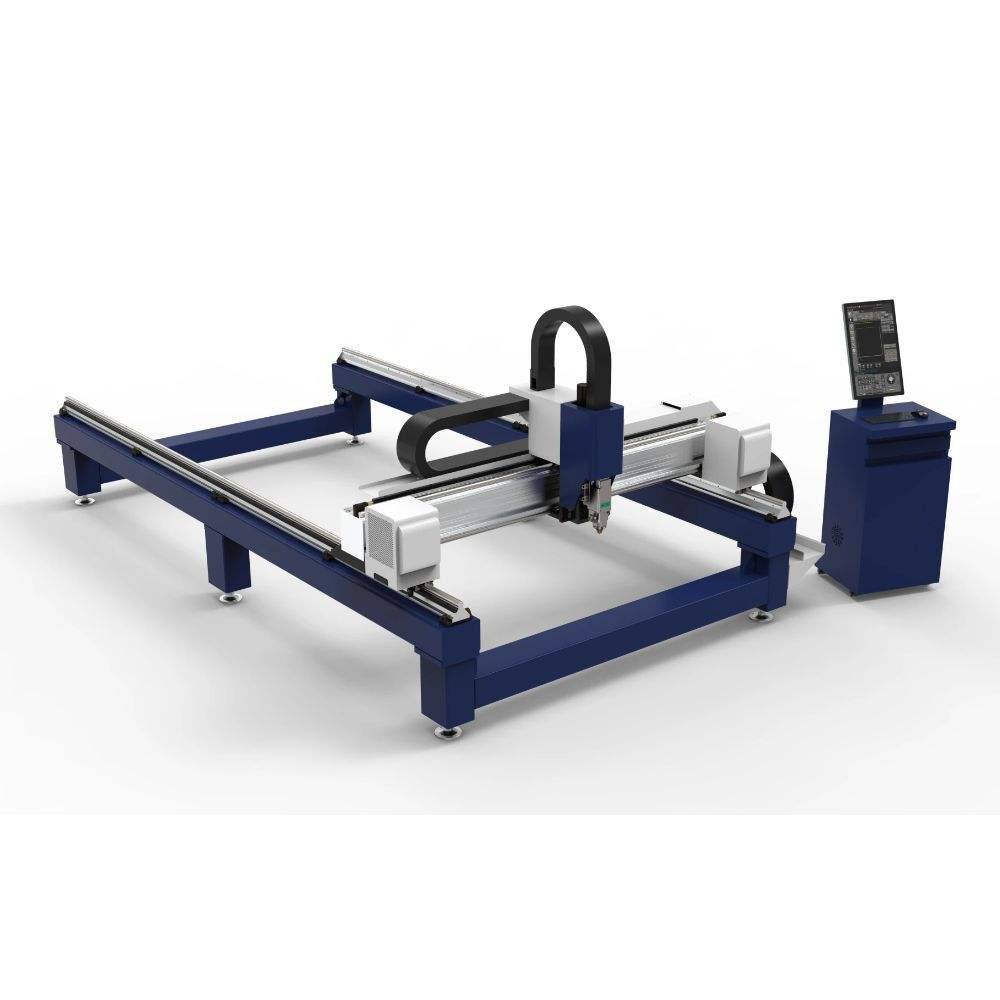
The versatility of the 1.5kW fiber laser cutting machine makes it an indispensable tool for various industries in the Bajío region. Its ability to handle galvanized steel with precision opens doors for several specific applications:
HVAC and Ductwork Fabrication
Leon’s construction boom requires extensive HVAC systems. Galvanized steel is the standard material for ductwork due to its longevity. A 1.5kW laser cutting machine allows for the rapid nesting of complex shapes, reducing material waste and ensuring that joints fit perfectly without manual deburring.
Automotive Components and Brackets
With major automotive OEMs located within a short drive of Leon, Tier 2 and Tier 3 suppliers utilize fiber lasers to produce reinforced brackets, clips, and internal structural components from galvanized sheet metal. The 1.5kW power level provides the speed necessary to meet Just-In-Time (JIT) delivery requirements while maintaining the tight tolerances required by automotive engineering standards.
Electrical Enclosures and Cabinetry
Outdoor electrical cabinets require the corrosion resistance of galvanized steel. Laser cutting these enclosures ensures that all mounting holes and ventilation slots are burr-free, which is essential for maintaining the integrity of the protective powder coating applied after fabrication.
Maintenance and Operational Longevity
Operating a 1.5kW fiber laser cutting machine in Leon’s climate requires attention to environmental factors. The region can be dusty, which is the enemy of sensitive optical components. A rigorous maintenance schedule is required to protect the investment.
Optical Path Integrity
While the fiber itself is sealed, the cutting head contains protective windows and lenses. When laser cutting galvanized steel, the zinc vapor can settle on the nozzle and eventually migrate to the protective window. Daily inspections and cleaning with high-purity isopropanol are mandatory to prevent “lens burn,” which can lead to costly downtime.
Chiller Management
The 1.5kW laser source and the cutting head generate heat that must be dissipated. In Leon, where ambient temperatures can rise significantly during the summer months, a high-quality dual-circuit water chiller is essential. Maintaining the coolant at a consistent temperature prevents thermal expansion of the optical components, ensuring that the laser cutting beam remains stable throughout long production shifts.
Why Leon Manufacturers are Choosing 1.5kW Systems
The decision to invest in a 1.5kW fiber laser cutting machine rather than a higher-wattage system often comes down to the “Return on Investment” (ROI). For many shops in Leon, the majority of galvanized steel processing involves thicknesses under 5mm. A 1.5kW machine can cut 2mm galvanized steel at speeds exceeding 15 meters per minute, which is more than sufficient for most production cycles.
Furthermore, the 1.5kW system has lower power consumption and requires less expensive consumables than 6kW or 12kW counterparts. For a growing business in Leon, this allows for a faster break-even point and the ability to offer more competitive pricing to local clients.
Integration with CNC and CAD/CAM
Modern 1.5kW machines are equipped with sophisticated CNC controllers that support advanced nesting software. This allows Leon’s engineers to import DXF or DWG files directly, optimize the layout of parts on a galvanized sheet, and minimize “scrap” material. Features like “leapfrog” positioning and automatic edge detection further enhance the efficiency of the laser cutting process.
Conclusion: The Future of Metal Fabrication in Leon
As Leon continues to solidify its position as a high-tech manufacturing hub, the 1.5kW fiber laser cutting machine will remain a cornerstone of the local workshop. Its specific capability to handle galvanized steel efficiently addresses the needs of the construction, automotive, and appliance industries that drive the regional economy.
By understanding the technical nuances of zinc vaporization, optimizing assist gas pressures, and maintaining the optical integrity of the system, manufacturers in Leon can produce world-class components. The transition from traditional mechanical shearing or plasma cutting to fiber laser cutting represents a significant step forward in precision, sustainability, and industrial competitiveness for the entire State of Guanajuato.