Introduction to 1.5kW Fiber Laser Technology in Guadalajara
The industrial landscape of Guadalajara, often referred to as Mexico’s “Silicon Valley,” has undergone a significant transformation in its metal-fabrication sector. As the demand for high-precision components in the automotive, HVAC, and electronics industries grows, the adoption of fiber laser technology has become a necessity rather than a luxury. Specifically, the 1.5kW fiber laser cutting machine has emerged as the industrial standard for small to medium-sized enterprises (SMEs) looking to balance capital investment with high-performance output. This guide explores the technical intricacies of using a 1.5kW system, with a dedicated focus on processing galvanized steel—a material ubiquitous in the region’s construction and manufacturing sectors.
Fiber laser cutting technology utilizes an optical fiber doped with rare-earth elements as the gain medium. Unlike traditional CO2 lasers, fiber lasers operate at a wavelength of approximately 1.06 microns, which is significantly better absorbed by metallic surfaces. At a 1.5kW power rating, the machine provides sufficient energy density to vaporize steel efficiently while maintaining a narrow kerf width, ensuring minimal material waste and superior edge quality.
The Engineering Advantage of Fiber Over CO2
From an engineering perspective, the 1.5kW fiber laser offers several advantages over its CO2 predecessors. The wall-plug efficiency of a fiber system is roughly 30-35%, compared to the 8-10% seen in CO2 systems. This translates to lower electricity consumption—a critical factor for workshops in Guadalajara’s industrial corridors like El Salto or Zapopan, where operational costs are closely monitored. Furthermore, the absence of complex mirrors and bellows in the beam delivery system reduces maintenance downtime, allowing for higher duty cycles in demanding production environments.
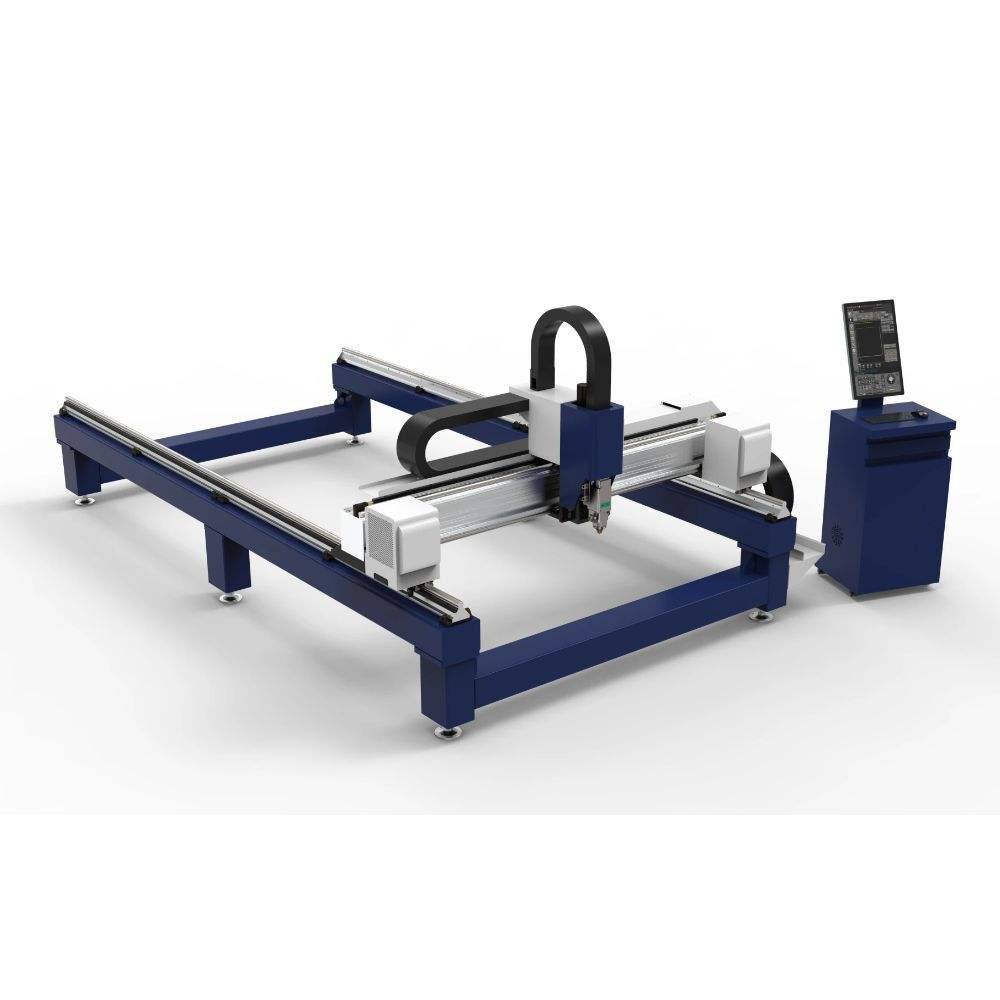
 laser cutting machine for Plate and Tube” style=”width: 100%; max-width: 800px; height: auto; margin: 20px 0;”>
Precision Laser Cutting of Galvanized Steel
Galvanized steel presents a unique set of challenges in the laser cutting process. The material consists of a carbon steel base coated with a layer of zinc to provide corrosion resistance. Because zinc has a much lower melting point (approximately 419°C) than the underlying steel (approximately 1370°C-1500°C), the thermal dynamics during cutting are complex. When the laser beam hits the surface, the zinc layer tends to vaporize before the steel melts, which can lead to instability in the cutting plasma and potential dross accumulation on the underside of the workpiece.
Managing the Zinc Coating Challenge
To achieve a high-quality finish on galvanized steel with a 1.5kW machine, operators must fine-tune the focal position and gas pressure. The zinc vapor can interfere with the laser beam’s path, causing “spatter” that may damage the protective window of the cutting head. Engineering best practices suggest using a slightly negative focus to ensure the energy is concentrated just below the surface of the material, helping to eject the molten zinc and steel more cleanly through the kerf.
In Guadalajara’s manufacturing hubs, where galvanized sheets are frequently used for air ducting and electrical enclosures, maintaining edge integrity is paramount. If the laser cutting parameters are incorrect, the zinc can flake away from the cut edge, leaving the steel vulnerable to oxidation. A well-calibrated 1.5kW fiber laser ensures that the heat-affected zone (HAZ) is kept to a minimum, preserving the protective properties of the zinc as close to the edge as possible.
Optimal Auxiliary Gas Selection
The choice of auxiliary gas is the most critical variable when laser cutting galvanized steel. While oxygen can be used to increase cutting speeds through an exothermic reaction, it often results in a charred, oxidized edge that requires post-processing. For most engineering applications in Guadalajara, Nitrogen is the preferred choice. Nitrogen acts as a shielding gas, preventing oxidation and blowing away the molten material to leave a clean, weld-ready edge. However, for 1.5kW systems, “Clean Air” cutting has become increasingly popular. By using high-pressure compressed air that has been filtered and dried, shops can achieve speeds comparable to nitrogen at a fraction of the cost, provided the material thickness is within the 1mm to 3mm range.
Technical Specifications and Performance Metrics
A 1.5kW fiber laser cutting machine is optimized for thin to medium-gauge metals. While it can cut thicker materials, its “sweet spot” for high-speed production lies in the following ranges:
- Stainless Steel: 1mm to 4mm (Optimal finish)
- Carbon Steel: 1mm to 12mm (Maximum capacity)
- Galvanized Steel: 0.5mm to 4mm (High-speed precision)
- Aluminum: 1mm to 3mm (Requires high-frequency pulsing)
Speed and Thickness Capacity
In a production setting, speed is the primary driver of ROI. For 1.5mm galvanized steel, a 1.5kW machine can achieve cutting speeds of approximately 25 to 30 meters per minute when using nitrogen or compressed air. As the thickness increases to 3mm, the speed drops to roughly 8-10 meters per minute. It is essential for engineers in Guadalajara to calculate these throughput rates when quoting jobs for the local automotive supply chain, as the narrow margins in “Just-in-Time” (JIT) manufacturing require precise scheduling.
The Guadalajara Industrial Context
Guadalajara’s unique position as a logistics and manufacturing hub means that laser cutting services are in high demand for diverse applications. The city’s infrastructure projects often require galvanized steel brackets, supports, and decorative facades. Furthermore, the local electronics industry requires precision-cut chassis and heat sinks where the accuracy of a 1.5kW fiber laser (typically ±0.03mm) is indispensable.
Applications in Local Manufacturing
One of the largest consumers of galvanized laser-cut parts in Jalisco is the HVAC industry. Ductwork and ventilation housings require complex nesting patterns to minimize material waste. Modern laser cutting software allows for “common line cutting,” where two parts share a single cut path, further increasing efficiency. For a 1.5kW system, the ability to rapidly pierce and cut thin-gauge galvanized sheets makes it significantly more productive than mechanical shearing or CNC punching, especially for prototypes or short-run production cycles common in the Guadalajara market.
Operational Best Practices for 1.5kW Systems
To maintain the longevity of a fiber laser cutting machine, especially in the relatively warm and sometimes humid climate of Guadalajara, strict operational protocols must be followed. The chiller unit, which regulates the temperature of the laser source and the cutting head, is the heart of the system. In Jalisco, ensuring the chiller uses deionized water and is kept free of dust is vital to prevent internal condensation and overheating.
Maintenance and Longevity
The optical components of a 1.5kW laser are sensitive. Operators should perform daily inspections of the protective window. When cutting galvanized steel, the risk of “blowback” is higher due to the zinc vapor. If the window becomes contaminated, the laser energy will be absorbed by the debris, leading to a rapid thermal crack that can damage the internal lenses. Regularly cleaning the machine’s rails and lubricating the rack-and-pinion system ensures that the high acceleration rates (often up to 1.2G) do not lead to mechanical wear or loss of precision over time.
Safety and Environmental Considerations
Laser cutting galvanized steel releases zinc oxide fumes, which are toxic if inhaled. It is a regulatory requirement in industrial zones like Guadalajara to have a robust dust extraction and filtration system. A 1.5kW machine should be paired with a fume extractor capable of handling sub-micron particles. Operators must also wear appropriate PPE, including laser safety glasses rated for the 1064nm to 1080nm wavelength (typically OD7+ protection), even if the machine is fully enclosed.
Fume Extraction and Zinc Vapor
In addition to health risks, zinc dust is highly fine and can settle on the machine’s electronic components, potentially causing short circuits. A high-volume centrifugal fan coupled with a flame-retardant filter is recommended. In Guadalajara, where environmental regulations are increasingly aligned with international standards, ensuring that your laser cutting operation is “green” by properly disposing of filtered particulates is essential for long-term compliance.
Conclusion
The 1.5kW fiber laser cutting machine represents the ideal intersection of power, precision, and price for the Guadalajara industrial sector. By mastering the nuances of cutting galvanized steel—from gas selection to focal adjustments—local manufacturers can significantly enhance their production capabilities. As the region continues to grow as a global manufacturing powerhouse, the implementation of fiber laser technology will remain a cornerstone of engineering excellence, driving innovation and efficiency across the metalworking landscape of Jalisco.