
Comprehensive Guide to 1.5kW Fiber laser cutting for Carbon Steel in Tijuana
The industrial landscape of Tijuana, Baja California, has undergone a massive transformation over the last decade. As one of Mexico’s primary manufacturing hubs, the city has shifted from basic assembly to high-precision engineering. Central to this evolution is the adoption of advanced laser cutting technology. Specifically, the 1.5kW fiber laser cutting machine has emerged as the workhorse for small to medium-sized fabrication shops focusing on carbon steel components. This guide explores the technical nuances, operational benefits, and regional advantages of deploying 1.5kW fiber laser systems in the Tijuana industrial corridor.
Understanding the 1.5kW Fiber Laser Power Profile
In the realm of laser cutting, power is often equated with capability. However, for many applications involving carbon steel, a 1.5kW (1500-watt) system offers the most efficient balance between capital investment and operational throughput. A fiber laser at this power level utilizes a solid-state gain medium, where the laser beam is generated in an optical fiber doped with rare-earth elements like ytterbium. This beam is then delivered via a flexible fiber optic cable directly to the cutting head.
For carbon steel, the 1.5kW threshold is significant. It provides enough energy density to achieve high-speed processing on thin gauges (1mm to 3mm) while maintaining the ability to penetrate thicker plates up to 12mm or 14mm, depending on the machine’s configuration and gas pressure settings. In Tijuana’s fast-paced “maquiladora” environment, where turnaround times are critical, the 1.5kW fiber laser offers a much higher absorption rate in carbon steel compared to traditional CO2 lasers, leading to faster cutting speeds and cleaner edges.
Optimizing Carbon Steel Processing in Tijuana
Carbon steel remains the most widely used material in the Tijuana manufacturing sector, particularly for automotive brackets, electronic enclosures, and structural components for the aerospace industry. When using a 1.5kW laser cutting system, the interaction between the beam and the carbon steel is influenced primarily by the assist gas used during the process.
For most carbon steel applications, Oxygen (O2) is the preferred assist gas. The oxygen reacts exothermically with the heated steel, adding thermal energy to the cut and allowing the laser to process thicker materials than it could with light alone. When cutting 6mm carbon steel with a 1.5kW source, the resulting edge is typically smooth with a thin layer of oxide. For shops in Tijuana aiming for “paint-ready” parts, managing this oxide layer is a key part of the workflow. Alternatively, using high-pressure Nitrogen (N2) can produce oxide-free cuts on thinner carbon steel (up to 3mm or 4mm), which is essential for components requiring immediate welding or high-quality powder coating without secondary cleaning.
Technical Specifications and Performance Metrics
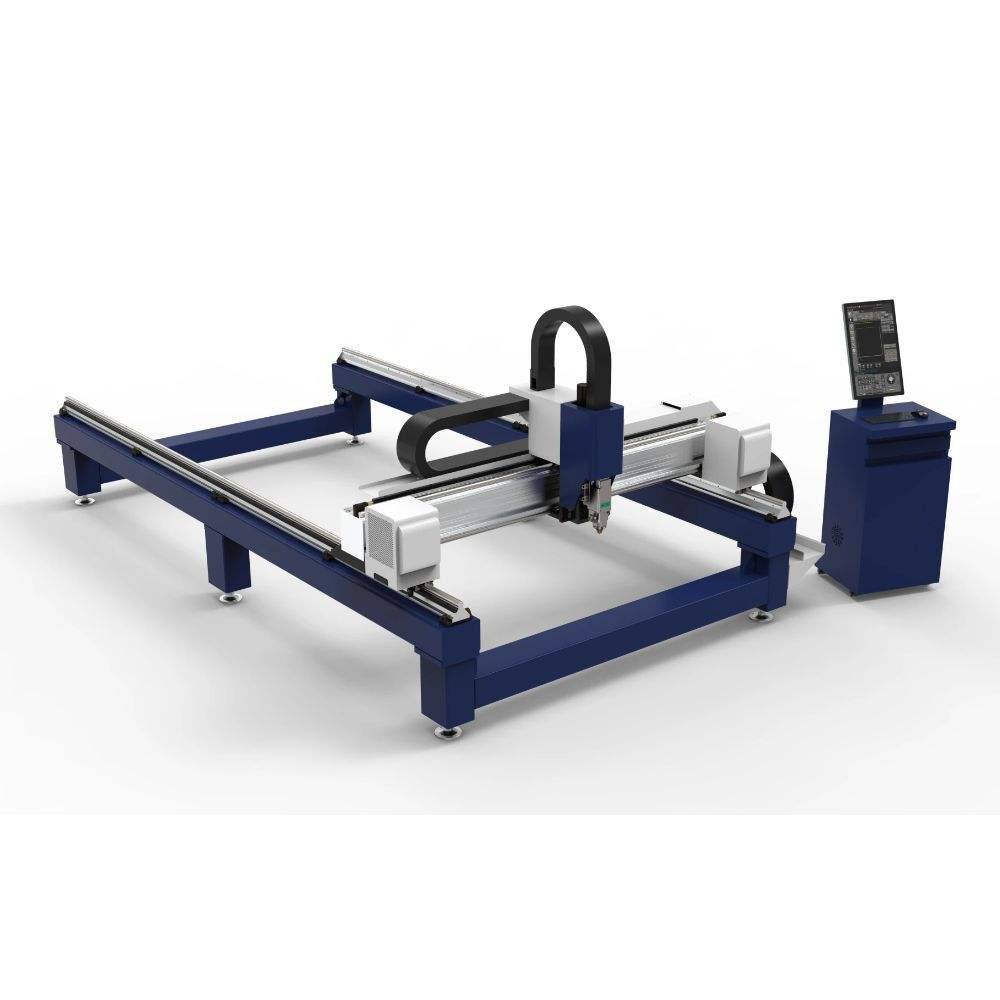
A professional-grade 1.5kW laser cutting machine is defined by more than just its power source. Engineering teams in Tijuana must look at the synergy between the CNC controller, the servo motors, and the bed construction. A typical high-performance unit features:
- Maximum Cutting Thickness (Carbon Steel): 12mm to 14mm (Production limit usually 10mm).
- Positioning Accuracy: ±0.03mm to ±0.05mm.
- Repeatability: ±0.02mm.
- Acceleration: 1.0G to 1.2G, allowing for rapid direction changes in complex geometries.
The structural integrity of the machine bed is also vital. In the humid and sometimes salty air of coastal Baja California, high-strength steel frames that have been stress-relieved through heat treatment are necessary to prevent warping over time. This ensures that the laser cutting process remains precise over years of multi-shift operation.
The Impact of Local Infrastructure on Laser Operations
Operating a 1.5kW laser cutting machine in Tijuana presents unique regional advantages and challenges. The proximity to the United States border allows for rapid sourcing of high-quality carbon steel from California and Texas, as well as easy access to specialized consumables like nozzles, protective windows, and ceramic rings. However, the local electrical grid can occasionally experience fluctuations.
Engineering best practices for Tijuana-based shops include the installation of high-capacity voltage stabilizers and industrial chillers. Fiber lasers are sensitive to temperature; a 1.5kW source generates significant heat that must be dissipated to maintain beam stability. A dual-circuit cooling system—one for the laser source and one for the cutting head—is standard for maintaining the “BPP” (Beam Parameter Product) and ensuring consistent cut quality during the hot summer months in the Otay Mesa or El Florido industrial zones.
Software Integration and Nesting Efficiency
To maximize the ROI of a 1.5kW laser cutting system, the integration of sophisticated nesting software is non-negotiable. Software platforms like CypCut or Lantek allow engineers to arrange parts on a carbon steel sheet to minimize scrap. Given the rising cost of raw materials, even a 5% improvement in sheet utilization can save thousands of dollars annually.
Furthermore, advanced software features such as “Fly Cutting” (where the laser head doesn’t stop between holes) and “Frog Jump” (optimized head lifting) significantly reduce the cycle time per sheet. For Tijuana shops serving the medical device or electronics sectors, the ability to import CAD files directly and generate G-code with optimized lead-ins ensures that the 1.5kW laser cutting process is both repeatable and highly efficient.
Maintenance Protocols for Longevity
In a professional engineering environment, maintenance is proactive rather than reactive. For a 1.5kW fiber laser, the primary maintenance tasks involve the optical path and the motion system. Unlike CO2 lasers, fiber lasers have no internal mirrors to align, which drastically reduces maintenance hours. However, the protective window in the cutting head must be inspected daily.
In Tijuana’s industrial parks, dust control is a major factor. Fine particulate matter from nearby construction or other metalworking processes can contaminate the laser cutting environment. Using a high-quality dust extraction system not only protects the machine’s linear guides and rack-and-pinion systems but also ensures a safer breathing environment for operators, complying with Mexican STPS (Secretaría del Trabajo y Previsión Social) regulations.
Economic Advantages for the Tijuana Metalworking Sector
The transition to a 1.5kW fiber laser represents a significant leap in productivity for shops currently using plasma cutters or older CO2 systems. The “cost per part” is significantly lower due to the higher cutting speeds and lower electricity consumption of fiber technology. A 1.5kW fiber laser typically consumes about 30-50% less power than a CO2 laser of equivalent cutting capacity.
For Tijuana businesses, this efficiency is a competitive edge. It allows local fabricators to bid more aggressively on contracts from US-based OEMs (Original Equipment Manufacturers) who are looking to “nearshore” their production. The ability to produce high-precision carbon steel parts with minimal edge taper and a small heat-affected zone (HAZ) positions Tijuana shops as high-tier suppliers in the global value chain.
Conclusion: The Future of Laser Cutting in Baja California
The 1.5kW fiber laser cutting machine is more than just a tool; it is a catalyst for industrial growth in Tijuana. By focusing on the specific requirements of carbon steel—from gas selection to thermal management—local manufacturers can achieve world-class results. As the city continues to attract high-tech investment, the reliance on precise, efficient, and reliable laser cutting technology will only increase. For the engineering professional in Tijuana, mastering the 1.5kW fiber laser is a strategic move toward operational excellence and long-term commercial success in the competitive landscape of North American manufacturing.
Summary of Best Practices for 1.5kW Laser Cutting
- Material Selection: Use high-quality, pickled and oiled carbon steel to minimize surface impurities that can interfere with the laser beam.
- Gas Management: Ensure high-purity Oxygen for thick cuts and clean, dry compressed air or Nitrogen for thin-gauge high-speed work.
- Climate Control: Keep the laser source in a temperature-controlled environment to prevent condensation and electronic failure.
- Operator Training: Invest in skilled technicians who understand the relationship between focal point, feed rate, and gas pressure in the laser cutting cycle.
















